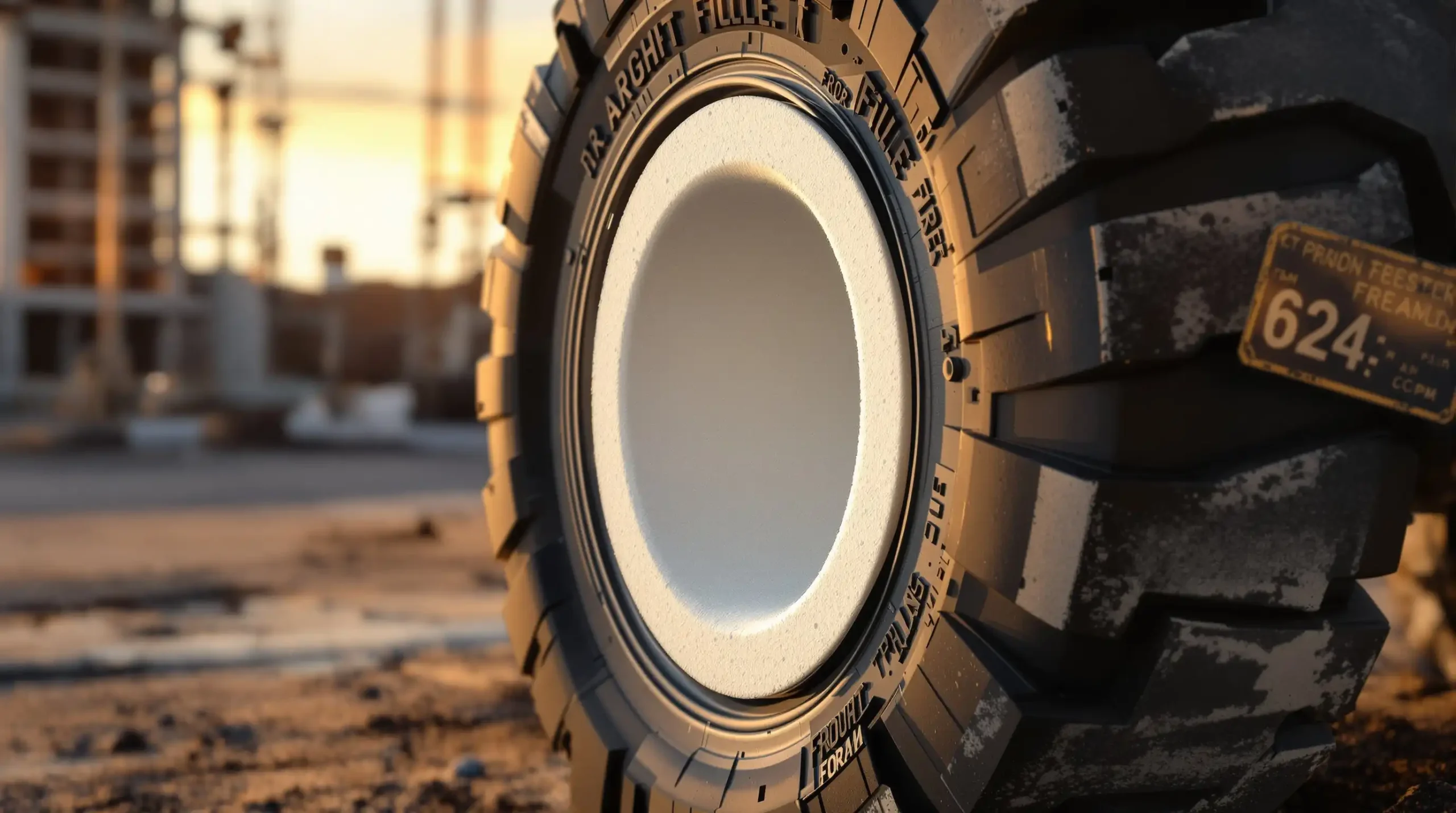

Airless foam-filled tires are transforming how we think about mobility, safety, and maintenance. Unlike traditional pneumatic tires that rely on compressed air, foam-filled tires use a dense polyurethane foam or elastomeric compound to occupy the tire cavity. This design eliminates the risk of punctures and blowouts while preserving load-bearing capacity and operational uptime. For industries where downtime is costly—construction, warehousing, agriculture, mining, and material handling—airless foam-filled tires offer a reliable, predictable, and cost-effective alternative.
What Are Airless Foam-Filled Tires?
Airless foam-filled tires are conventional tire casings that have been injected with specialized foam to replace air. Once cured, the foam creates a resilient internal structure that supports the tire sidewalls and tread, providing a consistently firm ride with excellent load distribution. Because there’s no air, there’s nothing to leak, puncture, or blow out. The result is a tire that keeps performing in harsh environments where nails, metal shards, glass, and rough terrain would normally mean frequent flats.
Key Advantages Over Pneumatic Tires
- No blowouts or punctures: Foam filling ends flats, slow leaks, and catastrophic failures that compromise safety and productivity.
- Stable performance: Consistent “pressure equivalent” delivers predictable handling and uniform contact with the ground, improving operator confidence and control.
- Higher uptime: Reduced maintenance and fewer stoppages mean better workflow continuity and lower total cost of ownership.
- Load capacity: Foam-filled configurations can be tuned for heavy loads without the squish or bounce seen in underinflated pneumatic tires.
- Safety: Eliminating explosive blowouts drastically reduces accident risk on job sites, ramps, and roadways.
Ride Quality and Handling
Modern foam formulations are engineered to strike a balance between firmness and flexibility. While foam-filled tires are typically stiffer than air-filled alternatives, their controlled deflection helps maintain traction and stability. For forklifts, skid steers, utility vehicles, and certain off-road equipment, this stiffness improves load handling and reduces sidewall roll. Operators often report tighter cornering and more precise machine response, especially on uneven surfaces.
Durability and Tread Life
The internal foam supports the casing evenly, helping minimize irregular wear. Because the tire never runs “underinflated,” heat buildup is controlled and tread life can be more predictable. In high-abrasion environments—scrapyards, construction sites, and mines—foam-filled tires consistently outlast air-filled options that suffer repeated punctures and bead damage.
Maintenance and Cost Considerations
- Initial investment: Foam filling generally costs more upfront than a standard pneumatic setup. However, the return on investment is realized through extended service intervals, fewer replacements, and eliminated flat-related downtime.
- Serviceability: Foam-filled tires are heavier and require specialized equipment to install or remove. Partnering with experienced tire service providers ensures proper curing, balance, and disposal.
- Lifecycle planning: Because the foam is permanent, pressure adjustments aren’t possible. Select the right foam density at installation based on load, speed, and terrain to optimize performance.
- Environmental factors: Many suppliers offer recycling programs for used foam-filled casings. Check local regulations and vendor take-back options to minimize environmental impact.
Ideal Use Cases
- Material handling: Forklifts, pallet trucks, and telehandlers operating in warehouses with debris or dock plates benefit from puncture-proof continuity.
- Construction and demolition: Skid steers, backhoes, and compact loaders gain resilience on rebar-laden or rubble-strewn sites.
- Agriculture and landscaping: Mowers, utility vehicles, and implements maintain productivity in thorny, rocky, or stubble-heavy fields.
- Mining and quarrying: Equipment faces extreme hazards where a blowout could be both costly and dangerous; foam-filled options mitigate that risk.
- Municipal services: Street sweepers and utility carts avoid flats from glass, nails, and curbside debris.
Performance Tuning: Density and Compound
Foam density directly affects ride feel and load support. Higher densities increase stiffness and carrying capacity but slightly reduce comfort; lower densities offer more compliance. Work with your tire specialist to select:
- Compound type: Heat-resistant blends for high-duty cycles; cut-resistant compounds for scrap and demolition; general-purpose blends for mixed use.
- Tread pattern: Choose deep-lug or all-terrain for off-road traction; smooth or ribbed for indoor surfaces where rolling resistance and floor protection matter.
- Wheel and rim compatibility: Ensure the casing and rim are rated for foam filling and the target load.
Safety and Compliance
By removing the risk of blowouts, foam-filled tires can improve compliance with site safety standards and reduce incident reports. Operators still need to perform visual inspections—checking for sidewall cuts, chunking, or tread separation—and adhere to load and speed ratings provided by the manufacturer. Proper training ensures that teams understand the non-adjustable nature of foam fill and the importance of selecting the correct specification from the outset.
Sustainability and Waste Reduction
While foam-filled tires use more material than pneumatic versions, they often reduce overall waste by lasting longer and preventing frequent disposals due to flats. Fewer service calls, fewer roadside emergencies, and fewer scrapped tires add up to a smaller operational footprint. Many vendors now offer reclaim or recycling pathways for used foam and casings; ask about take-back programs and environmental certifications.
Total Cost of Ownership (TCO)
Airless foam-filled tires shift costs from reactive to preventive. Consider:
- Downtime elimination: Preventing flats translates directly into higher machine availability.
- Predictable replacement cycles: With consistent performance and wear, scheduling becomes easier, helping manage inventory and labor.
- Reduced consumables: Fewer repair patches, tubes, and valves; less sealant usage; fewer emergency callouts.
How to Choose the Right Foam-Filled Tire
- Define duty cycle: Hours per day, typical speeds, and surface conditions.
- Calculate load: Include attachments and peak payloads to set the correct density.
- Match tread to terrain: Indoor concrete vs. outdoor gravel/mud vs. mixed sites.
- Validate compatibility: Confirm rim, bead, and casing ratings for foam fill.
- Confirm support: Choose a provider with installation, curing, balancing, and end-of-life solutions.
The Bottom Line
Airless foam-filled tires deliver on the promise “end of blowouts” by removing the failure mode entirely. For operations where safety, predictability, and uptime are non-negotiable, they provide a compelling upgrade over traditional pneumatic tires. With the right density, tread, and service partner, you can achieve smoother workflows, safer job sites, and lower lifetime costs—without the headaches of flats, leaks, and pressure checks.