
Autonomous Delivery Robots: From U.S. Suburbs to Global Megacities
Autonomous delivery robots are rapidly changing how goods move through our cities. What started as small pilot programs in quiet American suburbs is now scaling into a global phenomenon, with robots rolling through dense megacities from London to Tokyo. As e‑commerce, quick commerce, and on‑demand grocery delivery grow, these robots promise faster, cheaper, and more sustainable last‑mile logistics.
This transformation is not just a tech story. It reshapes urban planning, labor markets, retail strategies, and even how people experience their neighborhoods. Understanding this shift is critical for businesses, city planners, and consumers alike.
The Rise of Autonomous Delivery Robots in U.S. Suburbs
The first wave of autonomous delivery robots gained traction in controlled, low‑density environments: American suburbs and university campuses. Wide sidewalks, predictable traffic, and lower pedestrian density created ideal testbeds.
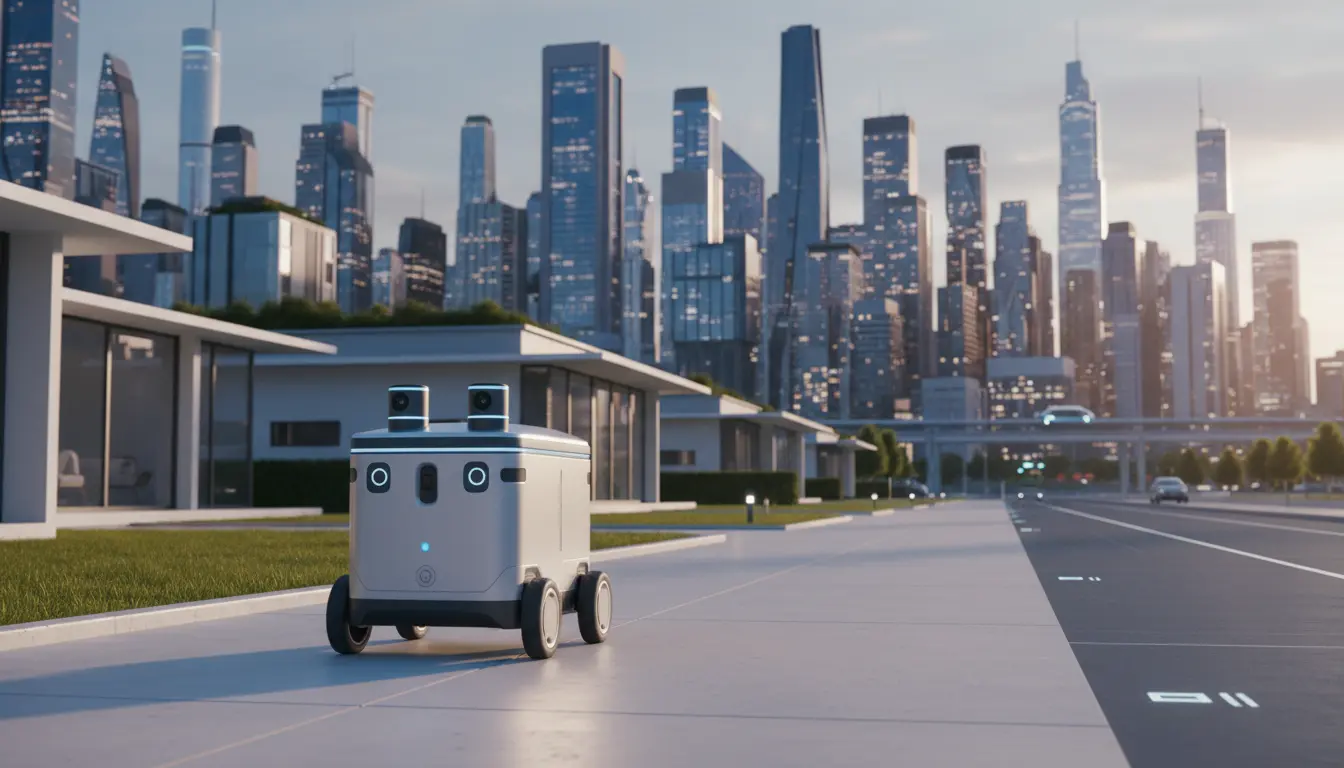
Early adopters partnered with grocery stores, local restaurants, and pharmacy chains. Residents used mobile apps to order food or small packages, while the robots navigated sidewalks using cameras, lidar, GPS, and AI‑powered mapping systems. Human teleoperators monitored fleets remotely and intervened only when needed.
Several factors supported this suburban growth:
- Cost pressure on last‑mile delivery: Human couriers are expensive, especially for low‑margin grocery or convenience items.
- Demand for same‑day and instant delivery: Consumers now expect goods to arrive within hours, not days.
- Pandemic‑driven contactless delivery: COVID‑19 accelerated both consumer acceptance and regulatory experimentation.
As reliability improved and customer satisfaction increased, operators began looking beyond suburbs toward more complex urban markets.
Why Megacities Are the Next Big Frontier
Megacities—densely populated urban areas with more than 10 million residents—represent enormous opportunity and complexity. The volume of e‑commerce orders, food deliveries, and urban logistics flows is far higher than in suburbs. At the same time, these cities face chronic traffic congestion, air pollution, and high delivery costs.
Autonomous delivery robots offer several advantages for megacities:
- Reduced congestion and emissions
Small, electric robots produce no tailpipe emissions and occupy far less road or sidewalk space than vans and motorbikes. At scale, they can reduce the number of short‑distance vehicle trips clogging city streets. - Lower last‑mile costs
By automating short deliveries and operating during off‑peak hours, robots can drive down cost per drop. This makes low‑value or low‑margin orders economically viable, enabling new services like ultra‑small basket grocery delivery. - 24/7 availability
Robots can operate late at night and early in the morning, supporting flexible delivery windows while respecting noise regulations more easily than traditional vehicles. - Better integration with public transit and micro‑hubs
In forward‑looking cities, delivery robots will connect neighborhood micro‑fulfillment centers, parcel lockers, and public transit hubs. This hub‑and‑spoke model can radically streamline urban logistics.
Technical Challenges in Dense Urban Environments
Moving from quiet suburbs to crowded megacities is not a simple software update. The operating environment is dramatically more complex:
- High pedestrian density: Sidewalks in cities like New York, Mumbai, or Istanbul are crowded and unpredictable. Robots must avoid people, pets, street vendors, and micro‑mobility devices.
- Complex road infrastructure: Multi‑lane roads, frequent intersections, bike lanes, and unmarked crosswalks create edge cases for navigation.
- Unstructured obstacles: Construction zones, parked scooters, street furniture, snow piles, and open manholes all demand robust perception and planning.
- Signal and GPS interference: Tall buildings can degrade GPS signals. Robots need sensor fusion (lidar, cameras, IMUs, high‑definition maps) to maintain accurate localization.
To succeed, modern robots rely on advanced AI models, real‑time mapping, and continuous learning from fleet data. Many systems combine on‑board computing with cloud‑based intelligence, enabling constant optimization of routes and behavior.
Regulatory and Social Acceptance Barriers
Regulation is one of the biggest determinants of where and how autonomous delivery robots can operate. U.S. states and cities pioneered sidewalk delivery legislation, but global megacities each have distinct frameworks.
Key regulatory challenges include:
- Sidewalk classification: Are robots considered pedestrians, vehicles, or something in between? This affects where they can travel and at what speed.
- Liability and safety standards: Cities demand clear accountability for collisions, property damage, or data breaches.
- Data privacy rules: Robots equipped with cameras raise concerns about surveillance and personal data collection in public spaces.
Social acceptance is equally critical. Residents may worry about:
- Robots “taking over” sidewalks
- Potential job displacement for couriers
- Accessibility challenges for people with disabilities
Pilot programs that emphasize transparency, community engagement, and accessible design have seen higher acceptance. For instance, including clear audio and visual signals on robots, designing them to yield aggressively to humans, and offering easy support channels can ease tensions.
Economic Impact and the Future of Urban Logistics
Autonomous delivery robots will not replace all human couriers, but they will restructure the last‑mile ecosystem. Several trends are emerging:
- Hybrid human‑robot fleets
Logistics providers will mix walking couriers, cyclists, cargo bikes, vans, and delivery robots. Robots handle short, repetitive, or off‑peak routes, while humans manage complex deliveries (heavy items, buildings with difficult access, or high‑touch services). - Growth of micro‑fulfillment and dark stores
To maximize robot efficiency, retailers are investing in localized inventory—small urban warehouses and dark convenience stores that reduce travel distance. - New business models
- Robot‑as‑a‑Service platforms leasing fleets to retailers and restaurants
- Subscription‑based delivery for neighborhoods or office districts
- Cross‑merchant platforms where a single robot network serves multiple brands
- Urban design implications
Cities will need to rethink curb space, sidewalk zoning, and loading areas. Designated robot lanes or docking bays may emerge in high‑use zones, similar to bike lanes today.
Over the next decade, we can expect autonomous delivery robots to become part of the everyday cityscape, especially in neighborhoods optimized for walkability and mixed‑use development.
Sustainability and Smart City Integration
Sustainability goals are a major driver behind the deployment of autonomous delivery robots. Many megacities have pledged aggressive reductions in greenhouse gas emissions and are restricting internal combustion vehicles in central zones.
Autonomous delivery robots support these goals by:
- Enabling zero‑emission last‑mile delivery when charged from renewable energy sources
- Reducing failed delivery attempts, since robots can wait longer and attempt multiple drop‑offs
- Supporting consolidated logistics, where multiple small orders share the same robot route
In smart city strategies, robots can also act as mobile sensing platforms. With proper privacy safeguards, they can collect anonymized data on road conditions, air quality, or infrastructure health. This information can feed into urban analytics and maintenance planning, making cities more resilient and responsive.
Preparing for a Robot‑Enhanced Delivery Ecosystem
Businesses and city leaders who want to stay ahead should take several steps:
- Retailers and restaurants should experiment with pilot programs, integrate robot‑friendly delivery options into their apps, and redesign packaging for small, compartmentalized robot storage.
- Logistics companies need to invest in fleet management platforms that can orchestrate both robotic and human resources, optimizing routes and capacity utilization.
- City planners and regulators should develop clear frameworks for sidewalk autonomy, accessibility protection, and transparent data usage, while inviting public feedback.
- Communities and consumers can shape how robots behave in their neighborhoods by participating in consultation processes and reporting issues during pilots.
Autonomous delivery robots are not a speculative future technology; they are already operating, learning, and scaling. The question is not whether they will serve global megacities, but how thoughtfully we will integrate them into the urban fabric.