
The Best Budget Cameras for Students: A Complete Guide to Quality on a Tight Budget
For students who want to get into photography, filmmaking, or content creation, choosing the right camera can feel overwhelming—especially on a tight budget. The good news is you don’t need to spend a fortune to capture sharp images, shoot stable videos, and learn the fundamentals of visual storytelling. Today’s entry-level and mid-tier cameras offer excellent image quality, intuitive controls, and features that help students grow creatively while keeping costs down. This guide breaks down what to look for, the best budget camera types, and specific models that deliver strong value for money.
What to Look for in a Student Budget Camera
- Image quality: Look for a larger sensor (APS-C or Micro Four Thirds) if possible. Even some compact cameras with 1-inch sensors deliver impressive results for the price.
- Video capabilities: Aim for at least 1080p, but 4K is increasingly common and helpful for future-proofing. Check for crop, frame rates (24/30/60 fps), and overheating behavior.
- Autofocus: Reliable continuous autofocus with face/eye detection is great for vlogging and fast-paced student projects.
- Stabilization: In-body image stabilization (IBIS) is a bonus. If the camera lacks IBIS, consider lenses with optical stabilization (OIS) or use a tripod/gimbal.
- Lens ecosystem and upgradability: Interchangeable-lens cameras grow with you. Affordable prime lenses (like 35mm or 50mm equivalents) can elevate your work.
- Portability and ergonomics: Light, compact bodies are easier to carry on campus. Good grip and clear menus help beginners.
- Battery life and connectivity: USB-C charging, Wi‑Fi/Bluetooth for quick transfers, and decent battery life matter for daily student use.
- Price and value: Factor in memory cards, an extra battery, and perhaps a mic or lightweight tripod.
Types of Budget Cameras for Students
- Compact cameras (point-and-shoot): Pocketable and simple. Great for casual shooting and travel. Some premium compacts stretch budgets but offer strong quality and 4K video.
- Mirrorless cameras: The sweet spot for many students—interchangeable lenses, modern autofocus, and solid video. APS-C and Micro Four Thirds models are especially budget-friendly.
- Entry-level DSLRs: Often discounted on the used market. Good ergonomics and battery life, though video and autofocus may lag behind modern mirrorless.
- Used and refurbished: A smart way to save. Buying from reputable sellers with return policies can unlock higher-tier features for less.
Top Budget Camera Picks for Students
- Sony ZV-E10 (APS-C mirrorless)
- Why it’s great: Designed for creators with excellent face/eye autofocus, strong 4K video, a flip-out screen, and great mic options. Interchangeable lenses mean room to grow.
- Considerations: No in-body stabilization; pair with stabilized lenses or a small gimbal for smoother footage.
- Canon EOS R50 (APS-C mirrorless)
- Why it’s great: Beginner-friendly menus, dependable Dual Pixel AF, crisp 4K oversampled video, and a compact body. Strong option for hybrid photo/video students.
- Considerations: RF-S lens ecosystem is growing; budget primes are improving but check local availability.
- Nikon Z30 (APS-C mirrorless)
- Why it’s great: Video-first mirrorless with a comfortable grip, solid 4K, clean audio options, and straightforward controls. Great entry into the Nikon Z ecosystem.
- Considerations: No EVF (electronic viewfinder), which might matter for bright outdoor shooting.
- Panasonic Lumix G100 or G85 (Micro Four Thirds)
- Why it’s great: Excellent handling, good 4K options, and affordable lenses in the Micro Four Thirds system. The G85 adds in-body stabilization and weather sealing at bargain used prices.
- Considerations: Smaller sensor than APS-C, but still very capable with the right lenses and lighting.
- Fujifilm X-T200 or X-S10 (APS-C mirrorless)
- Why it’s great: Great color science, user-friendly touch interface (X‑T200), and strong stabilization plus ergonomics on the X‑S10. Fujifilm primes are a joy for learning composition.
- Considerations: X‑S10 tends to be pricier; watch for used deals. X‑T200 is older but often very affordable.
Other
- Canon EOS M50 Mark II (APS-C mirrorless, legacy)
- Why it’s great: A favorite among student vloggers thanks to the flip screen, Dual Pixel AF for 1080p, and compact size. The used market offers excellent prices.
- Considerations: The EF‑M mount is phased out; fine if you’re on a tight budget and buying used, but less future-proof.
- Sony RX100 series (premium compact)
- Why it’s great: A pocket-sized camera with a 1-inch sensor and excellent image quality. Later models add 4K video and better AF, making them ideal for travel and campus life.
- Considerations: Non-interchangeable lens; later models can be pricey, but older versions are bargains.
- Entry DSLR bargains: Canon EOS Rebel T7/2000D or Nikon D3500
- Why they’re great: Often the lowest-cost path to good stills quality, optical viewfinders, and long battery life. Perfect for photography classes.
- Considerations: Video features and live-view AF trail mirrorless rivals. Best for photo-centric students.
Smart Ways to Save Money
- Buy used or manufacturer‑refurbished cameras: Save 20–40% with trusted sellers offering returns and warranty.
- Start with a kit lens, then add a fast prime (35mm/50mm f/1.8) for better low‑light and background blur.
- Accessorize smart: a budget shotgun mic, compact LED light, and sturdy tripod boost quality more than an early camera upgrade.
- Mind your storage: Record at sensible bitrates and keep spare SD cards. UHS‑I cards with V30 rating are cost-effective for 4K on many models.
- Leverage free software: For photo editing, consider free tools like Darktable or RawTherapee; for video, DaVinci Resolve (free version) or CapCut desktop are excellent starters.
Essential Features for Students in Different Scenarios
- For vlogging and presentations: Look for a flip screen, reliable eye AF, and microphone input. The Sony ZV‑E10, Canon R50, and Nikon Z30 are standouts.
- For photography courses: A clean EVF, manual controls, and RAW capability help you learn exposure and color grading. Fujifilm bodies are excellent for tactile learning.
- For filmmaking practice: 4K without heavy crop, decent dynamic range, flat or log profiles (even basic), and manageable rolling shutter. Panasonic G85/G100 and Sony/Fuji mid-budget options perform well.
- For travel and student events: Compact size, good battery life, and stabilization (lens OIS or IBIS). Consider RX100 series or Micro Four Thirds with a stabilized zoom.
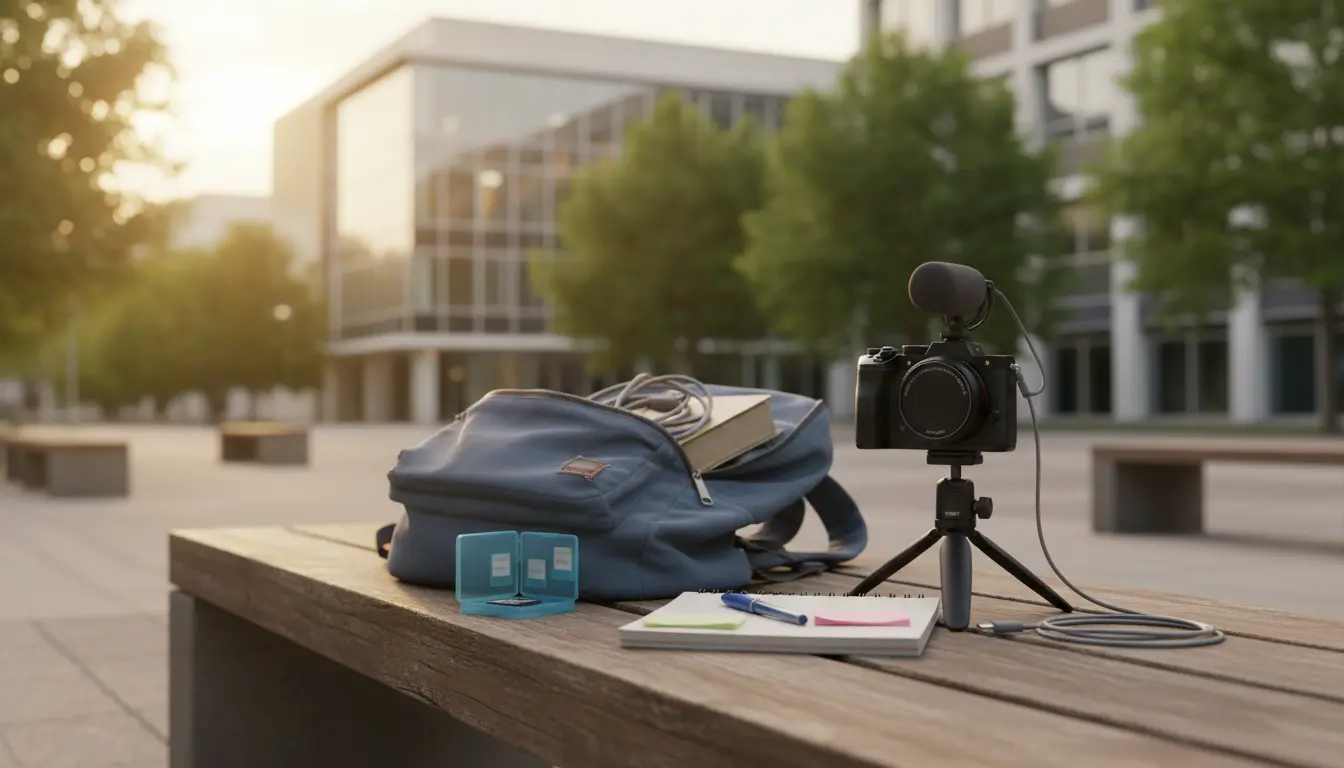
Practical Starter Kit Checklist
- Camera body with kit lens (e.g., 16–50mm or 15–45mm)
- One fast prime (e.g., 35mm or 50mm equiv., f/1.7–f/1.8)
- 2–3 SD cards (UHS‑I, V30)
- Extra battery and USB‑C charger (if supported)
- Compact tripod or tabletop stand
- External mic (3.5mm or digital shoe, depending on camera)
- Simple LED panel with soft diffuser
Final Buying Tips
- Try before you buy if possible: Handling can be the tie‑breaker. Menu logic, grip comfort, and button layout affect daily use.
- Consider the lens roadmap: Even if you buy only one lens now, your system choice should support your growth.
- Don’t chase specs you won’t use: A stable, simple setup you’ll carry every day beats complex features you rarely touch.
By focusing on sensor size, autofocus, stabilization options, and a healthy lens ecosystem, students can find cameras that balance affordability with performance. Whether you’re producing short films, building a photography portfolio, or growing a YouTube channel, today’s budget cameras can absolutely deliver professional-looking results and help you develop your creative style without breaking the bank.