
Best Fan-Cooled Active Video Cameras: A Practical Guide for Buyers and Professionals
Choosing the right video camera for demanding production environments requires careful attention to thermal management. Fan-cooled active video cameras combine robust sensor performance with engineered airflow to manage heat during long shoots, high frame-rate capture, and continuous operation. This guide explains how active cooling works, why it matters, what to look for, and practical buying and maintenance tips to get reliable, high-quality footage under heavy use.
What “fan-cooled” and “active cooling” mean for video cameras
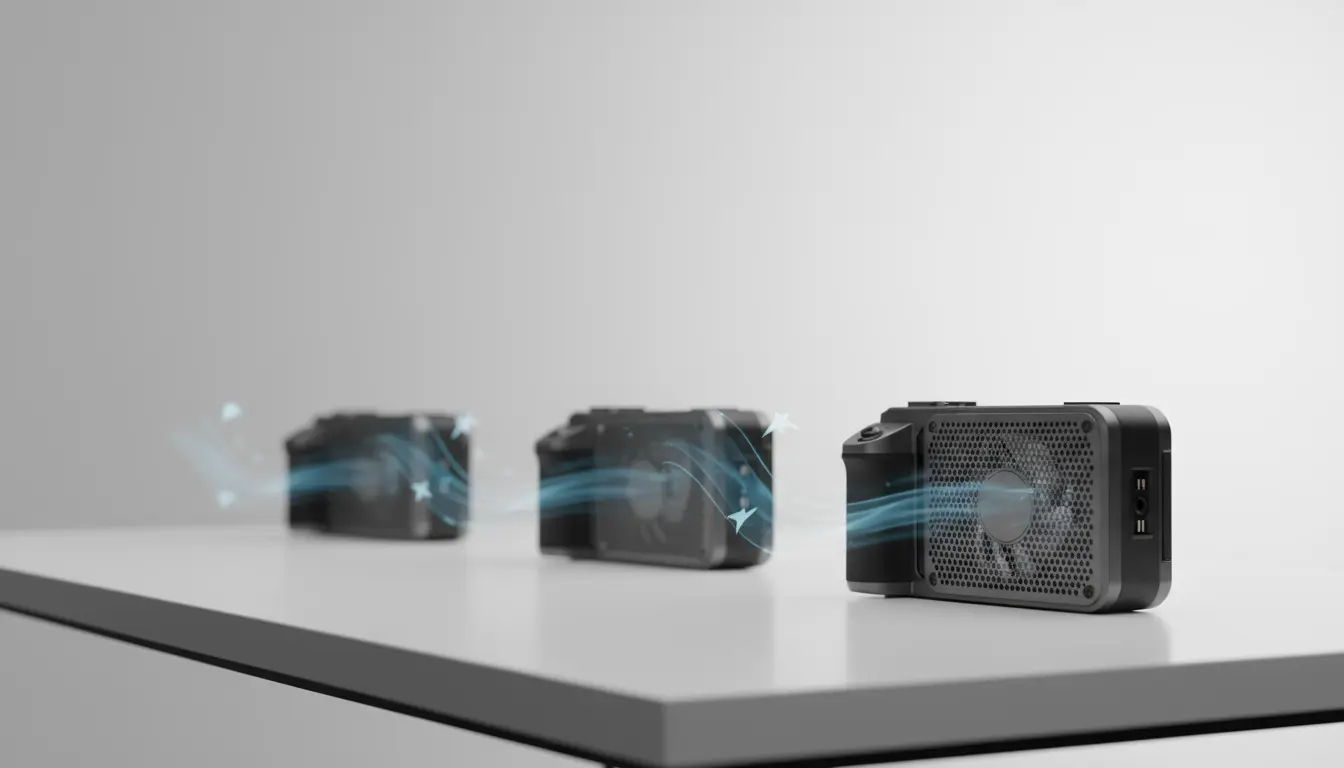
Active cooling uses powered components—usually fans, sometimes paired with heat pipes or small liquid loops—to move heat away from the sensor, image processor, and other heat-generating electronics. Fan-cooled cameras specifically rely on air movement: internal or ducted fans push ambient air over heat sinks and out of the chassis. Compared to passive cooling (heat sinks alone), active systems maintain lower component temperatures, enabling consistent performance for longer periods.
Why thermal control matters
Modern image sensors and processors generate significant heat when capturing high-resolution or high-frame-rate video. If heat is not removed efficiently, you can experience:
- Thermal noise and image degradation
- Automatic downclocking that reduces frame rates or dynamic range
- Unexpected shutdowns to prevent damage
- Shortened component lifespan
Active cooling helps preserve image fidelity, prevents throttling, and supports extended recording sessions—essential for live broadcasts, multi-hour timelapse, industrial monitoring, and high-speed cinematography.
Primary benefits of fan-cooled cameras
- Consistent performance during long takes or continuous recording
- Better high-frame-rate stability (reduced frame drops and overheating)
- Longer lifespan for internal components due to controlled temperatures
- Ability to operate in warmer ambient environments or enclosed housings (with proper ventilation)
- Often smaller, lighter heat-sink designs because fans increase cooling efficiency
Trade-offs and considerations
No solution is perfect. Fan-cooled systems introduce trade-offs:
- Noise: Fans add audible noise that can be problematic in quiet recording environments (dialogue, studio interviews). Look for low-RPM, smart-fan controllers, and variable-speed fans to minimize audible disturbance.
- Dust and moisture ingress: Fans draw air and particles into the chassis. Cameras intended for dusty or outdoor use should include filters, positive-pressure designs, or IP-rated protection.
- Power draw: Active cooling consumes power, which matters for battery-operated workflows. Check runtime impacts and battery capacity requirements.
- Mechanical complexity: Moving parts can fail. Choose cameras with reliable fan designs, replaceable modules, or good warranty/support.
Key specs and features to evaluate
When comparing fan-cooled active video cameras, examine these attributes closely:
- Thermal design power (TDP) and heat-sink architecture: Understand how heat is dissipated and whether the camera pairs fans with heat pipes or vapor chambers.
- Fan noise ratings and control: Look for dB(A) specs, low-noise modes, and automatic speed control that responds to thermal load.
- Dust filtration and sealing: Removable filters, IP ratings, and positive-pressure designs reduce contamination risk.
- Power management: Measure how much additional power the fans consume and whether the camera supports AC adapters, external battery solutions, or DC input ranges.
- Mounting and airflow: Consider where intakes and exhausts are located—avoid obstructing airflow when mounting the camera in cages or rigs.
- Operating temperature range: Manufacturer-specified limits tell you if the camera suits hot climates or enclosed enclosures.
- Continuous recording limits and thermal throttling behavior: Review real-world tests or manufacturer data showing how long the camera can record at specific resolutions and frame rates.
- Replaceable fans and maintenance access: Serviceability reduces downtime and extends product life.
Use cases where fan-cooled cameras shine
- Live sports and events where uninterrupted capture is critical
- Broadcast studios capturing long-form programming
- High-frame-rate production for slow-motion cinematography
- Industrial and scientific imaging requiring continuous monitoring
- Aerial and vehicle-mounted systems that operate in warm, confined spaces (with proper filtration and mounting)
- Thermal or infrared imaging devices that require active stabilization of detector temperature
Minimizing fan-related problems
- Choose models with smart thermal profiles that lower fan speeds during low load to reduce noise.
- Use external enclosures or acoustic baffles if noise is a concern—ensure airflow remains sufficient.
- Install quality dust filters and schedule regular cleaning intervals, especially for outdoor use.
- Monitor internal temperatures via the camera’s telemetry (if available) and set alerts for threshold breaches.
- Avoid blocking airflow ports with cages, mounts, or padding.
Buying tips and testing before purchase
- Request manufacturer thermal stress charts or independent lab tests showing continuous recording times and temperature curves.
- If possible, test in realistic conditions: simulate the expected resolution, frame rate, and ambient temperature to observe fan behavior and image stability.
- Compare noise measurements in dB(A) at typical fan RPMs to assess whether post-production or geophone mitigation will be needed.
- Verify the warranty and service options for fan replacement or repair—mechanical parts have different service lifecycles than electronics.
- Consider whether an accessory or enclosure will be necessary (filters, acoustic covers, external power solutions).
Maintenance checklist
- Clean or replace air filters monthly for heavy outdoor use; quarterly for indoor use.
- Inspect fan bearings and listen for unusual noise that signals wear.
- Keep firmware updated—manufacturers often improve fan curves and thermal management via updates.
- Maintain a log of continuous recording sessions and thermal load to track long-term trends and preempt failures.
Final thoughts
Fan-cooled active video cameras are specialized tools designed to deliver stable, high-performance capture in demanding situations. They offer real advantages over passive-cooled systems when long recording times, high frame rates, or operation in warm environments are required. The right choice balances thermal performance with noise, power, and environmental protection. By focusing on validated thermal data, serviceability, and real-world testing, you’ll identify a camera that reliably supports your production needs without unexpected down-throttling or premature component wear.
1) Sony FX6 (Sony Cinema Line FX6)
Why it fits: A professional cinema/broadcast camera with full-frame sensor and engineered thermal management (fan-assisted cooling) for reliable long takes and high-frame-rate work.
Pros:
- Full-frame sensor with excellent low-light performance and cinematic look
- Stable high-frame-rate recording and strong dynamic range
- Built for long-form shooting and field/broadcast ergonomics
- Active cooling reduces thermal throttling during extended recording
Cons:
- Higher price (professional segment)
- Fan noise may be noticeable in quiet studio dialogue—test placement and acoustic mitigation
Who it’s for: Broadcast teams, documentary crews, cinematographers and professionals who need long, uninterrupted recording sessions.
Buying considerations:
- Test fan noise in real-world conditions.
- Plan power solutions (AC, V-mount) because active cooling increases power draw.
- Check warranty and service options for fan/thermal components.
Approximate price: High-end professional camera range (verify current prices).
2) Blackmagic Pocket Cinema Camera 6K Pro (BMPCC 6K Pro)
Why it fits: Film-style image quality with a Super 35 sensor and active cooling; excellent value for independent filmmakers who need long-record stability and high-resolution capture.
Pros:
- 6K resolution with strong color science (Blackmagic RAW)
- Compact, relatively affordable for cinematic quality
- Fan-assisted cooling supports longer recording sessions than purely passive models
Cons:
- Fan may be audible in very quiet shoots—external audio or soundproofing may be needed
- Less native broadcast I/O compared with high-end broadcast cameras (may need adapters)
Who it’s for: Indie filmmakers, content creators, and small production teams seeking high image quality on a moderate budget.
Buying considerations:
- Check fan position and test noise with your microphones.
- Ensure you have fast storage (CFexpress/SSD) for high-bitrate recording.
- Verify battery/runtime impact when fans are active.
Approximate price: Mid-range cinema camera segment (verify current prices).