
Best Noise Cancelling Headphones for Ohio Public Transportation Commuters
Ohio commuters know that a trip can change quickly. The best noise cancelling headphones do not erase every sound, but they can make daily travel calmer, clearer, and more enjoyable. This guide explains how Ohio public transportation riders can choose headphones that fit real commuting habits rather than marketing promises.
Why Noise Control Matters on an Ohio Commute
Whether you ride a city bus, light rail service, or a regional train, repeated low-frequency noise can make podcasts hard to follow and music less satisfying. Active noise cancellation uses microphones and processing to reduce steady background sound, especially the hum of motors and rolling vehicles. Good passive noise isolation also matters. Well-shaped earcups or secure ear tips create a physical seal that reduces outside sound before electronics enter the picture.
For riders searching for commuter headphones, the aim is not complete silence. You still need awareness at platforms, crossings, and stops. A useful transparency mode lets outside sound pass through when you need to hear an announcement or speak to a driver. Switch back to ANC when you settle into your seat.


Choose Between Over-Ear Headphones and Earbuds
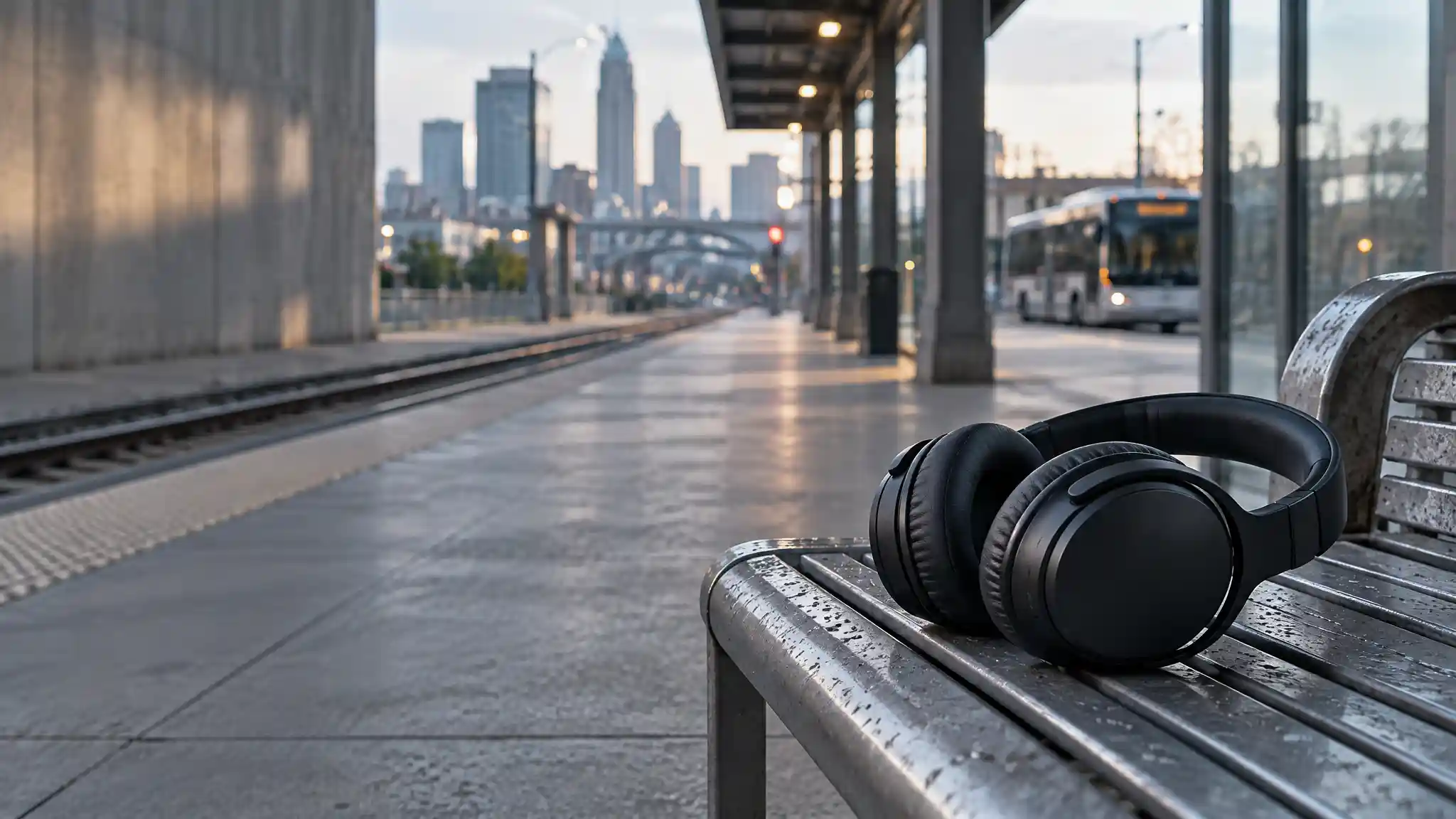
Over-ear headphones suit many riders because padded cups often provide a stronger seal and feel comfortable during longer trips. They also give you larger controls that you can find without looking at your phone. Look for a foldable design and a protective case if you carry a backpack. A lightweight frame helps prevent pressure during an extended commute.
Noise cancelling earbuds are easier to pocket and often work well for commuters who transfer between buses, walk to work, or do not want a larger item around their neck. Fit is decisive: an earbud with excellent specifications can disappoint if its tips do not seal properly. Try several included tip sizes. A stable fit improves bass, speech clarity, and noise reduction at the same time.
Evaluate Active Noise Cancellation Honestly
Strong active noise cancellation works best against predictable low sounds such as bus engines, ventilation systems, and tire noise. It is less effective against sudden voices, high-pitched brake sounds, or a nearby conversation. That is normal, not a defect. The best wireless headphones combine ANC with comfortable padding, sensible sound tuning, and reliable controls.
Before buying, check whether the headphone app offers adjustable ANC or an ambient sound mode. Adaptive noise cancellation can react to changing environments, but a simple manual control may feel more predictable. During the ride, avoid raising volume aggressively to overpower remaining noise. Effective ANC should help you listen at a more moderate level.
Battery Life and Connectivity for Daily Riders
Long battery life removes one small stress from a busy week. Consider your round-trip time, charging routine, and whether you use ANC every day. Over-ear models commonly last longer per charge, while earbuds rely on a charging case. Either format can work if you recharge consistently.
Bluetooth multipoint is valuable when you move between a work laptop and a phone. It can reduce repeated pairing steps and help you take a call without interrupting your routine.
Clear Calls, Weather Readiness, and Comfort
A commuting headset should handle more than music. If you answer calls while walking from a stop, seek microphones designed to reduce wind and background noise. No microphone can create studio-quality calls on a busy street, but a well-designed system can make your voice easier to understand.
Ohio weather can bring rain, snow, humidity, and fast temperature shifts. Earbuds with a water-resistance rating may better suit exposed walks, although a rating does not make every product waterproof. Over-ear models deserve extra care around moisture. Keep a small dry pouch in your bag and wipe the headphones after a wet commute.
Comfort remains personal. Glasses, hairstyles, ear shape, and sensitivity to clamping force can change your experience. Wear a candidate for at least twenty minutes when possible. Check for warm earcups, pressure points, and accidental touch gestures. A comfortable pair is the pair you will actually use consistently.
How to Shop Without Overpaying
Start with your non-negotiables: budget, fit, travel length, and preferred style. Then compare realistic features. Premium headphones may offer refined audio and stronger call performance, yet a mid-range model can be the smarter choice for a daily transit commute. Do not buy solely because a model claims to be the quietest.
Read current user feedback for durability and app support, but prioritize patterns over one extreme review. Check the seller’s return policy and test the headphones promptly in the environment that matters: your regular route. Listen to spoken audio, try a call, toggle transparency mode, and notice whether the headband stays comfortable.
A Smart Listening Routine for Public Transit
Use a moderate volume and pause audio before crossing streets or moving through unfamiliar stations. Activate transparency mode when an announcement, navigation cue, or conversation matters. Keep one ear free if that helps you stay aware in a particularly busy area. Store your headphones before rushing to board so they do not fall or snag.
For the most relaxed experience, download playlists or episodes before leaving home. Offline content prevents weak signal areas from interrupting playback and saves phone battery. Adjust your equalizer lightly; excessive bass can hide speech and encourage higher volume. With a thoughtful setup, commuter headphones become a practical travel tool, not just another gadget.
Final Recommendation
For riders who want a premium over-ear option, consider the Sony WH-1000XM6. Independent testing coverage highlights its combination of active and passive noise reduction, comfortable lightweight design, clear sound, and approximately 30 hours of battery life. Confirm the current price, delivery options, and return terms before ordering, because listings can change.
The right choice depends on how you travel. Prioritize fit, dependable noise control, transparency features, battery life, and responsible awareness. Those qualities will serve an Ohio commuter far better than a flashy specification list. Choose deliberately, protect your attention, and turn each ride into more productive personal time.