
Best Outdoor Projectors for Florida Terrace Movie Nights
Florida evenings create the perfect setting for relaxed terrace movie nights. Warm temperatures, open-air seating, and soft coastal breezes can turn an ordinary gathering into a memorable home cinema experience. However, selecting the best outdoor projectors for Florida terrace movie nights requires more than choosing the cheapest model with a large image size. Florida’s humidity, sudden rain showers, ambient lighting, and outdoor noise all affect picture quality and long-term projector performance.
A reliable outdoor movie projector should deliver a clear image after sunset, connect easily to streaming devices, and remain simple to move indoors when the weather changes. The right projector can transform a patio, terrace, poolside wall, or garden screen into a comfortable entertainment zone. Before purchasing, focus on brightness, resolution, portability, connectivity, sound quality, and sensible weather protection.
Why Florida Terrace Movie Nights Need the Right Projector
Florida offers long outdoor seasons, but its climate creates unique challenges for electronics. Humidity can affect lenses and vents, while afternoon storms may arrive with little warning. A projector does not need to sit outside permanently to work well outdoors. In fact, most homeowners get better results by using a portable unit that they set up shortly before the movie begins and store inside afterward.
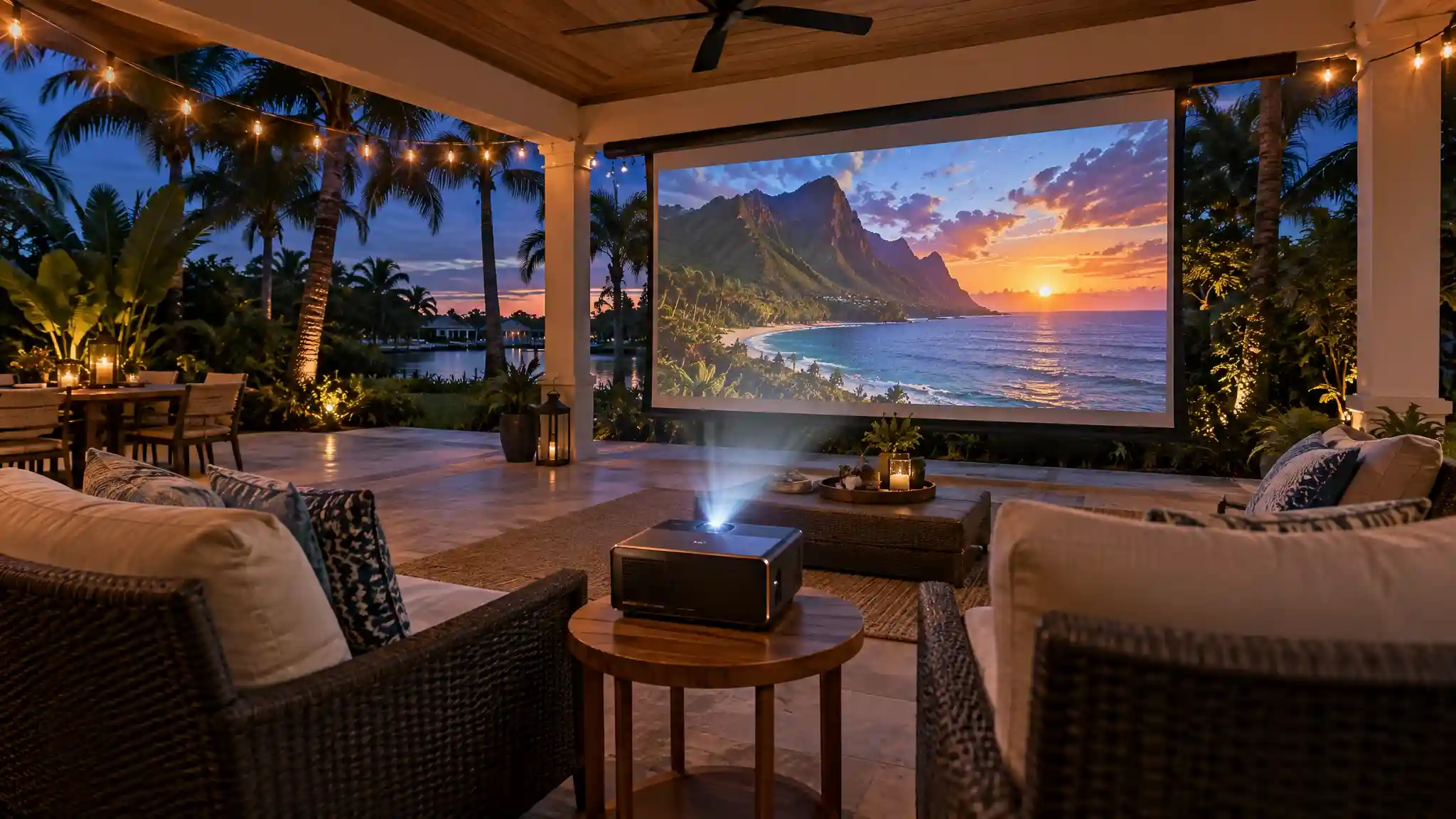
For a successful backyard cinema setup, choose a location with as little direct light as possible. A covered terrace, screened patio, or wall facing away from streetlights will improve contrast immediately. Even a bright projector cannot fully overcome strong sunlight or nearby landscape lighting. Plan movie nights for dusk or later, then reduce patio lighting once the film starts. This simple approach improves the viewing experience without forcing you to overspend on equipment.
Prioritize Brightness for Better Outdoor Viewing
Brightness is one of the most important features when comparing outdoor projector options. Look for ANSI lumens rather than vague marketing labels such as “LED lumens” or “lux lumens.” ANSI lumens provide a more useful reference point because they relate to standardized brightness measurement.
A high brightness projector helps viewers see a sharper, more colorful image when some ambient light remains on the terrace. For fully dark settings, moderate brightness can work well. If you expect to start movies around sunset or have decorative lighting nearby, consider a brighter model. The brighter the image, the more flexibility you have when setting up near pool lights, string lights, or neighboring homes.
Still, brightness alone does not guarantee excellent quality. A projector with balanced color, good contrast, and native Full HD resolution often creates a more enjoyable movie image than a poorly calibrated unit with inflated brightness claims. Read the manufacturer’s listed specifications carefully and avoid relying only on promotional descriptions.
Native 1080p Resolution Delivers a Strong Baseline
For most Florida terrace movie nights, native 1080p resolution provides an excellent balance between clarity, cost, and streaming compatibility. Full HD content looks detailed on screens or walls at common patio viewing distances. It also works well for movies, sports, family videos, and casual gaming.
Some projectors accept 4K input but display at a lower native resolution. This feature can still be useful, but it does not make the projector a true 4K model. If crisp image detail is your top priority and your budget allows it, native 4K may be worth considering. For many households, however, a well-reviewed 1080p portable projector for outdoors delivers more practical value.
Image size also matters. Bigger is not always better. Enlarging the picture too much can reduce brightness and make visual flaws more noticeable. Start with a screen size that fits your terrace and seating layout, then adjust the projector distance until the picture remains vivid and easy to watch.
Protect Your Projector From Florida Humidity and Rain
No standard projector should remain exposed to rain, dew, or heavy moisture. Even a product marketed as a weather resistant projector may only offer limited protection, so always check the actual manufacturer rating before placing it outdoors. A covered terrace helps, but it does not eliminate risks from wind-driven rain or nighttime condensation.
Keep the projector on a stable table, tripod, or shelf that sits above wet surfaces. Avoid placing it directly on the ground, near a pool edge, or under dripping rooflines. Use a covered outdoor power source and keep cables organized to reduce tripping hazards. After the event, allow the projector to cool down, then bring it indoors with its remote, power supply, and streaming accessories.
A breathable carrying case can help protect a projector during storage and transport. Do not seal a warm projector in an airtight container immediately after use. Let it cool first so trapped heat and moisture do not create avoidable problems.
Choose the Right Screen or Wall
A clean white wall can work surprisingly well for casual movie nights. However, a dedicated projector screen for patio viewing often improves brightness, color consistency, and sharpness. Portable screens are especially useful when your terrace wall has textured paint, windows, decorative features, or uneven coloring.
Select a screen size that matches the seating area. Guests should see the entire image comfortably without sitting too close. Position chairs so viewers face the screen directly, and leave a clear walkway behind the seating area. If wind is common, secure the screen with weights, stakes, or a sturdy frame designed for outdoor use.
Rear-projection screens can also work in some layouts, but they require enough space behind the screen for the projector. Front projection remains the easiest choice for most terraces because it allows flexible placement and quick setup.
Improve Sound for an Outdoor Home Theater
Built-in projector speakers can handle quiet viewing, but open-air spaces reduce audio clarity. Outdoor noise from fans, traffic, pools, neighbors, and insects can make dialogue difficult to hear. A compact Bluetooth speaker or portable soundbar can significantly improve the experience.
A complete outdoor home theater system does not need to be complicated. Connect the projector to a Bluetooth speaker, place the speaker near the audience, and test audio before guests arrive. Keep volume reasonable and respect local noise rules and nearby neighbors. Clear dialogue at a comfortable level feels better than excessive volume with distorted sound.
If your projector has Bluetooth output, confirm that it supports audio transmission and test for delay. Some wireless connections can create lip-sync issues. When that happens, an HDMI-connected speaker system or audio cable may offer a more reliable solution.
Smart Features and Flexible Connectivity Matter
A wireless outdoor projector can simplify terrace movie nights by supporting Wi-Fi, Bluetooth, screen mirroring, or built-in streaming apps. These features reduce cable clutter and allow quick access to popular entertainment platforms. However, built-in apps vary by model, region, and licensing support.
An HDMI port remains essential because it lets you connect a streaming stick, laptop, game console, or media player. USB ports can be useful for local files, while Bluetooth can connect speakers or headphones. Before buying, confirm that the projector supports the devices you plan to use rather than assuming every feature works with every streaming service.
For stable viewing, test your outdoor Wi-Fi signal before movie night. If the terrace sits far from the router, consider improving coverage or downloading permitted content in advance when available.
Create a Comfortable Florida Outdoor Entertainment Space
Great Florida backyard entertainment depends on atmosphere as much as hardware. Add comfortable chairs, outdoor cushions, insect control, blankets for cooler evenings, and a small snack table. Use low, indirect lighting behind the audience rather than bright lights near the screen. This keeps the terrace welcoming while preserving image contrast.
Set up early and test the projector, source device, Wi-Fi connection, focus, keystone adjustment, and audio before guests arrive. Use auto-focus and auto-keystone features as conveniences, but make manual refinements when needed. A properly aligned image looks more professional and reduces eye strain during a long film.
Final Buying Advice
The best outdoor projector for your Florida terrace is the one that matches your actual space and viewing habits. Prioritize native 1080p resolution, practical brightness, HDMI connectivity, dependable audio options, and a portable design that you can bring indoors after use. Avoid treating “outdoor” as a promise of permanent weather exposure. Instead, create a flexible setup that works beautifully on dry evenings and stores safely when the night ends.
For one current Amazon option, consider the Aurzen Roku TV D1R Smart Portable Outdoor Projector. Amazon lists it with Roku TV built in, native 1080p resolution, Wi‑Fi, Bluetooth, Dolby Audio, auto focus, and keystone correction—features that suit convenient terrace viewing. Review its current price, seller details, and delivery availability before purchasing through Amazon’s outdoor projector listings.