
Best Smart Home Water Leak Sensors for Florida Apartments
Water can become a costly apartment problem long before it becomes a visible disaster. In Florida, high humidity, frequent storms, aging plumbing, and busy rental lifestyles make early detection especially valuable. A smart water leak sensor gives residents and property managers a practical way to watch vulnerable areas, receive an alert quickly, and respond before a small drip damages flooring, cabinets, or a neighboring unit. This guide explains how to choose the best smart home water leak sensors for Florida apartments without overbuying features that an apartment does not need.
Why Florida Apartments Need Water Leak Protection
Apartment living creates a shared-risk environment. A leaking dishwasher hose or overflowing washing machine can affect the unit below, common areas, and personal belongings within a short time. Florida apartment water damage can also become harder to notice when residents travel, manage seasonal homes, or leave a unit vacant between tenants. A WiFi water leak detector provides remote monitoring, while a loud local alarm can warn anyone who is nearby.
Humidity matters, too. For renters, it offers peace of mind without permanent alterations. Florida’s changing weather also makes consistent monitoring useful. A brief storm-related power interruption, an air-conditioning condensate issue, or a leak that begins while residents are at work can turn a routine maintenance concern into a time-sensitive notification and prevent unnecessary confusion for everyone.
The Most Important Features to Compare
Start with connectivity. A WiFi leak sensor connects directly to a compatible wireless network and often sends smartphone alerts through its app. However, WiFi strength near utility closets, garages, and concrete walls deserves a quick test before purchase.
Some systems use Zigbee or another hub-based connection. A hub can help when several smart home sensors operate together, but it adds hardware and setup.
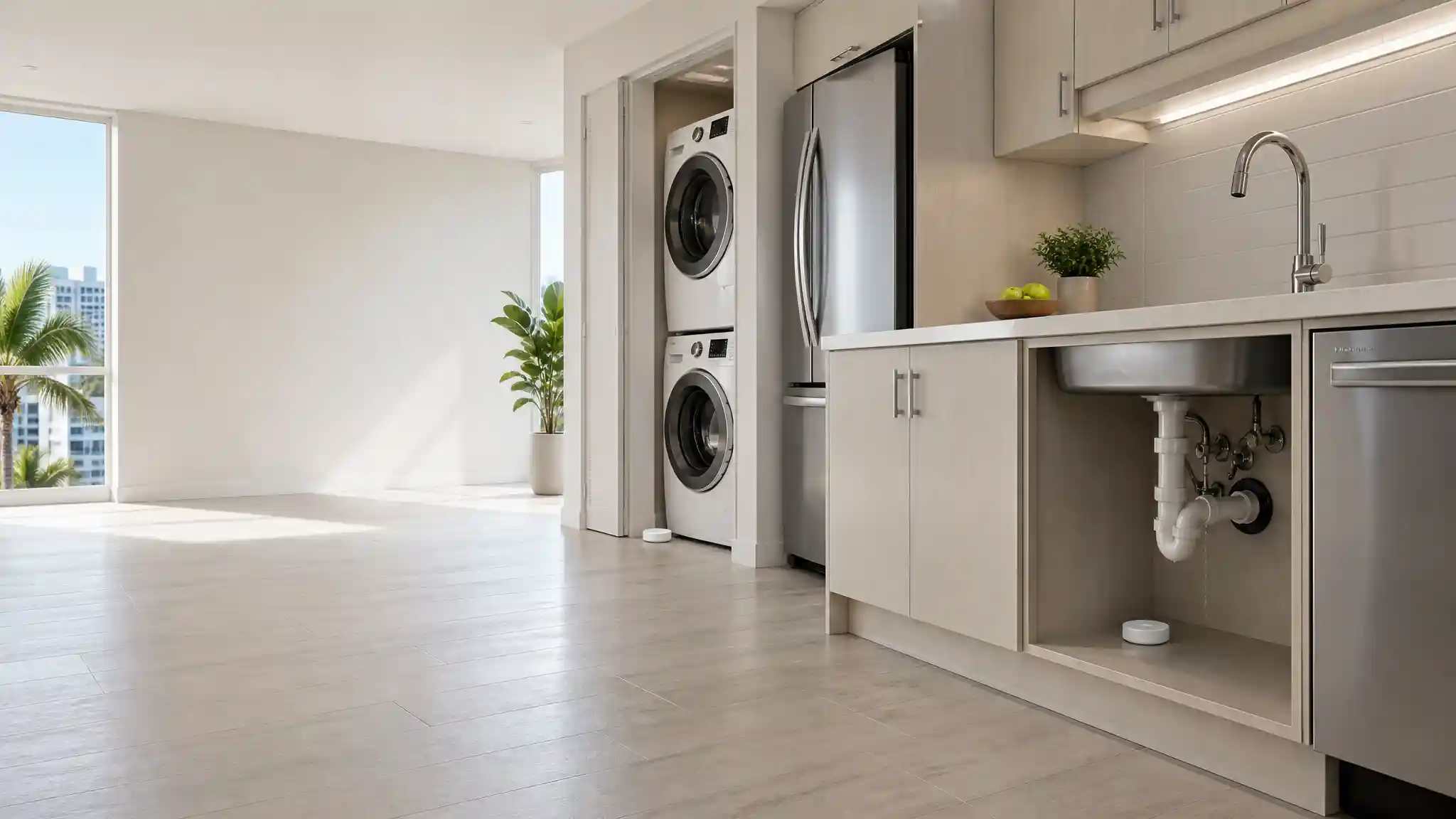
Look next at sensing design. Compact puck-style sensors work well under sinks, behind toilets, beside water heaters, and near washing machines. A water sensor with a wired probe reaches into tight spaces and detects water where a larger device cannot sit. For wider coverage, consider a leak detection cable around an appliance pan or along a water line.
Reliable notifications are essential. The strongest options combine app alerts, a local siren, and low-battery notifications. A flood sensor should tell you which sensor detected moisture if you install more than one.
Best Placement for Apartment Leak Sensors
Place sensors where water starts, pools, or travels unnoticed. The kitchen sink cabinet is a priority because supply valves, drain connections, filters, and garbage disposals can leak slowly. Add a sensor behind the refrigerator if it has an ice maker or water dispenser. In the bathroom, position a device near the toilet supply line, beneath the vanity, and beside the tub where a recurring overflow risk exists.
Laundry areas deserve special attention. Set a smart flood detector behind or beside the washer, not where normal cleaning will splash it. If your unit has a water heater, place a sensor in the drain pan or immediately beside it. Always follow the manufacturer’s placement instructions and check your lease before adding automatic shutoff equipment.
When an Automatic Water Shutoff Valve Makes Sense
A leak alarm identifies water; an automatic water shutoff valve can limit it. This upgrade closes the main supply after a compatible sensor reports a leak. Yet installation may require access to the main shutoff, approval from the association or landlord, and a licensed professional.
How to Choose the Right System
Match the system to your actual risk points. A small studio may only need two sensors: one under the kitchen sink and one near the bathroom plumbing. Count each location before comparing multi-packs; this prevents a common mistake of buying one excellent device for several separate risks.
Then evaluate power and upkeep. Battery-powered devices remain useful during ordinary power interruptions, but they still need scheduled battery checks. Write the replacement date in your calendar and test the sensor after installation. If a device relies on a hub or cloud service, confirm that alerts work on your phone while you are away from the apartment.
Finally, prioritize usability over marketing claims. A simple app, clear notifications, sensible placement options, and a dependable audible alarm often matter more than a long feature list. Look for water leak sensors that work with your preferred voice assistant only if that integration will genuinely help your household.
A Practical Florida Apartment Checklist
Before ordering, test WiFi coverage near every planned location. Identify your unit’s water shutoff and learn how to operate it. Save the building maintenance contact and your insurer’s claim information in the same phone folder as your sensor app. During severe weather or travel, check that the system remains online.
No sensor replaces regular inspections. Check appliance hoses, sink connections, toilet supply lines, and caulk around showers. Report persistent moisture promptly, particularly in a rental unit. When you pair routine maintenance with smart leak detection, you improve your chances of catching a problem while it is still manageable.
Conclusion
The best smart water leak sensor for a Florida apartment is the one that fits the unit’s risk areas, sends alerts you will notice, and stays easy to maintain. Start with high-risk points, use remote water monitoring where travel or vacancy matters, and add an automatic shutoff only when you control the plumbing and installation. With thoughtful placement and dependable alerts, residents can act sooner and reduce the disruption that a small leak can cause.
Amazon.com Product Recommendation
Consider the TP-Link Tapo T300 Smart Water Leak Sensor. It is a sensible option to evaluate on Amazon.com for apartment use because it offers leak detection, app notifications, an audible alarm, and support for compatible smart-home setups. Confirm current compatibility, required accessories, shipping, price, and listing details on Amazon.com before purchasing.