
The Best Outdoor Speakers for Arizona Patios and Pools: Complete Desert Audio Guide
Transforming a desert backyard into an entertaining personal resort requires deliberate acoustic planning and exceptionally durable hardware. The Sonoran Desert introduces harsh environmental realities, including intense solar radiation, triple-digit summer heatwaves, haboob dust storms, and violent monsoon downpours. Conventional residential audio hardware deteriorates quickly in this punishing climate because rapid temperature swings crack housings and destroy sensitive voice coils. Selecting the best outdoor speakers for Arizona patios and pools requires investing in resilient components that resist ultraviolet degradation while delivering crisp, dynamic sound across broad open-air spaces. Homeowners must deploy specialized equipment that blends harmoniously into native xeriscaping while effortlessly cutting through environmental ambient noise like splashing pool water, waterfall features, and air conditioning units.
Surviving Extreme Desert Weather with Rugged Enclosures
Arizona outdoor living spaces demand industrial-grade weatherproof outdoor speakers engineered to handle severe thermal expansion and constant sun exposure. Inferior plastics quickly dry out, fade, and fracture when exposed to relentless desert UV rays. High-performance exterior sound gear incorporates heavy-gauge UV-resistant composite housings, powder-coated aluminum grilles, and marine-grade stainless steel mounting brackets that resist oxidation and structural breakdown over extended operational periods.
Ingress protection standards quantify how effectively an audio housing excludes microscopic desert sand and driving precipitation. Homeowners should select equipment with certified IP65 or IP66 ingress protection ratings to prevent fine silica particles and monsoon moisture from breaching internal electrical circuitry. Hermetically sealed acoustic chambers keep desert insects, scorpions, and spiders from nesting within driver cavities. Furthermore, premium speaker drivers utilize mineral-filled polypropylene cones and pliable Santoprene surrounds that preserve structural flexibility without rotting during dry, scorching summers. Choosing robust physical engineering ensures that outdoor entertainment systems function flawlessly year after year without costly component failures or unexpected sound distortion.

Overcoming Acoustic Dispersion Around Swimming Pools and Verandas
Audio dynamics shift dramatically when moving from an enclosed family room into an expansive open-air backyard. Without reflective walls and ceilings to contain acoustic energy, low-frequency sound waves disperse rapidly into the atmosphere. Running pool pumps, bubbling water spillways, and lively social gatherings generate competing acoustic noise floors that easily mask subtle musical nuances and vocal clarity across large desert properties.
To resolve these acoustic hurdles, homeowners achieve superior results by installing a distributed network of multiple smaller speakers rather than driving a pair of traditional speakers at uncomfortably high volumes. Distributing balanced acoustic sources across your pool perimeter eliminates harsh sound hotspots near patios while banishing weak audio dead zones near sun loungers. Integrating dedicated in-ground subwoofers with your satellite arrays produces deep, authoritative low frequencies that anchor your soundstage without disturbing nearby neighbors. In-ground subwoofers bury their large sub-bass chambers safely beneath desert soil or gravel, leaving only a low-profile mushroom canopy exposed to vent rich, omnidirectional bass evenly across the landscape.
Desert Landscape Integration and Visual Discretion
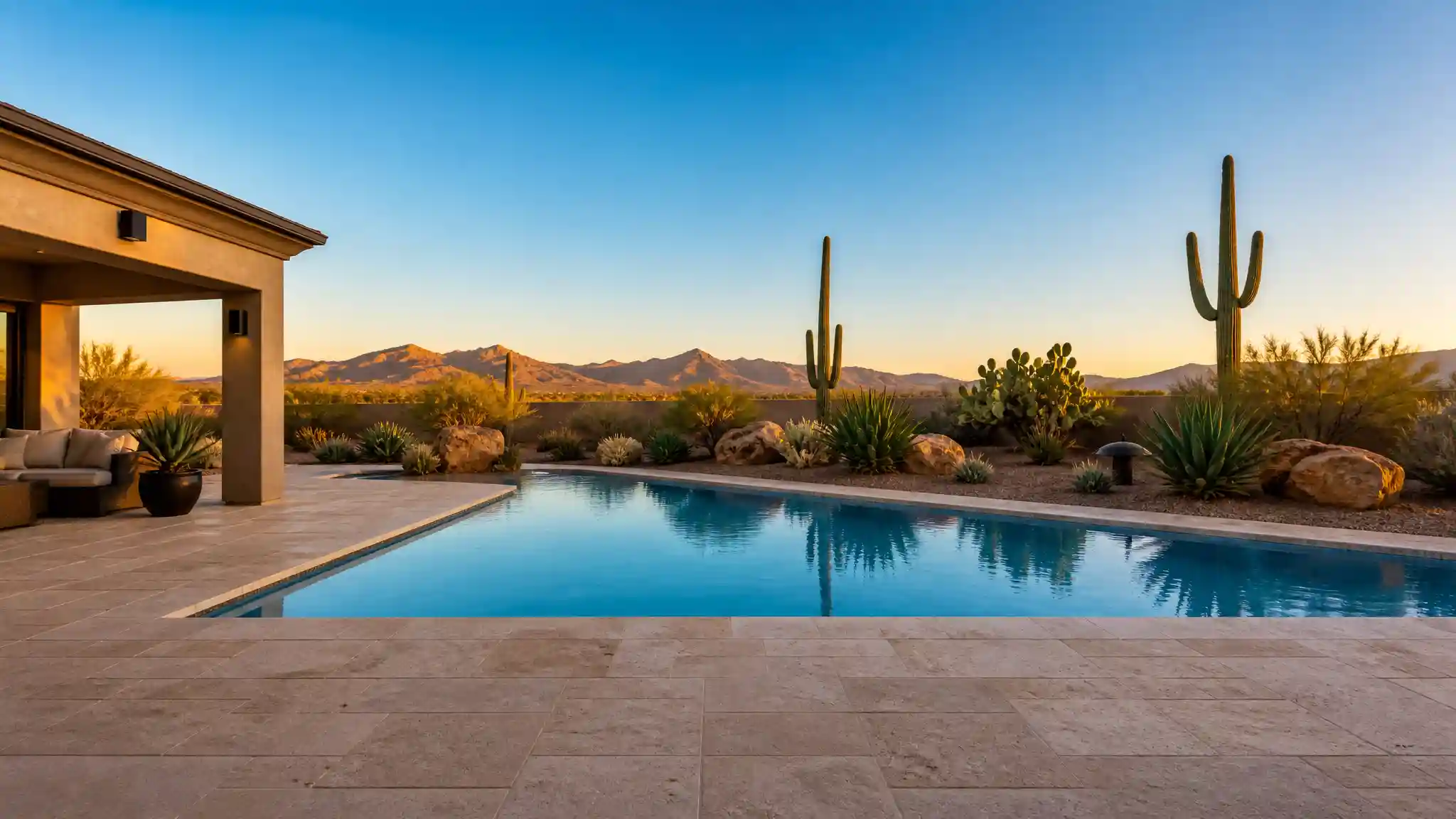
Contemporary outdoor architectural design prioritizes unobtrusive sound reproduction that elevates property appeal without compromising visual aesthetics. Arizona yards typically showcase elegant travertine hardscaping, decomposed granite groundcover, decorative boulders, and architectural succulents. Bulky rectangular cabinets mount awkwardly in these environments, creating unsightly distractions against minimalist desert scenery.
Modern landscape audio systems solve this aesthetic challenge through sleek, miniature satellite speakers mounted on heavy-duty ground stakes. Installers tuck these compact bronze or dark green units discreetly beneath agave leaves, flowering shrubs, or landscape uplighting fixtures. Realistic rock speakers provide another brilliant design alternative by concealing high-output drivers inside authentic faux-stone fiberglass enclosures. Manufacturers texture these resin cabinets to replicate natural granite, sandstone, and river rock, allowing them to integrate naturally beside pool coping, flagstone verandas, and desert rockeries. For covered verandas and stucco overhangs, low-profile wall-mounted patio speakers deliver focused musical projection across outdoor kitchens and shaded dining areas.
Hardwired Architecture Versus Wireless Connectivity in High Heat
Choosing between hardwired audio distribution and wireless streaming connections requires evaluating property layout, audio fidelity, and thermal reliability. While portable Bluetooth patio speakers provide swift ad-hoc functionality for small covered balconies, intense ambient heat rapidly degrades internal lithium-ion batteries and triggers thermal shutdown circuits during hot afternoons. Consequently, permanently installed wired systems represent the gold standard for luxury Arizona properties.
Direct-burial speaker wire connects distributed landscape arrays back to high-current multi-channel power amplifiers housed safely inside climate-controlled equipment closets or garages. Enclosing wiring within schedule-40 PVC conduits protects sensitive lines from digging tools, ground shifting, and gnawing desert rodents. Modern multi-zone streaming amplifiers empower homeowners to manage audio playback across distinct areas—such as the pool deck, covered dining pavilion, and outdoor fire pit—simultaneously or independently through intuitive smartphone applications and smart home integration systems.
Strategic Speaker Placement for Optimal Sound Coverage
Proper speaker positioning maximizes clarity while maintaining respectful acoustic boundaries with adjacent neighbors. Position wall-mounted speakers underneath shaded patio eaves to shield delicate driver assemblies from direct afternoon solar exposure, substantially prolonging equipment life. Angling speakers downward toward target seating arrangements directs high frequencies straight to listeners while containing stray acoustic reflections within your designated leisure zone.
Along swimming pool perimeters, space landscape satellite units approximately eight to twelve feet apart around garden edges. Aim the acoustic drivers inward toward the pool water rather than outward toward perimeter fence lines. This inward orientation generates an immersive acoustic sweet spot for swimmers and sunbathers while preventing unwanted sound leakage over property borders.
Recommended Product: Klipsch AWR-650-SM All-Weather Rock Speaker
The Klipsch AWR-650-SM All-Weather Rock Speaker represents an exceptional acoustic solution available on Amazon.com for desert pool decks and verandas. This rock speaker features a durable weather-resistant fiberglass composite housing that mimics natural granite or sandstone, withstanding scorching Southwestern heat, sudden torrential downpours, and abrasive dust storms. Internally, a dual voice coil 6.5-inch polymer woofer pairs with dual 0.75-inch dome tweeters to deliver rich stereo audio from a single discreet enclosure or blend seamlessly into multi-speaker configurations across spacious desert backyards.