
Best Portable Power Stations for Ice Fishing in Minnesota
Minnesota ice fishing is not a casual outdoor activity. Anglers often spend long hours on frozen lakes, operate electronics in subzero weather, and rely on reliable power to stay comfortable, safe, and productive. A portable power station can keep a fish finder, sonar unit, LED shelter lights, phone, camera, heater fan, and other important gear operating when shore power is not available.
However, not every battery generator performs well in a Minnesota winter. Cold temperatures reduce battery efficiency, shorten available runtime, and can make charging unsafe for certain battery types. The best portable power station for ice fishing must balance capacity, portability, output options, battery chemistry, and cold-weather reliability.
This guide explains what Minnesota anglers should look for before buying a power station for an ice house, portable shelter, or day trip on the ice.

Why Minnesota Ice Anglers Need a Portable Power Station
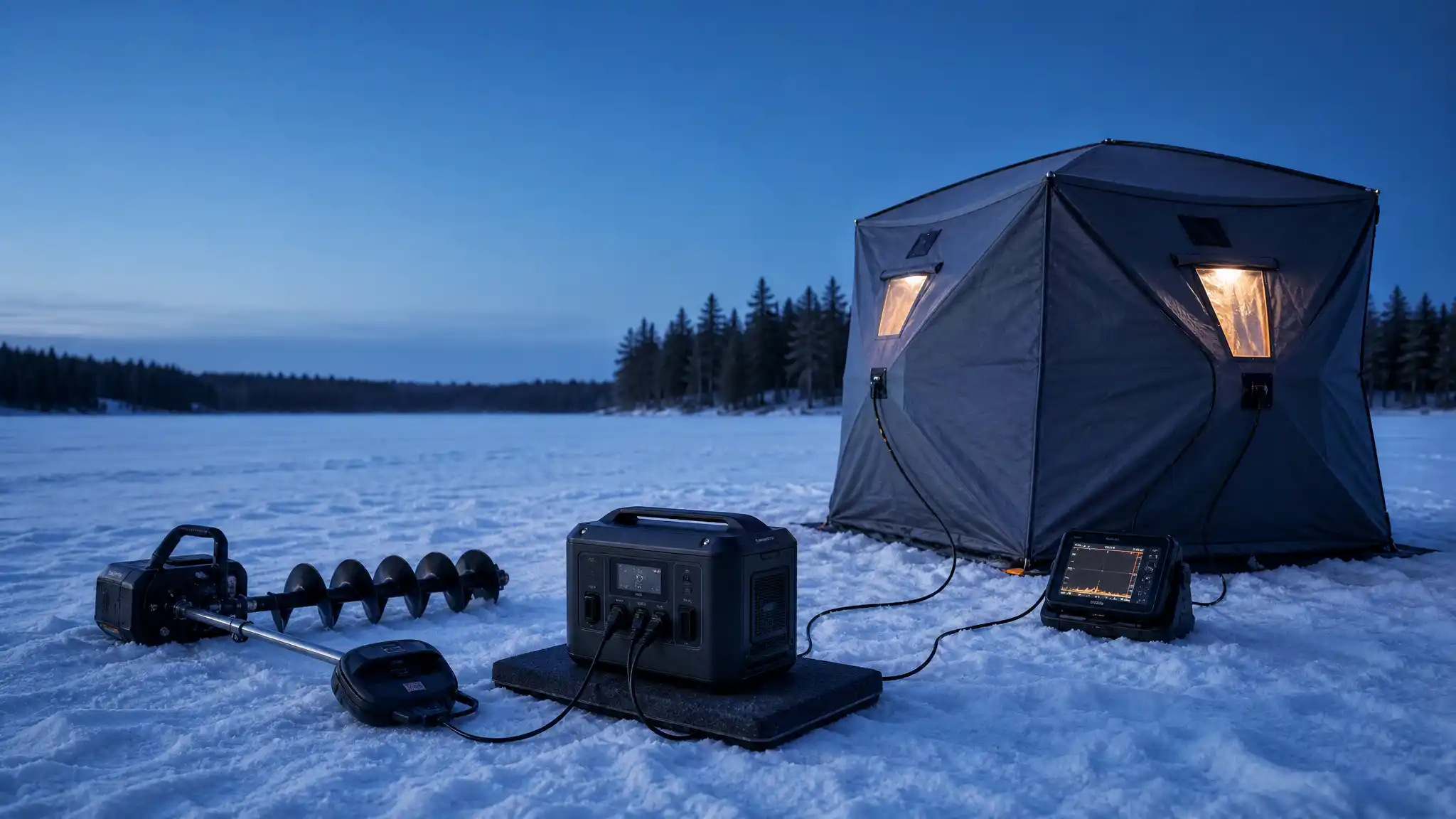
A frozen lake creates a unique power challenge. You may park far from an electrical outlet, move between fishing spots, or spend an entire weekend in a wheelhouse. Modern ice fishing also depends on electronics more than ever. A quality portable power station for ice fishing lets you run the gear that improves your fishing experience without relying on a noisy gas generator.
For example, anglers may use portable power for:
- Fish finders and flasher units
- Live sonar systems
- Underwater fishing cameras
- LED ice shelter lighting
- Smartphones, GPS units, and handheld radios
- GoPro cameras and tablets
- Small fans or low-watt heating accessories
- Battery chargers for rods, reels, and electronics
A dependable ice fishing battery pack also gives you a safety advantage. It can keep a phone charged for navigation, emergency communication, and weather updates. On remote Minnesota lakes, that extra reserve power can matter.
What Makes a Power Station Suitable for Cold Weather?
Cold weather changes how batteries perform. A power station that works perfectly during summer camping may lose capacity quickly on the ice. That does not always mean the product is defective; it means lithium batteries react differently in freezing conditions.
The best cold weather power station should offer a battery management system, durable housing, multiple charging ports, and clear operating-temperature guidance from the manufacturer. Look for a model that lets you discharge power in cold conditions, but remember that charging lithium batteries below freezing can damage many battery cells unless the unit supports low-temperature charging protection or internal heating.
For Minnesota ice fishing, consider keeping the power station inside an insulated sled bag, heated shelter, or battery box. You do not need to overheat it. You simply want to reduce direct exposure to wind and extreme cold.
A practical setup often includes a LiFePO4 power station, because lithium iron phosphate batteries usually provide long cycle life and stable power output. Still, always check the manufacturer’s stated temperature limits. Battery chemistry alone does not guarantee winter performance.
Choose the Right Capacity for Your Fishing Style
Power station capacity is measured in watt-hours, usually written as Wh. The more watt-hours you have, the longer the station can run your devices. But bigger is not automatically better. A high-capacity unit can become heavy, expensive, and inconvenient when you pull a sled across snow.
For a short day trip, many anglers only need enough power for a sonar unit, phone charging, and LED lights. A compact 12V portable power supply may be ideal. For overnight ice fishing, multi-day trips, or a larger shelter, choose a more substantial unit with enough stored energy for several devices.
Use this simple estimate:Estimated Runtime (hours)=Device Wattage (W)Power Station Capacity (Wh)×0.85
The 0.85 factor accounts for normal energy losses during conversion and use.
For example, if you have a 500Wh battery generator and run a 25W device:Runtime=25500×0.85=17 hours approximately
Actual runtime varies based on battery temperature, device behavior, cable losses, and whether you use AC outlets or direct 12V DC power.
Small Capacity: 200Wh to 300Wh
A small power station works well for mobile anglers who walk onto the ice or use a lightweight sled. It can handle phone charging, a compact fish finder power source, a few LED lights, and small USB accessories.
This range suits anglers who prioritize low weight and simple day-trip power. It may not support multiple high-draw electronics for a full weekend.
Mid-Range Capacity: 500Wh to 800Wh
This is often the sweet spot for a serious Minnesota ice angler. A 500Wh to 800Wh portable solar generator can power multiple accessories, recharge devices, and provide a useful emergency reserve. It works especially well for portable shelters, hub-style tents, and anglers who run sonar, cameras, lighting, and phones.
Large Capacity: 1,000Wh and Above
A larger battery generator for ice fishing makes sense for permanent fish houses, wheelhouses, and overnight stays. It can support more gear and longer runtimes, but it may be too bulky for anglers who move frequently.
Before choosing a high-capacity model, check its weight, handle design, charging options, and output rating. A large battery is only useful if you can transport it safely across snow and ice.
Prioritize 12V DC Outputs for Fishing Electronics
Many fishing electronics run most efficiently from 12V DC power. If you use a fish finder, live sonar, shuttle, or underwater camera, direct DC output can reduce unnecessary conversion losses.
AC outlets convert stored battery power into household-style electricity, but that conversion wastes some energy. When possible, connect compatible electronics through a regulated 12V outlet, USB-C port, Anderson port, or another appropriate DC connection.
A 12V battery box for ice fishing can also be an excellent alternative for anglers who primarily run DC equipment. It may weigh less than a full power station and can provide focused power for a sonar unit, LED lights, and charging ports. Make sure every connection is fused correctly and protected from moisture.
Look for the Right Ports and Output Power
The best portable power station should fit your actual gear list. Do not buy a unit solely because it has a large battery. Review the ports first.
Useful features include:
- 12V car-style outlet for compatible fishing electronics
- USB-A ports for standard phone and accessory charging
- USB-C PD ports for newer phones, tablets, and laptops
- AC outlets for chargers and small appliances
- Anderson connectors for higher-current DC accessories
- Wireless charging pads, if you value convenience
- Built-in LED light for simple emergency use
You should also check the AC inverter rating. If you plan to use an appliance that draws 300W, select a unit with an output rating comfortably above 300W. Avoid assuming that a high battery capacity automatically means high AC output.
For most ice shelter setups, an efficient portable power supply for fish finders matters more than a large AC inverter. Buy according to your real equipment, not an exaggerated “everything at once” scenario.
Lithium Iron Phosphate Is a Strong Option for Ice Fishing
A LiFePO4 battery for ice fishing offers several advantages over traditional lead-acid batteries. It generally weighs less, lasts through more charge cycles, and maintains a more consistent voltage curve. That stable voltage helps sensitive electronics operate more reliably.
Lead-acid batteries can still work, especially in a budget ice fishing setup, but they are heavy and less convenient to transport. They also lose usable capacity more noticeably in cold weather.
LiFePO4 units are not invincible. Keep them dry, avoid physical damage, and follow the manufacturer’s low-temperature charging instructions. If your fishing trip involves severe cold, charge the power station indoors before leaving and avoid attempting to recharge it outside unless it is designed for that temperature.
Portability Matters on the Ice
Minnesota anglers often transport gear by sled, ATV, snowmobile, truck, or on foot. The ideal portable battery generator should have a sturdy handle, compact footprint, and secure outer casing.
Consider these questions before purchase:
- Can you lift it into a sled without help?
- Does it fit inside your shelter or wheelhouse storage area?
- Can you protect it from slush and blowing snow?
- Does it include a reliable display showing battery percentage and output?
- Can you operate the buttons while wearing gloves?
A rugged case is valuable, but waterproof claims deserve careful reading. Most portable power stations are not meant to sit directly in snow, slush, or standing water. Place the unit on a dry platform, in an insulated tote, or inside a protected compartment.
Solar Charging Can Help, but Plan Realistically
A solar generator for ice fishing sounds ideal, but Minnesota winter sunlight can be inconsistent. Short daylight hours, cloud cover, low solar angle, snow, and panel shading can limit charging speed. Solar works best as a supplemental option rather than your only plan.
If you fish for several days, bring a compatible solar panel, but start with a fully charged power station. Position the panel toward direct sunlight and clear snow from its surface. You can also recharge from a vehicle while driving between locations if the station supports vehicle charging.
Solar charging becomes more valuable in late winter or during longer backcountry-style trips. For a single day of ice fishing, a fully charged battery and careful power management often provide more dependable results.
How to Extend Runtime During an Ice Fishing Trip
You can get more value from any off-grid power station by using energy wisely.
First, choose LED lights rather than high-watt incandescent or halogen lighting. LEDs use very little power and work well in a shelter. Second, lower screen brightness on fish finders, cameras, and tablets when visibility allows. Third, charge devices before leaving home instead of using your power station for every initial charge.
You can also separate essential gear from convenience gear. Keep sonar, communications, navigation, and lighting as your priority loads. Use nonessential accessories only when battery capacity allows.
Insulation also helps. Store the station in a dry, insulated area rather than leaving it exposed near an open shelter door. Do not block ventilation openings, especially if the unit runs an inverter or has built-in cooling fans.
Final Buying Advice for Minnesota Anglers
The best power station for Minnesota ice fishing is not always the largest model. Choose a unit that matches your trip duration, electronics, transport method, and expected weather. A lightweight 12V system may be perfect for a mobile angler. A 500Wh to 800Wh station can serve most portable shelter users. A larger unit better suits wheelhouses and extended overnight fishing.
Focus on cold-weather operating guidance, LiFePO4 battery technology, direct DC outputs, protected storage, and realistic watt-hour needs. A well-chosen ice fishing power station keeps your electronics running, helps you stay connected, and makes long days on the frozen lake more comfortable.
Top Recommendation: Jackery Portable Power Station Explorer 500
Why it’s best for Ice Fishing:
Pro Tip: Keep the unit on a piece of foam or inside an insulated bag to maintain its temperature and maximize battery life during long outings on the frozen lake.
Cold-Weather Reliability: It features a high-quality Battery Management System (BMS) that stabilizes output even in freezing temperatures, protecting your sensitive sonar and fish finders.
Perfect Portability: Weighing only 13.3 lbs, it is easy to transport across the ice in a sled or by hand.
Efficiency: The 518Wh capacity provides plenty of power for 12V electronics (using the DC outlet for maximum efficiency), LED shelter lights, and multiple phone charges.