
Best Portable Power Stations for Remote Research and Expeditions
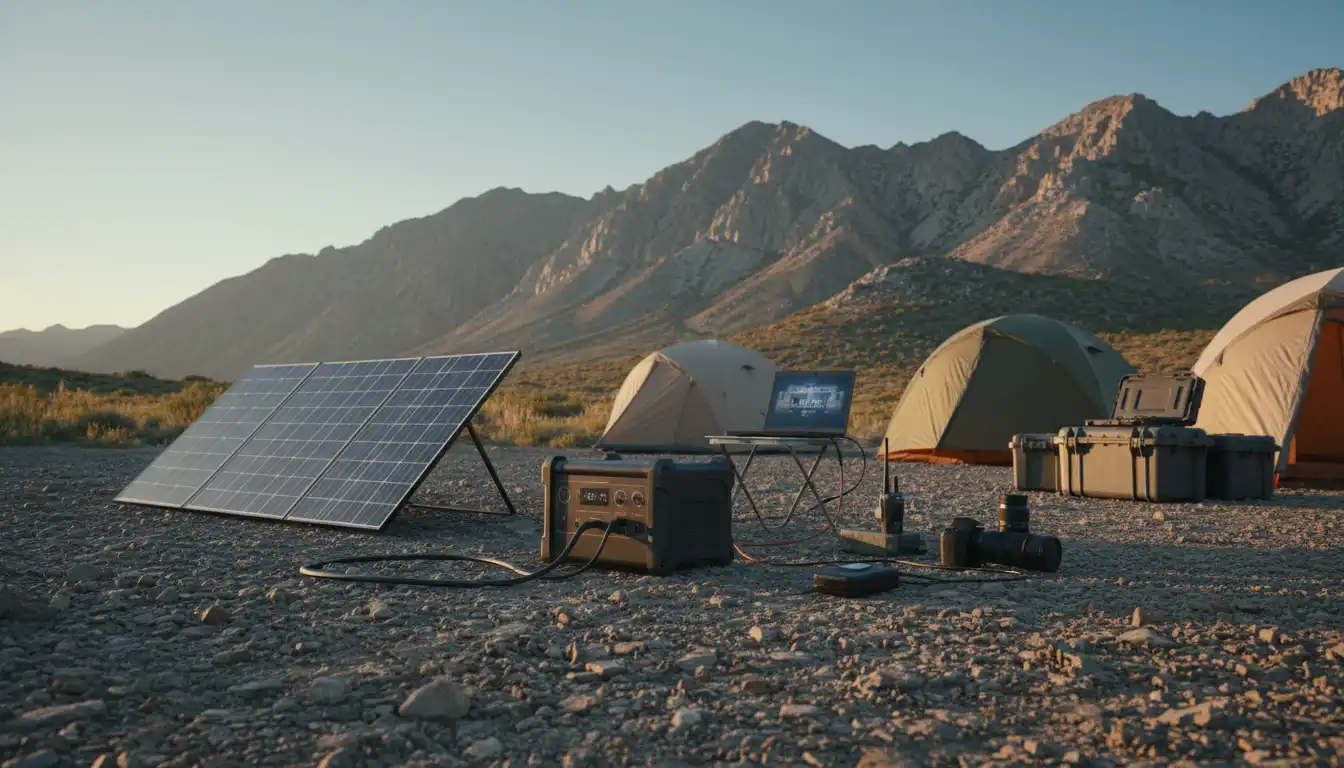
Conducting research or going on expeditions in remote locations requires reliable, safe, and portable energy. Whether you are a scientist in the field, a documentary team in the wilderness, or an explorer crossing deserts and mountains, portable power stations have become essential gear. They keep your communication devices, laptops, satellite tools, drones, cameras, and even medical equipment running when you are far from the grid.
In this guide, you will learn what to look for in a portable power station for remote research and expeditions, how to size your power needs, what features matter most in harsh environments, and which type of power station makes the most sense for long-term, off-grid work.
Why Portable Power Stations Matter for Remote Fieldwork
Modern research relies heavily on electronics. GPS receivers, laptops for data entry, satellite modems, field sensors, cameras, and even small laboratory instruments all need power. In remote regions, fuel-based generators used to be the default solution. However, they are noisy, produce fumes, require constant fuel logistics, and can disturb wildlife and sensitive environments.


Portable power stations solve many of these problems:
- They provide clean, quiet power with no exhaust.
- They are easy to transport in vehicles, boats, or even on foot for shorter distances.
- Many models can recharge via solar panels, vehicle DC outlets, or standard AC when available.
- They reduce logistical complexity, especially for multi-week or multi-month expeditions.
For research teams working in protected natural areas, a silent, emission-free power source is not only more practical but often more compliant with environmental regulations and ethics.
Key Factors When Choosing a Portable Power Station
When you select a portable power station for remote research and expeditions, you should evaluate more than just capacity. The wrong choice can leave crucial instruments dead in the middle of a mission. Focus on the following criteria.
1. Battery Capacity and Runtime
Battery capacity is typically measured in watt-hours (Wh). This value indicates how much energy the station can store. To estimate how much capacity you need:
- List all devices you plan to run (laptop, satellite phone, camera chargers, sensors, lights, etc.).
- Find their power draw in watts (W) or convert from volts and amps.
- Estimate how many hours per day each device will run.
- Multiply watts × hours to get daily watt-hours for each device, then sum them.
For instance:
- Laptop (60 W) × 5 hours = 300 Wh
- Satellite modem (30 W) × 3 hours = 90 Wh
- LED light (10 W) × 6 hours = 60 Wh
- Camera battery chargers (50 W) × 2 hours = 100 Wh
Total estimated use: 550 Wh per day.
For a 3-day mission without recharging, you would want at least 1,650 Wh, plus a safety margin (20–30%) for cold temperatures, inefficiencies, and unexpected loads. That pushes you closer to 2,000 Wh or more.
For long expeditions with solar recharging, you may choose a smaller unit but pair it with efficient solar panels to replenish energy daily.
2. Output Types and Power Rating (W)
Research setups often include a mix of AC and DC devices. Verify:
- Continuous output (W): Ensure the station’s continuous AC output is higher than the total wattage of all devices you plan to run at the same time.
- Surge power: Motors or compressors may need higher startup power; check the surge (peak) rating.
- Ports:
- Pure sine wave AC outlets (for sensitive electronics and lab instruments)
- USB-A and USB-C PD for phones, tablets, and some laptops
- 12 V DC ports for field radios, coolers, or specialized equipment
If you use sensitive scientific gear, prioritize models with pure sine wave inverters and stable voltage regulation.
3. Battery Chemistry and Durability
For field research and expeditions, longevity and safety matter more than anything else.
- LiFePO4 (Lithium Iron Phosphate) batteries offer:
- Very long life cycles (often 3,000+ full cycles to 80% capacity)
- Better thermal stability and safety
- Good performance in demanding environments
Conventional lithium-ion (NMC) batteries can still be useful, but for long-term projects and frequent use, LiFePO4 chemistry often delivers better value.
Also consider:
- Operating temperature range (especially for high-altitude or polar research)
- Impact resistance and solid casing for rough transport
- IP ratings (dust and water resistance) if you work in extreme weather or coastal regions
4. Recharge Options and Solar Integration
For truly remote locations, a portable power station without good solar support is a risk:
- Ensure the unit supports MPPT (Maximum Power Point Tracking) for efficient solar charging.
- Check the maximum solar input (W) and compatible voltage ranges.
- Plan your solar array based on your daily consumption and available sun hours.
For example, if you consume about 600 Wh per day and regularly get 5 hours of usable sun, a 200 W solar panel array can theoretically provide about 1,000 Wh per day (under ideal conditions), which gives you a comfortable buffer.
Also consider:
- Vehicle charging (12 V car charging) when traveling between sites
- AC charging when you occasionally return to a base with grid power
For expeditions aboard research vessels or in mobile labs, having multiple charging methods is essential.
5. Portability and Form Factor
Portability is relative: a 25 kg power station is manageable in a vehicle-based expedition but impractical for a solo, foot-based study in mountainous terrain.
- Check weight and dimensions carefully.
- Choose integrated handles, sturdy wheels, or modular systems if needed.
- Consider splitting capacity into two medium-sized units instead of one very large unit for flexibility and redundancy.
If your team must carry gear in backpacks, focus on lighter units with ~300–600 Wh and rely heavily on solar or vehicle recharging.
6. Safety Features and Reliability
In remote environments, failure is not an option. Prioritize:
- Built-in Battery Management System (BMS): overcharge, over-discharge, short-circuit, and temperature protection.
- Clear status display for remaining capacity, input/output watts, and error codes.
- Proven track record from reputable manufacturers and verified user feedback.
Some research institutions standardize on a few models to simplify training, spare parts, and maintenance—an approach worth considering if you manage multiple teams.
Best Use Cases for Portable Power Stations in Remote Research
Portable power stations support a wide range of scientific and exploratory activities:
- Environmental monitoring: Running data loggers, weather stations, camera traps, and water quality instruments.
- Archaeological and geological expeditions: Powering GPS units, drones, laptops, and sample analysis tools.
- Wildlife and conservation studies: Operating camera systems, acoustic recorders, and communication equipment without disturbing animals.
- Humanitarian and medical missions: Supporting portable refrigerators, diagnostic equipment, and lighting in remote clinics.
- Media documentation: Powering cinema cameras, audio gear, and drones on documentary shoots far from the grid.
In each of these applications, the combination of a robust portable power station and appropriately sized solar panels can turn an inaccessible region into a workable, semi-permanent field site.
Practical Tips to Maximize Runtime in the Field
To keep your system running reliably throughout your expedition:
- Prioritize critical loads. Decide which devices are mission-critical and shut down non-essential gear when power is low.
- Use energy-efficient equipment. LED lights, low-power laptops, and efficient satellite modems make a noticeable difference.
- Charge in daylight windows. Align heavy charging tasks (laptops, drone batteries) with peak sun hours to avoid deep discharges at night.
- Protect the power station. Keep the unit dry, shaded, and within its operating temperature range; extreme heat or cold reduces efficiency and battery health.
- Carry backup options. For critical missions, consider a smaller secondary power station or spare batteries for essential devices.
These habits not only extend runtime but also help preserve long-term battery health, ensuring your equipment stays reliable across multiple seasons.
Example Product Recommendation (Amazon)
As an example of a field-ready option, you can consider looking at the BLUETTI AC200MAX Portable Power Station on Amazon.com. It offers:
- High capacity suitable for multi-day fieldwork
- LiFePO4 battery chemistry for long cycle life
- Multiple AC, DC, and USB outputs for mixed scientific gear
- Good solar input capability for off-grid recharging
Before purchasing, always verify the latest specifications, user reviews, and availability to ensure it aligns with your specific expedition requirements and device list.