
Best Microphones for Streamers on Amazon in 2026: A Complete Buying Guide
Streaming has evolved into a serious craft, and audio quality now separates hobbyists from professionals. Viewers forgive shaky video far more easily than they forgive muddy, distorted, or inconsistent sound. If you’re building a channel on Twitch, YouTube, or TikTok Live in 2026, choosing the right microphone isn’t optional anymore—it’s foundational. This guide walks through what actually matters when shopping for a streaming mic on Amazon, breaks down the leading microphone types, and ends with a specific product recommendation worth considering.
Why Microphone Quality Shapes Your Channel’s Growth
Audiences judge a stream within seconds. A crackling signal, background hum, or inconsistent volume pushes viewers away before your content even gets a chance. Platforms like Twitch and YouTube also reward retention, so clean vocal clarity directly influences your discoverability. A quality microphone reduces editing time, improves voice presence during commentary, and makes collaborations with other creators sound professional rather than amateurish. Investing early in reliable audio gear pays off across every video you publish afterward.
USB Microphones vs XLR Setups: What Should You Choose?
Most beginner and intermediate streamers gravitate toward USB microphones because they plug directly into a computer without needing an audio interface or mixer. They’re simple, portable, and often include onboard gain control and headphone monitoring. XLR microphones, on the other hand, require additional equipment such as a preamp or audio interface, but they typically deliver richer, more customizable sound and scale better as your setup grows.
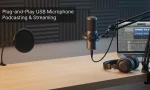
For someone just starting out or running a single-camera setup, a USB condenser microphone usually offers the best balance between affordability and performance. Creators who plan to add multiple mics, instruments, or podcast guests down the line may benefit more from an XLR-based system.
Condenser vs Dynamic Microphones for Streaming
This is one of the most common points of confusion among new streamers. Condenser microphones are highly sensitive and pick up subtle vocal detail, making them ideal for quiet, treated rooms. They also tend to capture background noise more easily, which can be a drawback in untreated spaces.
Dynamic microphones are less sensitive and naturally reject ambient noise, making them a strong choice for streamers recording in shared apartments, near computer fans, or in rooms without acoustic foam. Many professional broadcasters and podcasters actually prefer dynamic mics specifically because they isolate the voice so effectively.
Key Features to Check Before Buying on Amazon
When comparing options on Amazon, look beyond star ratings and skim the specification sheet carefully. A few features consistently make the biggest difference:
- Polar pattern options (cardioid, omnidirectional, bidirectional, stereo) let you adapt the mic for solo commentary, group podcasts, or ASMR-style content.
- Sample rate and bit depth affect how crisp and detailed the recorded voice sounds.
- Built-in headphone jack allows real-time monitoring, so you catch audio issues before viewers do.
- Mute button and gain dial placement matters for live adjustments during a broadcast.
- Shock mount and pop filter compatibility reduce plosive sounds and desk vibrations.
- Software support for Windows, macOS, or console platforms ensures the mic actually works with your streaming setup.
Reading verified buyer reviews on Amazon also reveals real-world durability issues that spec sheets don’t mention, such as connector wear or driver software glitches.
Budget Considerations for Content Creators in 2026
Pricing on Amazon spans a wide range, from entry-level clip-on lavalier mics under $30 to premium broadcast-grade dynamic microphones exceeding $200. New streamers testing whether content creation suits them long-term shouldn’t overspend immediately. A mid-range USB condenser microphone in the $60–$100 bracket typically delivers professional-sounding audio without unnecessary financial risk.
As your channel grows and monetization becomes realistic, reinvesting in an XLR microphone paired with an audio interface becomes a smarter long-term move. Many established streamers eventually run a hybrid setup: a dynamic XLR mic for voice, paired with a separate lavalier or shotgun mic for in-person content or vlogging segments.
Room Acoustics Still Matter More Than Most Creators Realize
Even the best microphone can’t fully compensate for a poorly treated room. Hard surfaces, bare walls, and high ceilings create echo and reverb that muddy vocal clarity. Simple, affordable fixes—thick curtains, a rug, foam panels behind the microphone, or even bookshelves filled with books—absorb sound reflections significantly. Positioning the microphone six to eight inches from your mouth at a slight angle also reduces breathing noise and popping consonants, giving your stream a noticeably cleaner sound without spending extra money on gear.
Accessories That Improve Streaming Audio Instantly
A few inexpensive accessories consistently improve recording quality:
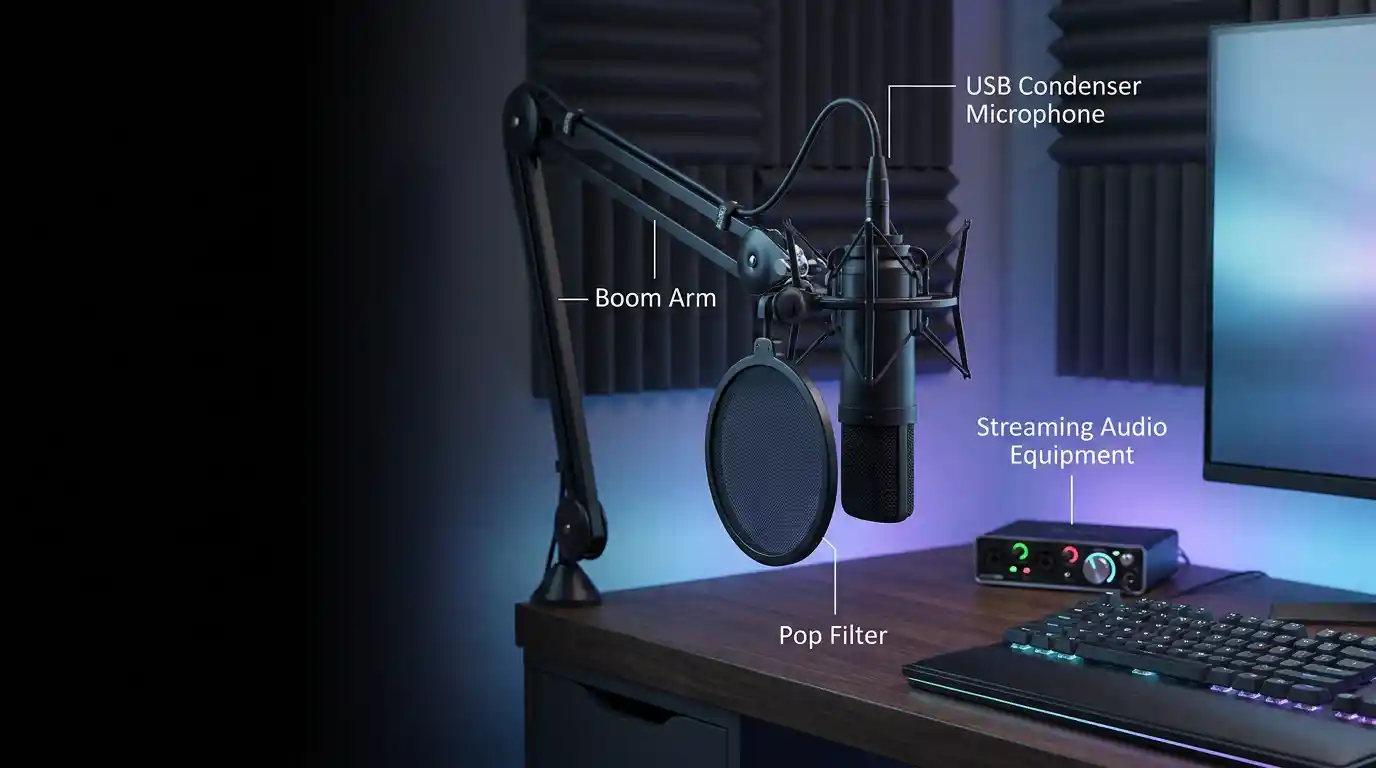
- A boom arm keeps the microphone positioned consistently and out of camera frame.
- A pop filter softens harsh “p” and “t” sounds.
- A shock mount isolates the mic from desk taps and keyboard vibration.
- An isolation shield helps in untreated rooms by reducing reflected sound.
These additions typically cost far less than upgrading the microphone itself, yet they often produce a more immediately noticeable improvement in recording clarity.
A Recommended Microphone Worth Considering on Amazon
For streamers wanting a reliable, well-reviewed option, the HyperX QuadCast S USB Condenser Gaming Microphone stands out as a strong all-around pick available on Amazon. It offers four selectable polar patterns, built-in anti-vibration shock mount, a tap-to-mute sensor, customizable RGB lighting, and a pop filter integrated directly into the design. It plugs in via USB, requires no extra interface, and works across PC, PlayStation, and Mac systems—making it a practical choice for streamers who want plug-and-play convenience without sacrificing sound quality.
Final Thoughts on Choosing a Streaming Microphone
Selecting the right microphone in 2026 comes down to understanding your recording environment, your budget, and your long-term streaming goals. Beginners benefit most from simple USB condenser or dynamic microphones, while advanced creators should consider investing in XLR setups paired with proper room treatment. Whatever you choose, prioritize noise rejection, comfortable positioning, and genuine user reviews over marketing claims. A well-chosen microphone doesn’t just improve sound—it builds trust with your audience and keeps them coming back.