
Biodegradable Packaging Innovations for E‑Commerce
Biodegradable packaging innovations are rapidly transforming the e‑commerce landscape. As online shopping volumes continue to grow, so does concern about the environmental impact of conventional plastic packaging. Today, forward‑thinking brands are adopting biodegradable, compostable, and plant‑based materials to protect products while reducing their ecological footprint. These solutions not only minimize waste but also enhance brand reputation and customer loyalty.
In e‑commerce, packaging is more than a protective layer: it is the first physical touchpoint between a digital brand and its customers. When buyers receive a parcel wrapped in sustainable materials, they immediately associate the brand with responsibility and quality. This emotional connection is one of the driving forces behind the shift toward biodegradable packaging in online retail.
What Is Biodegradable Packaging in E‑Commerce?
Biodegradable packaging consists of materials that naturally break down into non‑toxic components under specific environmental conditions. Unlike traditional plastics derived from fossil fuels, biodegradable options are often made from renewable resources such as cornstarch, sugarcane, potato starch, or agricultural waste fibers. In the context of e‑commerce, these materials are used to create mailers, shipping boxes, protective fillers, and labels that decompose more safely and quickly.
It is important to distinguish between biodegradable, compostable, and recyclable packaging.
- Biodegradable packaging breaks down through natural processes but does not always leave nutrient‑rich compost.
- Compostable packaging is designed to decompose into water, CO₂, and biomass under industrial or home composting conditions, leaving no toxic residues.
- Recyclable packaging can be reprocessed and turned into new materials.
A strategic e‑commerce sustainability plan often combines these three concepts to minimize waste throughout the supply chain.
Key Material Innovations in Biodegradable E‑Commerce Packaging
Recent technological advances have produced a range of innovative biodegradable materials tailored to the specific needs of online retailers:
- Plant‑Based Bioplastics (PLA and Others)
Polylactic acid (PLA), derived from fermented plant starch, is one of the most widely used bioplastics. It can be shaped into films, mailer bags, and even rigid containers. For light and medium‑weight products, PLA mailers offer a strong, flexible alternative to conventional polyethylene while reducing dependence on fossil resources. - Mushroom and Mycelium Packaging
Mycelium, the root structure of mushrooms, can be grown around a mold to form custom shapes. Once dried, it creates a lightweight, shock‑absorbing material ideal for protecting fragile products such as electronics, cosmetics, or glassware during shipping. After use, mycelium packaging can be broken up and composted, returning nutrients to the soil. - Seaweed‑Based Films and Coatings
Seaweed and algae are gaining attention as renewable resources for thin films and protective coatings. These materials can be used as liners or wraps inside shipping boxes, replacing petroleum‑based plastic films. Seaweed grows quickly without the need for fresh water or fertilizers, making it an attractive option for environmentally conscious brands. - Recycled Paper and Cardboard with Biodegradable Inks
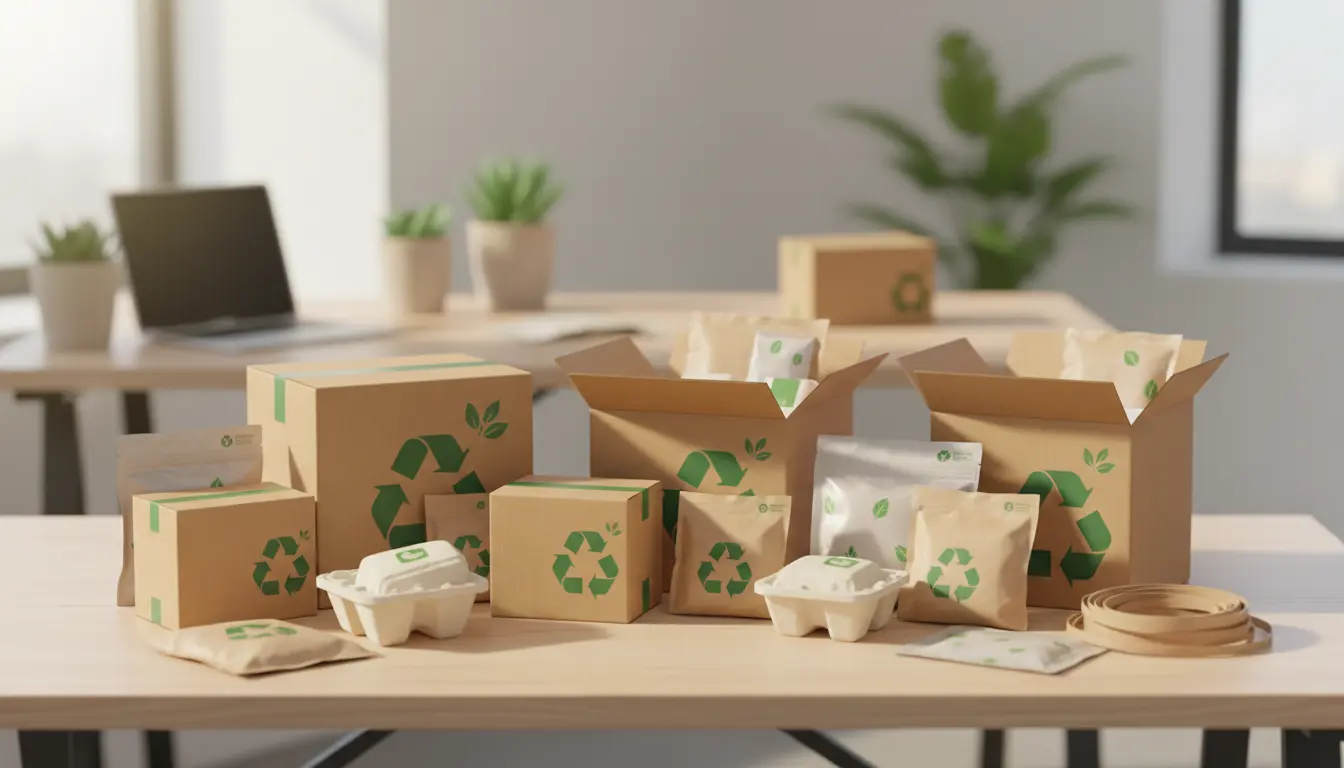
While paper and cardboard are not new materials, the combination of high‑recycled content, sustainably sourced fibers, and biodegradable inks represents a significant innovation. For e‑commerce, this means boxes, envelopes, and inserts that can be easily recycled or composted, minimizing landfill waste. - Compostable Bubble Wrap and Void Fillers
Traditional bubble wrap and plastic air pillows contribute significantly to plastic pollution. Compostable alternatives, made from starch‑based polymers or expanded paper, provide the same cushioning effect without leaving a lasting environmental footprint. For merchants shipping delicate products, these void fillers maintain product safety while aligning with eco‑friendly values.
Benefits of Biodegradable Packaging for Online Retailers
Adopting biodegradable packaging for e‑commerce offers a variety of strategic advantages:
- Reduced Environmental Impact
Biodegradable materials can decompose under the right conditions, generating fewer microplastics and toxic residues. This helps minimize long‑term pollution in landfills, oceans, and natural ecosystems. - Stronger Brand Differentiation
As consumers become more eco‑conscious, they actively seek out brands that demonstrate commitment to sustainability. Sustainable packaging becomes a clear, tangible sign of that commitment, helping online retailers stand out in a crowded market. - Higher Customer Loyalty and Trust
Shoppers are more likely to return to brands whose values align with their own. When customers know that every order arrives in environmentally responsible packaging, they feel better about their purchases and are more inclined to recommend the brand to others. - Compliance With Emerging Regulations
Many regions are introducing stricter regulations on single‑use plastics and packaging waste. Investing early in biodegradable and compostable materials prepares e‑commerce businesses for future policy changes and reduces the risk of penalties or rapid packaging redesigns. - Optimized Shipping and Storage
Some biodegradable materials are lighter than traditional options, helping to lower shipping costs and carbon emissions. Additionally, certain solutions, such as flat‑packed cardboard or compressed paper fillers, require less storage space in warehouses.
How E‑Commerce Brands Can Implement Biodegradable Packaging
Transitioning to biodegradable packaging should be approached as a strategic project rather than a quick swap of materials. Online retailers can follow a structured process:
- Audit Current Packaging
Start by analyzing existing packaging components: outer boxes, internal fillers, labels, tapes, and inserts. Identify which elements contribute the most to plastic waste and where biodegradable alternatives are readily available. - Collaborate With Sustainable Packaging Suppliers
Partnering with specialized suppliers is critical for maintaining product protection and customer experience. Suppliers can recommend tailored solutions, such as custom‑sized compostable mailers or mycelium inserts for specific product lines. - Test Durability and Performance
Biodegradable packaging must maintain structural integrity throughout the shipping journey. Conduct drop tests, compression tests, and climatic tests when necessary to ensure products arrive safely. Performance data helps balance sustainability goals with practical logistics requirements. - Educate Customers on Disposal
One of the biggest challenges in sustainable packaging is correct disposal. E‑commerce brands should clearly communicate whether packaging is industrially compostable, home compostable, or recyclable. Simple icons, QR codes, or printed instructions on the box can guide customers to make environmentally sound decisions. - Monitor Costs and Optimize Design
While some biodegradable materials may initially cost more than conventional plastics, smart design can offset these expenses. Reducing unnecessary layers, right‑sizing boxes, and using multifunctional packaging components help lower overall material usage and shipping costs.
Overcoming Common Challenges
Despite its advantages, biodegradable packaging in e‑commerce faces several obstacles:
- Limited Industrial Composting Infrastructure
In some regions, facilities capable of processing industrially compostable materials are still limited. Brands can address this by prioritizing home‑compostable and widely recyclable options where possible. - Consumer Confusion About Labels
Terms like “biodegradable,” “oxodegradable,” and “compostable” are often misunderstood. Clear, honest messaging is essential to avoid greenwashing and ensure customers dispose of packaging correctly. - Balancing Protection and Sustainability
Highly fragile or heavy products may still require robust protective solutions. In these cases, a hybrid approach that combines recycled materials, biodegradable fillers, and efficient design can deliver both protection and sustainability.
Future Trends in Biodegradable Packaging for E‑Commerce
The future of biodegradable packaging for online retail is shaped by continuous innovation and shifting consumer expectations. Emerging trends include:
- Smart, Eco‑Friendly Packaging
Integration of QR codes, NFC tags, or digital watermarks into biodegradable packaging will provide detailed sustainability information, track recycling, and verify product authenticity. - Circular E‑Commerce Models
More brands are experimenting with reusable shipping containers and take‑back programs. Biodegradable components can be combined with reusable elements to create mixed systems that support circular economy principles. - Advanced Bio‑Based Coatings
New barrier coatings derived from natural polymers will improve the moisture and oxygen resistance of biodegradable packaging, expanding its use to food and personal care categories in e‑commerce.
By embracing biodegradable packaging innovations, e‑commerce brands can significantly reduce their environmental footprint, comply with evolving regulations, and build deeper trust with eco‑conscious consumers. The shift requires careful planning and education, but it also presents a powerful opportunity to align business growth with planetary health.