
Electric Vehicle Performance in Cold Weather: What Drivers Need to Know
As electric vehicles (EVs) become more common on the roads, many drivers are beginning to notice an important reality: cold weather can significantly affect how their cars perform. From reduced driving range to slower charging times, low temperatures introduce unique challenges for EV owners. Understanding how cold affects EV performance and learning how to adapt your driving habits can help you stay safe, maximize efficiency, and protect your battery health throughout the winter months.
How Cold Weather Affects EV Batteries
At the heart of every electric vehicle is a lithium‑ion battery. These batteries rely on chemical reactions to store and release energy. In cold temperatures, these reactions slow down, which leads to several noticeable effects:
- Reduced range
One of the first things EV drivers notice in winter is a drop in estimated range. When the battery is cold, it cannot deliver energy as efficiently, so the vehicle will consume more energy for the same distance. In some climates, range can decrease by 20–40% during very cold conditions. - Lower charging speed
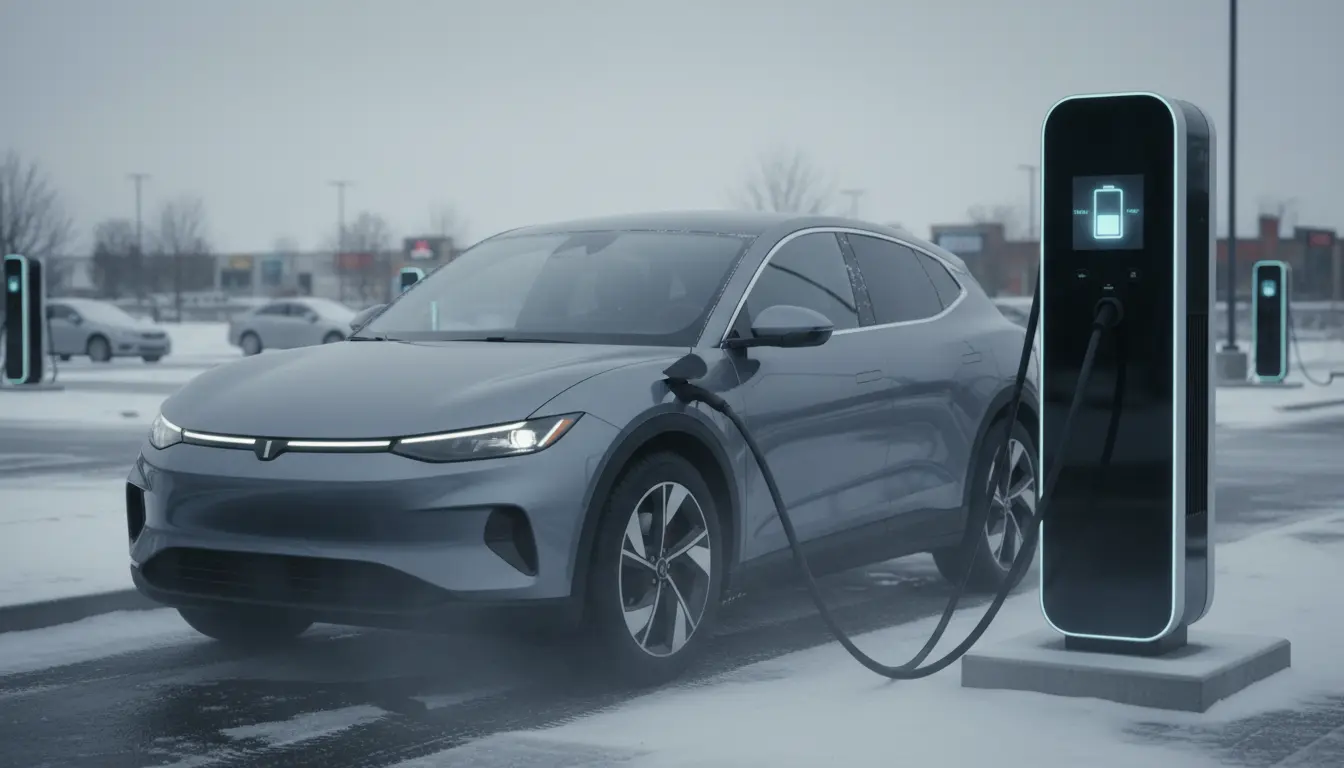
Cold batteries do not accept charge as quickly as warm ones. To protect the battery from damage, the vehicle’s battery management system (BMS) automatically slows down charging at low temperatures. This means that DC fast charging in winter can take significantly longer than in mild weather. - Higher energy use for heating
Unlike traditional cars that use waste heat from the engine, EVs must draw additional energy from the battery to heat the cabin and, in many cases, to precondition the battery itself. This extra energy demand further contributes to reduced winter range. - Thicker lubricants and rolling resistance
Cold weather also affects tires and drivetrain components. Tires stiffen, and lubricants can become more viscous, slightly increasing rolling resistance and energy consumption. While this effect is smaller than the impact on the battery, it still contributes to overall range reduction.
Winter Range: What Is Normal and What Isn’t?
It is normal to see a noticeable drop in range on very cold days, especially if:
- You frequently make short trips (the car warms up repeatedly and never stays warm)
- You use strong cabin heating and seat heaters at full power
- Your EV is parked outside overnight without access to charging
However, extreme or sudden range losses may indicate other issues, such as:
- A malfunctioning battery heater
- Incorrect tire pressure
- Software or sensor errors
If you experience unexplained or severe range loss in moderate temperatures, it is a good idea to contact your dealer or service center for a battery and system check.
Practical Tips to Improve EV Performance in Cold Weather
While you cannot change the laws of physics, you can adopt smart habits to keep your EV efficient and comfortable in winter. The following strategies can make a significant difference in cold weather EV performance.
- Precondition your battery and cabin
Most modern EVs offer a preconditioning feature that warms the battery and cabin while the vehicle is still plugged in. Using this function:
- Brings the battery close to its optimal operating temperature
- Reduces the energy needed for heating once you start driving
- Improves both range and charging speed
Ideally, schedule preconditioning to finish just before your departure time. This way, you start your trip with a warm cabin and a battery that is ready to deliver power efficiently.
- Charge indoors or use covered parking when possible
Parking in a garage or sheltered area helps protect your EV from the coldest ambient temperatures. Even a few degrees warmer can:
- Reduce battery cooling overnight
- Preserve more range in the morning
- Improve comfort when you start driving
If you cannot park indoors, consider using a timed charger so the battery is charging (and slightly warmed) closer to your departure time.
- Use seat and steering-wheel heaters efficiently
Heating the air in the cabin uses more energy than heating specific surfaces. To maximize winter range:
- Set the cabin climate control to a moderate temperature
- Use seat and steering‑wheel heaters to stay comfortable
- Avoid rapid, repeated temperature changes on the HVAC
This approach provides comfort while placing a smaller demand on the battery.
- Optimize your driving style
Gentle, predictable driving is especially important in winter. To help maintain range and traction:
- Accelerate smoothly and avoid hard launches
- Maintain a steady speed on highways, using eco or efficiency modes
- Anticipate traffic and use regenerative braking instead of hard braking when conditions allow
Some EVs reduce regenerative braking on very cold days to protect the battery and preserve traction. Be mindful that your car may not slow as aggressively when you lift off the accelerator until the battery warms up.
- Monitor tire pressure regularly
Tire pressure drops as temperatures fall. Under‑inflated tires:
- Increase rolling resistance and energy consumption
- Reduce driving range
- Can negatively affect handling and braking on snow or ice
Check your tire pressure more frequently during winter and maintain it at the manufacturer’s recommended level for cold conditions.
- Plan charging stops with extra margin
When temperatures are low, your real‑world range will likely be lower than the rated figure. To avoid range anxiety:
- Use navigation systems that factor in temperature and elevation when planning routes
- Leave a comfortable buffer instead of driving down to very low state‑of‑charge levels
- Be aware that fast charging speeds may be slower than usual, especially if your battery is very cold when you arrive at the charger
If your car supports battery preconditioning for fast charging, enable it before arriving at a DC fast charger. This feature warms the battery to an ideal temperature for quicker charging.
Battery Health and Long-Term Impact of Cold Weather
Cold temperatures can be harsh in the short term, but they are not necessarily harmful to EV battery health in the long run if you follow best practices. In fact, extreme heat is generally more damaging to lithium‑ion batteries than cold. Still, there are a few points to keep in mind:
- Avoid very high fast‑charging power when the battery is extremely cold and the state of charge is low, unless your vehicle automatically manages this.
- Do not leave your EV parked for long periods at 0–5% state of charge in freezing conditions; maintain a moderate charge level, typically 30–60%, when storing the vehicle.
- Use scheduled charging so that the battery is not sitting at 100% for many hours, especially overnight, even in winter.
By combining smart charging habits with regular software updates and maintenance, you can preserve your battery’s performance for many years.
Safety Considerations for Winter Driving in an EV
Electric vehicles can be excellent winter cars thanks to features like instant torque, precise traction control, and the option for all‑wheel drive. To stay safe:
- Use appropriate winter or all‑weather tires if you frequently drive on snow or ice.
- Be aware that regenerative braking may feel different depending on temperature and road conditions; practice in a safe area to understand how your car behaves.
- Keep emergency supplies in your car, such as a blanket, phone charger, ice scraper, gloves, and a small shovel, especially for long trips in remote areas.
Remember that running the heater in an EV consumes energy but does not produce harmful exhaust. If you are stuck in traffic or parked during a snowstorm, you can safely keep the cabin warm as long as you have enough battery, which is an important safety advantage over internal‑combustion vehicles.
Planning Ahead for a Better Winter EV Experience
Successful EV ownership in cold climates is largely about preparation and realistic expectations. You can make winter driving smoother and more efficient by:
- Learning how your specific model manages battery temperature and regenerative braking
- Using mobile apps and vehicle settings to schedule preconditioning and optimized charging
- Monitoring real‑time energy consumption and adjusting your speed, climate settings, and route as needed
With proper planning and smart driving habits, your electric vehicle in winter can remain reliable, comfortable, and efficient, even on the coldest days.