
Continuous Printing (Long-Tail) Stable Printers: A Complete Guide
Continuous printing with long-tail stable printers has become essential for businesses that need high-volume, uninterrupted output. Whether you run an e‑commerce warehouse, a logistics company, or a small manufacturing line, investing in a reliable continuous printer can dramatically improve your efficiency. In this article, we will explore what continuous printing is, how long-tail stable printers work, and what you should look for when choosing the best device for your operations.
What Is Continuous Printing?
Continuous printing refers to the ability of a printer to work for long periods without frequent manual intervention. Instead of printing one small batch at a time, these printers are designed to handle large jobs and continuous data streams.
This is especially important in:
- Shipping and logistics centers
- Warehouses and fulfillment hubs
- Manufacturing and production lines
- Retail and inventory management environments
A long-tail stable printer is optimized for consistent, long-duration operation. It can process thousands of labels, barcodes, receipts, or documents while maintaining print quality and minimizing downtime.
Key Features of Long-Tail Stable Printers
Long-tail stable printers are built with hardware and software features that support heavy workloads. Some of the most important characteristics include:
1. High Duty Cycle
The duty cycle is the maximum number of pages or labels a printer can reliably produce in a month. Continuous printers typically have a high duty cycle, which means they can handle constant use without frequent breakdowns. This makes them ideal for businesses that print all day, every day.
2. Robust Print Engine
A long-tail printer uses a durable print engine designed for continuous operation. Components such as print heads, rollers, and motors are engineered for longevity. This helps maintain consistent print quality even under heavy workloads.
3. Stable Media Handling
Stable printers manage media—such as labels, tags, and paper rolls—smoothly and accurately. Advanced sensors and rollers reduce jams and misalignments. This is especially useful when you print long sequences of barcodes or shipping labels without stopping.
4. Efficient Cooling and Thermal Management
Overheating is a common reason printers fail during long print runs. Long-tail stable printers usually incorporate better cooling systems and optimized thermal design, allowing them to operate for extended periods without performance loss.
Benefits of Continuous Printing for Businesses
Investing in a continuous printing solution can deliver a strong return on investment. Some of the main benefits include:
Higher Productivity
With continuous printers, operators do not need to constantly reload media or restart jobs. This saves time, reduces manual labor, and enables staff to focus on more valuable tasks.
Reduced Downtime
Stable printers with long-tail performance are less likely to break down under pressure. Fewer interruptions mean your workflow remains smooth, which is critical for same-day shipping or just-in-time production.
Consistent Print Quality
When you print thousands of labels or documents, quality must stay consistent from the first item to the last. Continuous printers help maintain sharp text, scannable barcodes, and clear graphics throughout long runs.
Lower Total Cost of Ownership
Although long-tail stable printers may cost more upfront, they often deliver lower costs over time. Durable components, fewer service calls, and less wasted media can significantly reduce the total cost of ownership.
Use Cases for Long-Tail Stable Continuous Printers
Continuous printing is not limited to one industry. It supports many different applications:
1. Logistics and Shipping
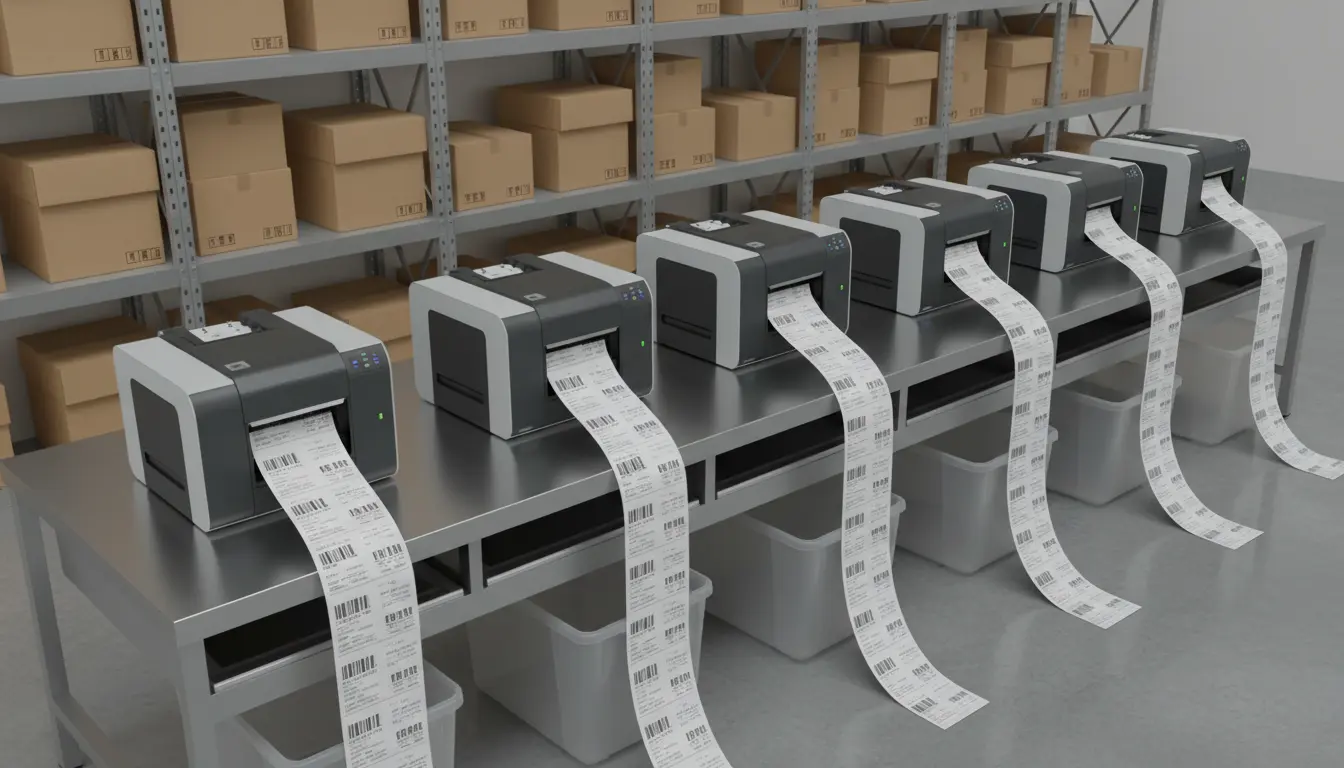
Carriers and fulfillment centers print shipping labels, tracking barcodes, and packing slips all day. A long-tail stable printer ensures that label printing keeps pace with order processing, even during peak seasons.
2. E‑Commerce Fulfillment
Online retailers need fast and accurate labeling for thousands of packages. Continuous printers help maintain order accuracy and speed, improving customer satisfaction.
3. Manufacturing and Industrial Environments
In factories, continuous printers create product labels, serial number tags, and compliance stickers. Stability is crucial, as disruptions can slow down an entire production line.
4. Retail and Inventory Management
Retailers use continuous printers to generate shelf labels, price tags, and inventory barcodes. Stable performance helps support quick price changes and stock checks.
How to Choose a Long-Tail Stable Printer
Selecting the right printer for continuous printing requires a detailed evaluation of your needs. Consider the following factors:
Print Technology
Decide between thermal transfer, direct thermal, inkjet, or laser depending on your application:
- Direct thermal: Great for shipping labels and short‑term barcodes
- Thermal transfer: Better for durable, long-lasting labels
- Laser or inkjet: Suitable for documents and mixed media
Print Speed and Resolution
A good continuous printer balances speed and quality. Look for a model that can print fast enough to match your workflow while delivering the resolution required for barcodes, logos, or text.
Connectivity Options
Modern printers support USB, Ethernet, Wi‑Fi, and sometimes Bluetooth. Continuous printing often relies on stable network connections and integration with warehouse management systems, ERP platforms, or shipping software.
Compatibility With Labels and Media
Confirm that the printer supports your preferred media type and size. It should handle long rolls or large stacks of labels without frequent reloading.
Reliability and Service
A long-tail stable printer should come from a reputable brand with strong support. Check warranty terms, access to spare parts, and availability of technical assistance.
Best Practices for Continuous Printing Stability
Even the best printer needs proper setup and maintenance to perform reliably in long-tail scenarios.
1. Use Quality Media and Consumables
Low-quality labels, ribbons, or paper can damage print heads and cause jams. Invest in compliant, high-quality supplies that match the printer’s specifications.
2. Schedule Regular Maintenance
Clean print heads, rollers, and sensors regularly. Remove dust and adhesive residue. Routine maintenance reduces unexpected downtime and extends the life of your device.
3. Monitor Printer Performance
Use built-in diagnostics or management software to monitor error rates, temperature, and workload. This data helps you detect problems before they affect production.
4. Optimize Print Settings
Adjust darkness, speed, and resolution to match your application. Overly aggressive settings may wear out components faster, while efficient settings can increase stability.
Future Trends in Continuous Long-Tail Printing
Continuous printing technology continues to evolve. Modern printers now integrate:
- Cloud-based management tools for remote monitoring
- Advanced firmware that supports multiple data formats
- Better energy efficiency for greener operations
- Enhanced security for networked printing environments
These innovations will make long-tail stable printers even more reliable and cost‑effective for businesses of all sizes.
Recommended Product on Amazon
For a reliable long-tail continuous printing solution, you can consider the Rollo Direct Thermal Label Printer, available on Amazon.com. It is widely used in e‑commerce and logistics for fast, stable label printing with high-volume workloads.