
HDR10+ vs Dolby Vision on Mobile: Which Content Looks Better?
In the era of streaming and mobile entertainment, display technology has become one of the most important factors defining how we consume content. Among the latest innovations enhancing visual quality, HDR (High Dynamic Range) stands out as a critical advancement. It delivers more vibrant colors, deeper contrast, and greater detail in both bright and dark scenes.
When it comes to HDR, two names dominate the conversation—HDR10+ and Dolby Vision. But which one actually looks better on mobile screens? To answer that, we’ll compare both formats in terms of technical performance, compatibility, visual experience, and practical benefits for mobile users.
Understanding HDR: The Foundation of Better Visuals
Before diving into HDR10+ and Dolby Vision, it’s crucial to understand what HDR really means for mobile displays. HDR expands the luminance range, meaning it can show both brighter whites and darker blacks simultaneously without losing detail. It also enhances color depth, delivering lifelike images that better match what the human eye perceives in real-world scenes.
Modern smartphones, such as the Samsung Galaxy S series, iPhone Pro models, and OnePlus flagship devices, come equipped with OLED or AMOLED panels capable of displaying HDR content. However, not all HDR is created equal—different standards optimize brightness and color differently.
What is HDR10+?
HDR10+ is an open, royalty‑free HDR standard developed by Samsung and Amazon Video. It’s an upgraded version of HDR10, improving upon its static metadata by introducing dynamic metadata. This allows each frame or scene to be adjusted individually for color tone and brightness, offering more precision than HDR10’s one‑size‑fits‑all approach.
Some advantages of HDR10+ include:
- Dynamic lighting adjustment for each frame
- Free licensing, making it attractive for manufacturers
- Strong support on Android and Samsung devices
- High compatibility with streaming platforms such as Amazon Prime Video and YouTube
However, HDR10+ has its limitations too. It supports up to 10‑bit color depth and maximum brightness levels of 4000 nits, though most displays peak much lower. Despite this, HDR10+ is visually impressive when combined with top-tier screens like Samsung Dynamic AMOLED 2X.
What is Dolby Vision?
Dolby Vision is a proprietary HDR standard developed by Dolby Laboratories. It goes beyond HDR10+ in some technical aspects, supporting 12‑bit color depth and brightness up to 10,000 nits. It also uses dynamic metadata, meaning it analyzes and adjusts every scene (sometimes even every frame) for the optimal look.
Dolby Vision is widely supported across streaming platforms including Netflix, Disney+, Apple TV+, and Paramount+, as well as on devices like iPhones, iPads, and some Android phones.
The main advantages of Dolby Vision are:
- Superior color grading with deeper, richer tones
- Better shadow and highlight detail
- Extensive support across premium mobile devices
- Advanced dynamic tone mapping for more realistic visuals
Its drawbacks, however, are largely due to licensing costs and limited adoption on non‑Dolby hardware. Manufacturers must pay Dolby to include the feature, so it’s less common on budget or mid-range phones.
HDR10+ vs Dolby Vision: Technical Comparison
| Feature | HDR10+ | Dolby Vision |
|---|---|---|
| Color Depth | 10-bit | 12-bit |
| Peak Brightness | Up to 4000 nits | Up to 10,000 nits |
| Metadata Type | Dynamic | Dynamic |
| Tone Mapping | Scene‑by‑scene | Frame‑by‑frame |
| Licensing | Free | Paid |
| Developer | Samsung, Amazon | Dolby Laboratories |
| Content Support | YouTube, Prime Video | Netflix, Disney+, Apple TV+ |
In essence, Dolby Vision wins on paper in terms of technical brilliance. But real-world perception can differ depending on the display panel, brightness handling, and software optimization by the phone manufacturer.
Mobile Experience: How They Actually Look
When it comes to smartphones, the difference between HDR10+ and Dolby Vision is subtle but noticeable under certain conditions.
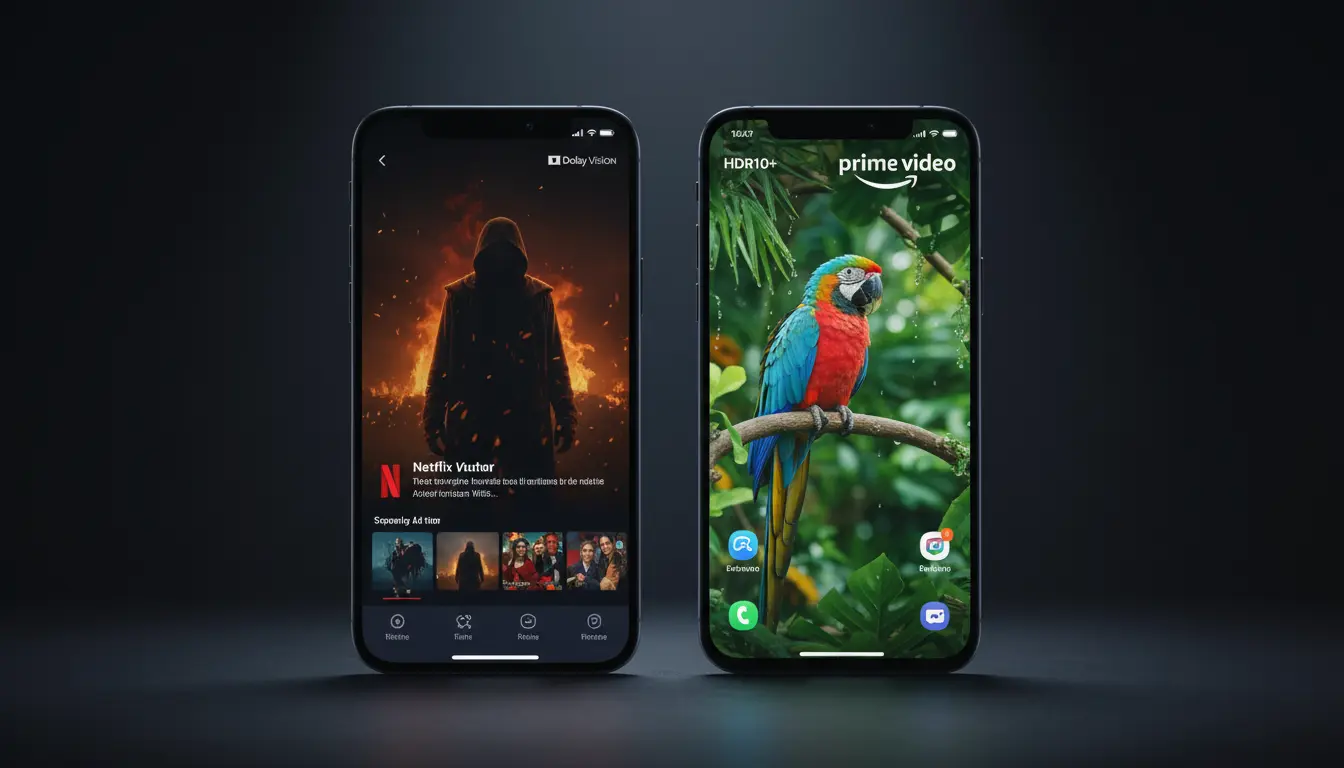
On Dolby Vision‑enabled iPhones, you’ll find improved contrast transitions, smoother gradients, and slightly more natural skin tones. It’s especially stunning when streaming Netflix Originals, where Dolby Vision mastering ensures perfect balance across highlights and shadows.
On Samsung or other HDR10+ phones, HDR10+ shines brightest in fast-motion scenes. The dynamic metadata works efficiently to optimize each frame without adding processing lag. For content creators and action‑movie lovers, HDR10+ feels more dynamic, with punchy highlights and vivid saturation.
However, many users agree that the difference becomes smaller on smaller screens. The perceived brightness and color variation depends heavily on ambient lighting, so under direct sunlight, both standards perform similarly unless the display has excellent peak brightness above 1500 nits.
Streaming Platforms and Content Availability
Here’s where Dolby Vision gains an advantage. Most streaming services prioritize Dolby Vision for their HDR libraries. If you’re a frequent viewer of Netflix, Disney+, or Apple TV+, Dolby Vision ensures consistent quality.
HDR10+ content, while growing, is still less widespread. The most prominent sources remain Amazon Prime Video, Google Play Movies, and some YouTube HDR videos. So if your favorite streaming platform doesn’t support HDR10+, you might not fully utilize your phone’s HDR10+ display.
Fortunately, many modern devices can render both HDR formats automatically depending on the content available, ensuring you always get the best possible picture.
Performance and Battery Life
HDR playback consumes more power than standard SDR (Standard Dynamic Range) due to higher brightness levels and additional image processing. Dolby Vision’s advanced tone mapping and 12‑bit color depth may demand slightly more energy than HDR10+, though this difference varies depending on the chipset and display optimization.
Phones with adaptive brightness and AI‑driven display optimization tend to manage this well. For users concerned about battery drain, HDR10+ could offer marginally better efficiency on supported devices, but the overall difference remains minimal.
Future of HDR on Mobile Devices
Both HDR10+ and Dolby Vision are evolving rapidly. Dolby Vision’s integration with gaming platforms and Apple’s ecosystem gives it an edge in consistency and stability. Meanwhile, HDR10+ continues to build momentum through open licensing and its collaboration with major brands like Samsung, Panasonic, and Amazon.
Upcoming smartphones are expected to support multi-HDR compatibility, allowing seamless switching between HDR10+, Dolby Vision, and even HLG (Hybrid Log Gamma) formats depending on the content.
As screens and processors continue to improve, the differences between the two standards will likely become less about raw specs and more about ecosystem compatibility and content availability.
Final Verdict: Which One Looks Better on Mobile?
If you’re using an iPhone, Dolby Vision will undoubtedly deliver the best possible experience. It’s beautifully integrated with the iOS ecosystem, delivering deeper contrast, superior color accuracy, and smoother tone mapping.
If you’re on an Android, especially a Samsung Galaxy, HDR10+ is optimally tuned for that environment, offering spectacular visuals with rich colors and sharp contrast.
Ultimately, both HDR formats enhance your visual experience beyond standard HDR10 or SDR. Whether you prefer Dolby Vision’s cinematic accuracy or HDR10+’s bold vibrancy depends on your device, your favorite platforms, and your personal taste.
✅ Conclusion
In the ongoing battle of HDR10+ vs Dolby Vision, both deliver exceptional quality on mobile screens. Dolby Vision remains the pinnacle of image refinement for premium Apple users, while HDR10+ provides a visually stunning and more accessible solution for Android enthusiasts.
The best HDR experience will always come down to device optimization, content source, and ambient lighting conditions—not necessarily the logo printed on the box.
🔹 1. Samsung Galaxy S24 Ultra (Supports HDR10+)
- Display: 6.8″ QHD+ Dynamic AMOLED 2X, 120Hz refresh rate, HDR10+ certified
- Peak Brightness: Up to 2600 nits — outstanding visibility even under direct sunlight
- Content Compatibility: Perfect for HDR10+ titles on Amazon Prime Video and YouTube HDR
- Highlight Feature: Samsung’s native HDR10+ optimization delivers incredible contrast and color depth
Why it’s recommended:
If you want to experience true HDR10+ performance on mobile, this is your best Android choice. It produces vivid brightness, exceptional clarity, and lifelike contrast, especially in fast-motion or action scenes.
🔹 2. Apple iPhone 15 Pro (Supports Dolby Vision)
📱 Apple iPhone 15 Pro – Amazon.com
- Display: 6.1″ Super Retina XDR OLED with 120Hz ProMotion refresh rate
- HDR Support: Dolby Vision, HDR10, and HLG
- Peak Brightness: Up to 2000 nits for outdoor visibility
- Streaming Compatibility: Premium Dolby Vision playback on Netflix, Disney+, and Apple TV+
- Highlight Feature: Real-time Dolby Vision mastering even while recording with the camera
Why it’s recommended:
For the most cinematic mobile viewing experience, the iPhone 15 Pro excels with Dolby Vision. It delivers natural tones, accurate colors, and deep contrast that make streaming and photography feel immersive.