
Best Camera Bodies with IBIS + Lens IS Combination: The Ultimate Stabilization Guide (2025)
In the fast-evolving world of photography and videography, image stabilization has become a defining factor for producing professional-level results. Whether you’re a travel vlogger, a documentary filmmaker, or a portrait photographer, the difference between a blurry shot and a crystal-clear masterpiece often comes down to one crucial feature: In-Body Image Stabilization (IBIS) and Lens Image Stabilization (Lens IS).
When these two technologies work together in harmony, they provide unmatched stability, even in the most challenging shooting environments. This article explores the best camera bodies that combine IBIS + Lens IS in 2025, explains how this dual stabilization system works, and gives you valuable insight into choosing the ideal setup for your creative workflow.
🔍 Understanding IBIS and Lens IS: What They Do
In-Body Image Stabilization (IBIS) is a camera body technology that physically shifts the sensor to counteract small movements or vibrations caused by handholding the camera. On the other hand, Lens Image Stabilization (Lens IS), built directly into the lens, moves specific optical elements to achieve the same purpose.
When combined, they form a synchronized stabilization system where the camera and the lens communicate to achieve smoother results across more axes—sometimes up to 8 or even 9 stops of compensation.
The IBIS + Lens IS combo has revolutionized handheld photography and made it possible to shoot at slower shutter speeds or capture cinematic handheld footage that previously required a gimbal.
⚡ Why IBIS + Lens IS Matters
- Sharper Images in Low Light:
The dual system allows slower shutter speeds without introducing motion blur, perfect for low-light shooting. - Gimbal-Like Stability for Video:
Videographers now rely less on bulky stabilizers—IBIS + IS-equipped cameras deliver buttery smooth footage. - Compatibility Across Lenses:
Since IBIS operates at the sensor level, even non-stabilized lenses benefit from image stabilization. - Improved Autofocus Accuracy:
Stable framing helps with precise autofocus, even in dynamic scenarios like sports or wildlife photography.
🏆 Top Camera Bodies with the Best IBIS + Lens IS Combination (2025)
Let’s dive into some of the most powerful hybrid stabilization systems available on the market today:
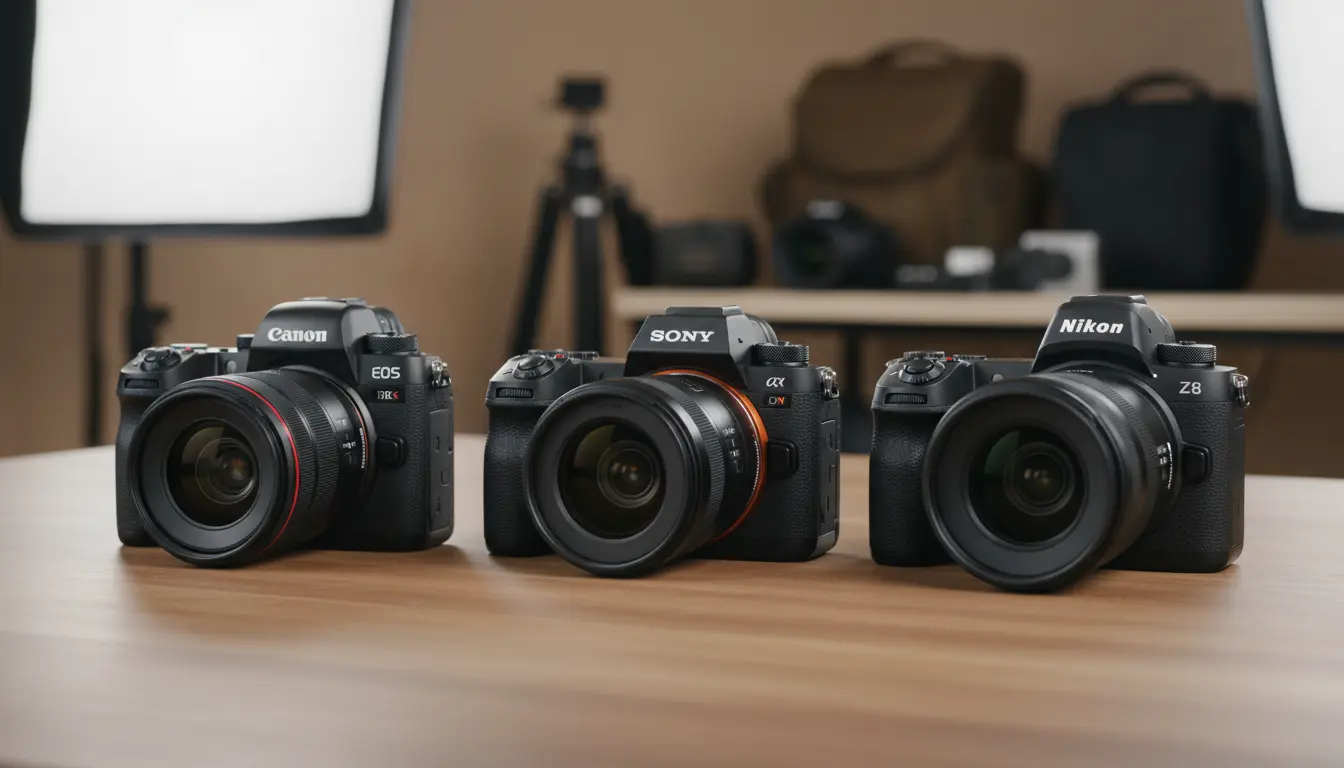
1. Canon EOS R5 Mark II
Canon’s flagship mirrorless camera continues to set standards for stability. The EOS R5 Mark II features a 5-axis IBIS system that works seamlessly with Canon RF lenses equipped with IS. When paired with lenses like the RF 24-105mm f/4L IS USM, you get up to 8 stops of combined correction.
Where it really shines is video: handheld 8K RAW capture has never looked smoother.
2. Sony A7R V
Sony’s A7R V takes precision stabilization to another level. Its advanced AI-based IBIS algorithm adjusts compensation dynamically according to subject movement, lens type, and even framing composition. When combined with OSS (Optical SteadyShot) lenses like the 24-70mm GM II, users can expect ultra-sharp handheld images at remarkably low shutter speeds.
It’s a favorite among landscape and studio photographers needing edge-to-edge crispness.
3. Nikon Z8
Nikon’s Z8 inherits the professional DNA of the Z9 with the same outstanding sensor-shift stabilization mechanism. The synergy between Nikon’s VR (Vibration Reduction) lenses and the in-body system delivers up to 8.5 stops of correction. For filmmakers, its internal 10-bit N-Log footage benefits tremendously from minimal shake, making it a killer hybrid machine.
4. Panasonic Lumix S5 IIX
Panasonic has long been a stabilization powerhouse, and the S5 IIX cements that reputation. The new Active IS mode intelligently enhances IBIS performance for handheld walking shots, especially with Lumix lenses featuring OIS (Optical Image Stabilization).
The dual system offers up to 7.5 stops of compensation, making it one of the most dependable tools for run-and-gun creators.
5. Fujifilm X-H2S
Fujifilm’s X-H2S features a 5-axis IBIS that pairs brilliantly with OIS lenses like the XF 16-80mm. The hybrid system significantly improves both still and video stabilization. Combined with Fujifilm’s industry-leading color science, this camera offers professionals and enthusiasts alike an uncompromising creative experience.
6. OM System OM-1 Mark II
The OM System (Olympus) OM-1 Mark II delivers up to 8.5 EV stops of stabilization when used with specific M.Zuiko IS PRO lenses. It’s nearly unbeatable in handheld macro photography and long telephoto work. The lightweight Micro Four Thirds system further amplifies the gain from IBIS, making it a traveler’s delight.
💡 How to Maximize Stabilization Performance
Even with world-class hardware, the user plays a vital role in getting the best out of the IBIS + Lens IS combo. Here are a few pro tips:
- Use lenses natively designed for your camera mount for optimal communication between IBIS and IS.
- Turn off one stabilization system (usually lens IS) when using a tripod to avoid feedback loops.
- For video, enable “active mode” or digital IS only when absolutely necessary—it can crop your field of view.
- Keep firmware updated; manufacturers frequently refine stabilization algorithms for better coordination.
🎬 The Future of Dual Stabilization
AI-driven stabilization is the next big leap. Future cameras will analyze motion patterns, predict shake, and adapt in real-time using machine learning. Brands like Sony and Panasonic are already integrating AI-assisted stabilization algorithms to improve results dynamically for hand motion, body sway, and walking movement.
📷 Final Verdict
If your workflow involves handheld shooting, fast-paced events, or cinematic videography, investing in a body that supports IBIS + Lens IS hybrid stabilization is a smart long-term choice. These systems are no longer limited to high-end bodies—you’ll find strong contenders across full-frame, APS-C, and Micro Four Thirds models.
The combination provides unbeatable flexibility, sharper images, and smoother videos — making it a must-have feature for the modern visual storyteller.