
Hypersonic Passenger Concepts: Intercontinental Travel in 1–2 Hours
Imagine flying from New York to Tokyo in under two hours. Hypersonic passenger concepts promise exactly that, pushing aviation beyond today’s fastest airliners and even past the retired Concorde. As aerospace companies and space startups race to develop new ultra‑fast aircraft, hypersonic travel is becoming one of the most exciting frontiers in transportation.
This article explains what hypersonic passenger concepts are, how they work, their technical and environmental challenges, and when we might realistically see 1–2 hour intercontinental flights.
What Is Hypersonic Passenger Travel?
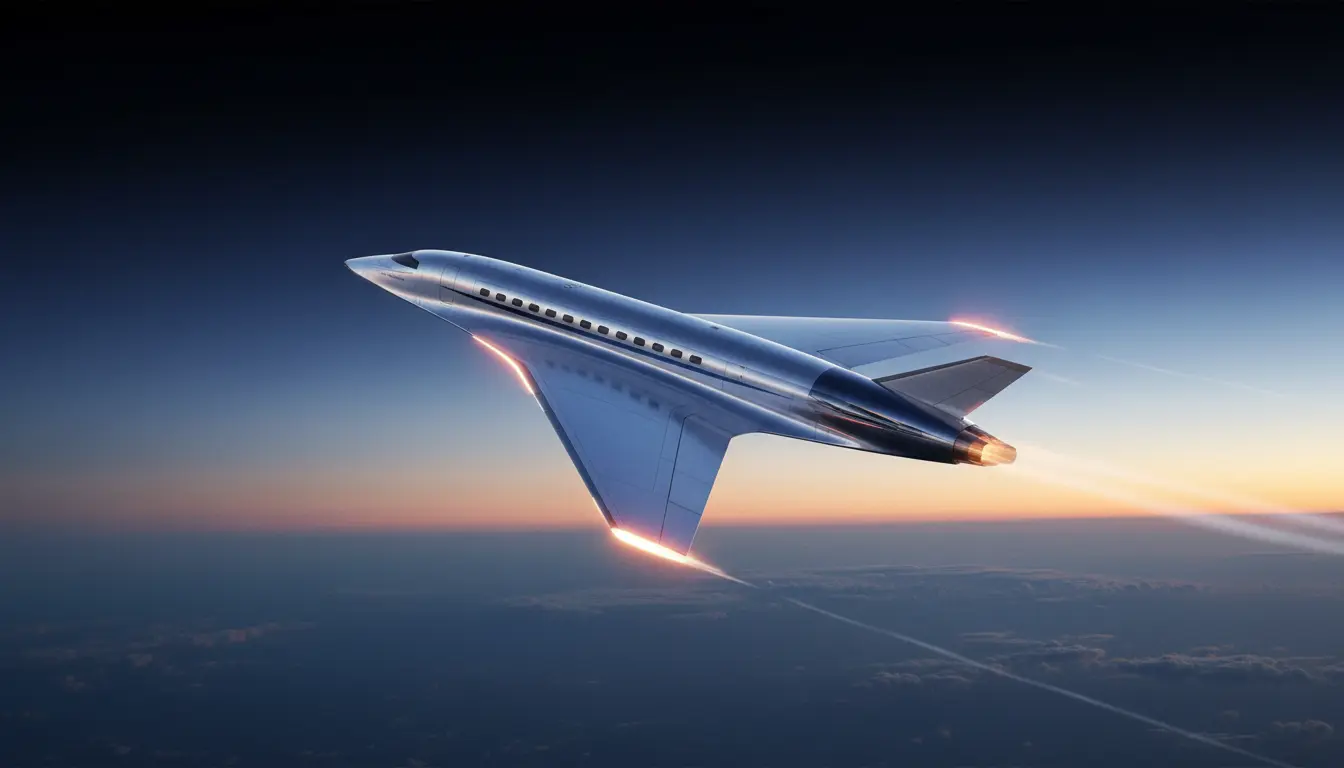
Hypersonic travel generally refers to flight at speeds above Mach 5, or five times the speed of sound. At cruising altitude, this is roughly 6,000 km/h (about 3,700 mph). At these velocities, an aircraft could cross the Atlantic in under an hour and reach the other side of the globe in just a couple of hours.
Hypersonic passenger concepts are conceptual or early‑stage designs for aircraft that:
- Carry civilian passengers instead of only military payloads
- Take off and land from runways, like conventional planes
- Use advanced propulsion systems that can reach and sustain hypersonic speeds
- Aim to dramatically reduce long‑haul flight times while remaining safe and economically viable
Unlike orbital spacecraft, these vehicles would travel through the upper atmosphere rather than going into space, making them more like extreme versions of airliners than rockets.
How Hypersonic Aircraft Could Work
Designing a hypersonic passenger aircraft is far more complex than simply “making a plane faster.” At Mach 5 and above, air resistance and heating become extreme, and traditional engines and materials quickly reach their limits. Engineers are exploring several core technologies.
Advanced Aerodynamics and Airframe Design
At hypersonic speeds, shockwaves form around the aircraft and generate intense drag and heat. To minimize this, designers consider:
- Sharp, slender noses and swept‑back wings to reduce wave drag
- Waverider configurations, which “ride” their own shockwave for better lift‑to‑drag ratios
- Blended wing–body shapes, which can improve stability and aerodynamic efficiency
The structure must remain light enough for efficient flight yet strong enough to withstand high dynamic pressures and buffeting in the upper atmosphere.
Propulsion: From Turbojets to Scramjets
Conventional turbofan engines used in today’s airliners cannot operate effectively at hypersonic speeds. Future hypersonic vehicles may use:
- Combined‑cycle engines that can function as turbojets at lower speeds for takeoff and landing, then transition to ramjet or scramjet mode for hypersonic cruise
- Ramjets and scramjets (supersonic combustion ramjets), which compress incoming air using the aircraft’s own speed, allowing efficient combustion at extreme velocities
Some concepts also investigate rocket‑based combined‑cycle (RBCC) systems, in which small rocket engines assist during acceleration or at very high altitude.
Thermal Protection and High‑Temperature Materials
Aerodynamic heating is one of the biggest engineering challenges. At Mach 5+, the external skin temperature can soar to hundreds of degrees Celsius. To survive these conditions, hypersonic passenger concepts rely on:
- Advanced composites and high‑temperature alloys used in spaceplanes and reentry vehicles
- Thermal protection systems, such as ceramic tiles or heat‑resistant coatings
- Active cooling, where specially routed fuel absorbs heat from critical components before being burned
Maintaining passenger comfort—cool, pressurized cabins with minimal noise and vibration—adds another layer of complexity to the thermal design.
Passenger Experience at Hypersonic Speeds
While the technology is impressive, commercial success depends on the passenger experience. Future hypersonic airlines must feel safe, comfortable, and at least somewhat familiar.
Key design priorities include:
- Smooth acceleration: Passengers should feel gradual increases in speed rather than rocket‑like thrust.
- Comfortable cabins: Quiet, climate‑controlled interiors with reduced vibration and active noise suppression.
- Safety systems: Multiple redundant systems, emergency descent procedures, and clear regulatory certification for hypersonic operations.
- Shorter total trip time: Not only must cruise be fast, but boarding, security, and turnaround must be streamlined to fully leverage the time savings of 1–2 hour intercontinental flights.
In practice, a traveler might check in as usual, board a sleek hypersonic jet, and experience a slightly steeper climb than a typical airliner, followed by an exceptionally short cruise phase before descent.
Environmental and Economic Challenges
The promise of hypersonic transport comes with serious questions about sustainability, noise, and cost.
Sonic Booms and Flight Corridors
Supersonic and hypersonic vehicles generate sonic booms when they exceed the speed of sound. These pressure waves can be disruptive to people on the ground. Regulators currently limit or prohibit supersonic overland flights in many regions.
To address this, designers and policymakers are exploring:
- “Quiet boom” shaping to reduce perceived noise at ground level
- Dedicated corridors over oceans and sparsely populated areas
- Altitude and speed management to minimize impact on communities
Emissions and Climate Impact
Hypersonic aircraft will likely consume more fuel per seat‑kilometer than subsonic airliners, at least initially. Their environmental footprint depends on:
- Fuel type: Use of sustainable aviation fuels (SAF), synthetic e‑fuels, or even hydrogen could reduce lifecycle emissions.
- Altitude of emissions: Pollutants released in the upper atmosphere can have complex climate effects, especially on ozone.
- Operational efficiency: Optimized flight routing, high load factors, and careful scheduling can mitigate some environmental impact.
Balancing ultra‑fast travel with climate goals will be central to the long‑term viability of hypersonic passenger concepts.
Ticket Prices and Market Demand
Developing and certifying hypersonic aircraft will be extremely expensive. Early flights are likely to target:
- Business travelers who value time savings enough to pay a premium
- High‑net‑worth individuals and luxury tourism markets
- Government and specialized corporate clients
Over time, as technology matures and economies of scale improve, costs may fall. However, widespread mass‑market adoption will depend on:
- Operating costs per seat
- Regulatory approval and demand on major routes
- Competition from other technologies, such as suborbital point‑to‑point rockets or ultra‑efficient subsonic aircraft
Timelines: When Could Hypersonic Passenger Flights Become Reality?
Many aerospace firms and startups are actively researching high‑speed transport, from advanced supersonic jets to experimental hypersonic demonstrators. Still, several steps must happen before everyday travelers can book tickets:
- Successful experimental flights of full‑scale hypersonic demonstrators
- Regulatory frameworks for certifying hypersonic aircraft and defining safe airspace corridors
- Airport infrastructure updates, including handling of new fuels such as hydrogen or SAF at large scale
- Commercial partnerships and routes, focusing initially on high‑demand, long‑haul city pairs such as New York–London, Los Angeles–Tokyo, or Dubai–Sydney
Conservative projections suggest that limited commercial hypersonic services, if they succeed, would begin sometime in the 2030s or 2040s. Technological breakthroughs or major investments could accelerate this, but safety, regulation, and environmental concerns will ultimately define the pace.
Why Hypersonic Passenger Concepts Matter
Even if true mass adoption is decades away, the pursuit of hypersonic passenger concepts is already driving innovation that benefits broader aviation:
- New lightweight materials and thermal management techniques can flow down to conventional airliners.
- More efficient propulsion systems and cleaner fuels developed for hypersonic projects may improve subsonic fleets.
- Research into noise reduction, air traffic management, and safety protocols at high speed can inform future aerospace standards.
In essence, the effort to make 1–2 hour intercontinental travel possible is not only about speed; it is also about redefining what is technologically and operationally achievable in global transportation.