
Robot-Assisted Warehouses: The Innovations Behind Amazon-Style Logistics
In the last decade, robot-assisted warehouses have transformed global logistics. What many people simply call “Amazon-style logistics” is actually the result of highly coordinated systems where robots, software, and human workers operate together. These smart warehouses are designed to speed up order fulfillment, reduce errors, and cut operational costs, while handling millions of products every day.
This article explains how robot-assisted warehouses work, which innovations made them possible, and why they have become a competitive necessity for modern e‑commerce companies.
From Traditional Warehouses to Robot-Assisted Hubs
Traditional warehouses relied heavily on manual labor. Workers walked long distances to pick items from shelves, scanned barcodes by hand, and moved products across the building with pallet jacks or forklifts. This approach was slow, tiring, and error-prone, especially as e‑commerce orders grew in volume and complexity.
Robot-assisted warehouses changed this model. Instead of people walking to the products, mobile robots often bring shelves or totes directly to human pickers. Automated storage and retrieval systems (AS/RS), conveyor belts, and robotic arms handle the repetitive movement and sorting tasks. Human operators focus on decision-making, exception handling, and quality control.
Core Technologies Powering Robot-Assisted Warehouses
1. Autonomous Mobile Robots (AMRs)
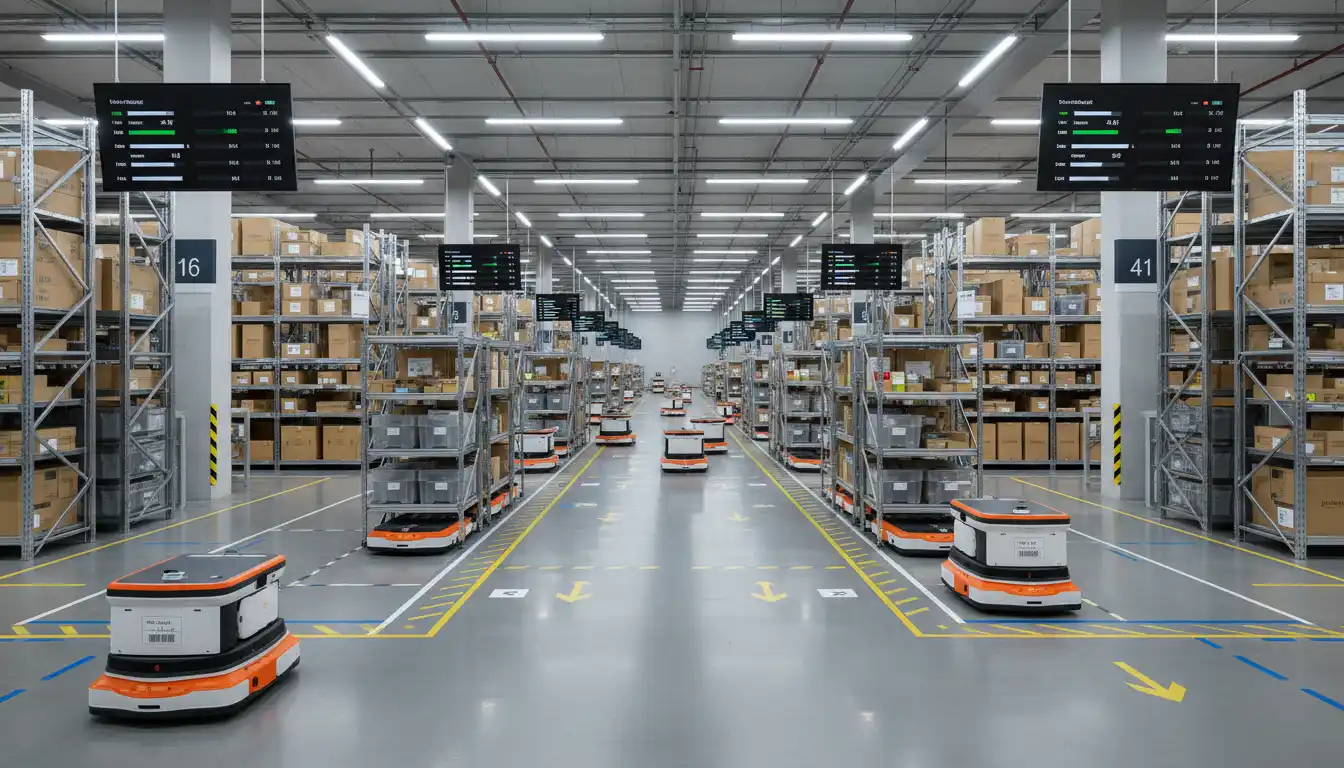
Autonomous mobile robots are the backbone of many Amazon-style fulfillment centers. These robots:
- Navigate warehouse floors using sensors, cameras, and LiDAR
- Carry shelves, bins, or pallets to specific workstations
- Communicate with a central warehouse management system (WMS) in real time
By optimizing travel routes and sharing traffic data, AMRs help minimize congestion and keep goods moving efficiently across the warehouse.
2. Robotic Picking and Packing Systems
Robotic arms with advanced grippers are increasingly used for picking and packing tasks. Supported by computer vision and machine learning, they can:
- Recognize different product shapes, sizes, and packaging
- Select the right grip strength to avoid damage
- Place items accurately into totes, bins, or shipping boxes
Although human pickers still play a crucial role, robotic picking reduces repetitive strain injuries and ensures consistent performance around the clock.
3. Automated Storage and Retrieval Systems (AS/RS)
AS/RS technologies transform vertical space into highly dense, organized storage. These systems:
- Use shuttles, cranes, or vertical lifts to store and retrieve goods
- Reduce the footprint required for inventory
- Integrate with AMRs and conveyor systems for seamless material flow
The result is higher storage capacity and faster access to products, even in compact facilities.
4. Artificial Intelligence and Warehouse Management Software
Robot-assisted warehouses only reach their full potential with smart software. AI-powered algorithms and warehouse management systems:
- Assign tasks dynamically to robots and workers
- Optimize picking routes and storage locations
- Predict demand and adjust inventory placement
By learning from historical data, the system continuously improves throughput and reduces bottlenecks.
Benefits of Amazon-Style Robot-Assisted Logistics
Higher Speed and Throughput
One of the main advantages of robot-assisted warehouses is speed. Robots can move quickly and continuously without fatigue, enabling:
- Shorter order processing times
- Faster same-day or next-day delivery options
- Increased order volumes during peak seasons
This performance level helps e‑commerce companies meet rising customer expectations.
Improved Accuracy and Fewer Errors
Automated scanning, guided picking, and real-time tracking reduce human errors in order fulfillment. Robots follow precise instructions, while software checks each step of the process. As a result:
- Orders contain the correct SKUs and quantities
- Return rates due to picking mistakes drop
- Customer satisfaction and brand loyalty increase
Lower Operational Costs
Although the initial investment is significant, robot-assisted warehouses often lower long-term costs. Companies save on:
- Labor expenses for highly repetitive tasks
- Product damage from manual handling
- Energy usage through optimized movement and compact storage
Over time, automation supports scalable growth without proportional increases in labor or facility space.
Safer and More Ergonomic Workplaces
Robots take over the heaviest and most repetitive tasks, such as lifting, walking long distances, or moving large pallets. This shift:
- Reduces workplace injuries
- Decreases fatigue-related mistakes
- Allows human workers to focus on supervision, problem-solving, and quality checks
A safer environment also helps companies retain employees and improve morale.
Key Challenges in Implementing Robot-Assisted Warehouses
Despite the clear benefits, building Amazon-style logistics capabilities is not trivial. Companies face several challenges:
- High Initial Investment
Robots, AS/RS systems, and integrated software require substantial capital. Businesses must carefully calculate ROI and plan phased deployments. - System Integration Complexity
New robotic systems must connect smoothly with existing ERP platforms, order management systems, and transportation management solutions. Poor integration can create data silos and operational friction. - Change Management and Workforce Training
Employees need training to work effectively with robots and analytics tools. Organizations must communicate that technology is augmenting workers, not simply replacing them. - Scalability and Flexibility
E‑commerce patterns change quickly. Robot-assisted warehouses must support new product lines, different packaging formats, and evolving delivery models without major redesigns.
The Future of Robot-Assisted Logistics
Robot-assisted warehouses will continue to evolve with advances in AI, IoT, and robotics. Several trends are already shaping the next generation of Amazon-style logistics:
- More Collaborative Robots (Cobots): Robots designed to work safely alongside people, sharing workstations and tasks.
- Edge Computing and Real-Time Analytics: Faster decision-making at the device level, improving route optimization and traffic control.
- Sustainable Operations: Energy-efficient robots, smart power management, and eco‑friendly facility designs to reduce the carbon footprint of logistics.
- End-to-End Automation: Closer integration between warehouses, last‑mile delivery, and returns processing for a truly connected supply chain.
Companies that invest in these capabilities now gain a strategic advantage, enabling them to offer faster shipping, reliable service, and competitive pricing.
Conclusion: Why Robot-Assisted Warehouses Define Modern E‑Commerce
Robot-assisted warehouses are more than just a trend; they are the operating system of modern e‑commerce. By combining autonomous robots, intelligent software, and human expertise, Amazon-style logistics deliver unmatched speed, accuracy, and scalability.
Organizations that adopt robot-assisted warehouse solutions can:
- Handle rapid growth in online demand
- Reduce fulfillment costs and errors
- Improve safety and employee satisfaction
- Build a resilient, data-driven supply chain
As technology continues to advance, robot-assisted warehouses will remain at the heart of efficient, customer-centric logistics strategies.