
Apple Ends $599 Mac mini: What It Means for AI Demand and Users
Apple has quietly removed its most affordable $599 Mac mini from its online store, signaling a notable shift in both pricing strategy and product positioning. The move, first spotted by MacRumors, leaves the Mac mini lineup starting at $799, now limited to configurations with at least 512GB of storage. While Apple has not officially confirmed the discontinuation, industry signals strongly suggest that rising demand for AI workloads and hardware constraints played a key role.
Rising AI Demand Is Reshaping Mac mini Pricing
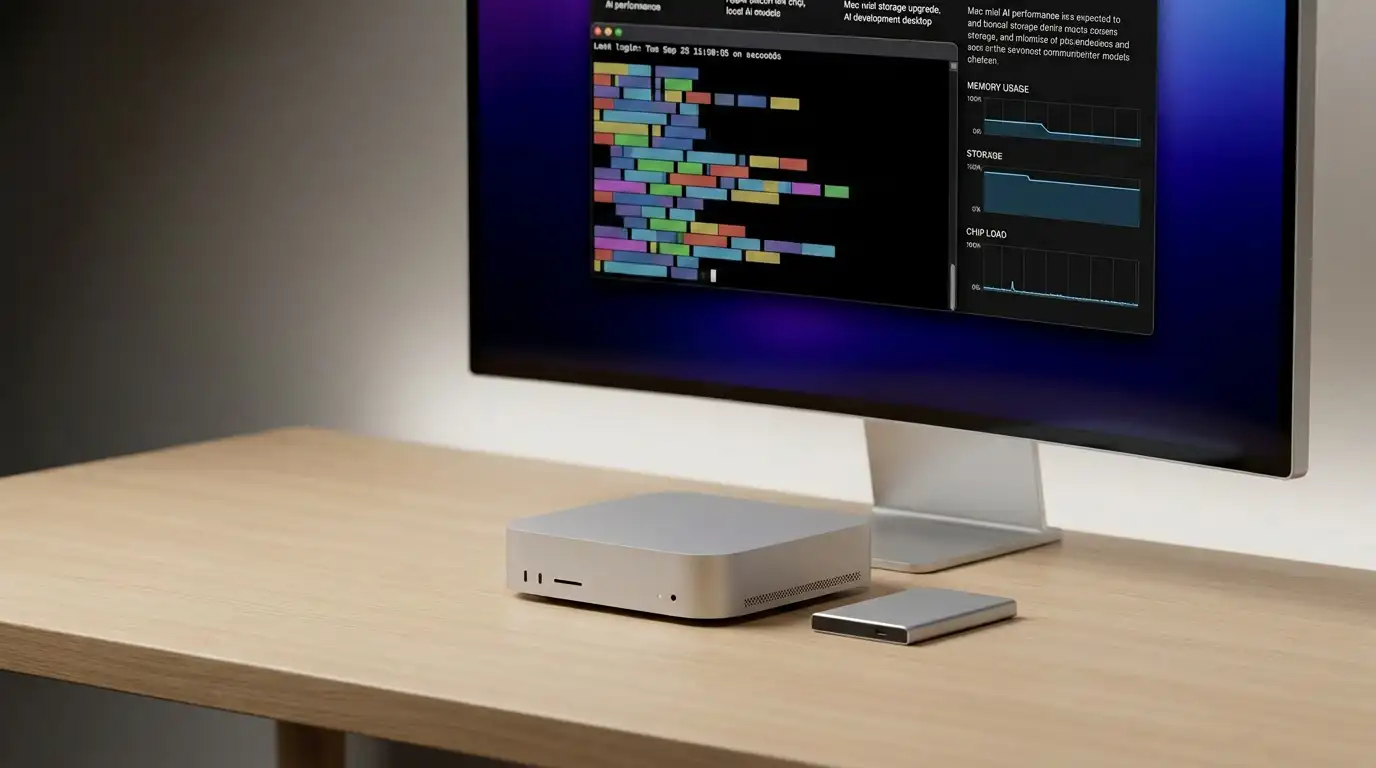
The Mac mini has become an unexpectedly popular device among developers and AI enthusiasts. Thanks to Apple Silicon chips like the M4, combined with efficient unified memory architecture, the Mac mini has proven capable of running local large language models (LLMs) and AI agents smoothly.
Many users adopted the base $599 model as a cost-effective entry point for experimenting with AI tools, including automation frameworks and agent-based systems like OpenClaw. This surge in demand likely contributed to supply pressure, especially on components like RAM and SSD storage.
Apple CEO Tim Cook recently acknowledged this trend, noting that the Mac mini and Mac Studio are seeing stronger-than-expected demand driven by AI applications. As a result, Apple appears to be optimizing its lineup toward higher-margin configurations that better support these use cases.
Why Apple Removed the Entry-Level Model
Several factors explain Apple’s decision:
- Increased demand for AI-capable hardware
- Supply constraints on memory and storage components
- Shift toward higher baseline specifications
- Strategic pricing alignment with premium positioning
The 256GB storage option, once standard at the base level, may no longer meet the expectations of AI users who require more space for models, datasets, and workflows. By starting at 512GB, Apple ensures that every Mac mini sold is more aligned with modern computing needs.
Impact on Consumers and Developers
For everyday users, the price increase may feel like a setback. The $599 Mac mini was widely praised as one of Apple’s best-value products in years. It offered strong performance, compact design, and versatility at a relatively low cost.
However, for developers and AI enthusiasts, the change might actually improve the out-of-the-box experience. With more storage and better baseline configurations, users can immediately run more demanding tasks without needing upgrades or external drives.
Still, the absence of a true budget Mac mini leaves a gap in Apple’s lineup. Unlike the MacBook Neo, which offers a lower-cost alternative in the laptop category, there is currently no equivalent desktop option.
The Bigger Picture: AI Is Driving Hardware Evolution
This shift highlights a broader trend across the tech industry. As artificial intelligence becomes more integrated into everyday workflows, hardware requirements are increasing. Devices that once served basic computing needs must now handle:
- Machine learning inference
- Local AI model execution
- Data processing workloads
- Automation and agent systems
Apple’s decision reflects this transition. Rather than maintaining a low-cost entry point, the company is prioritizing performance-ready machines that align with future demand.
Will the $599 Mac mini Return?
It remains unclear whether Apple will reintroduce a cheaper Mac mini in the future. If supply chain pressures ease and component costs stabilize, a lower-priced model could return. However, given the current trajectory, Apple seems focused on moving upmarket rather than down.
For now, users seeking an affordable macOS desktop may need to consider refurbished units or alternative Apple devices.
Final Thoughts
The removal of the $599 Mac mini marks more than just a price change—it reflects the growing influence of AI on consumer hardware. As demand for powerful, compact computing continues to rise, Apple is adapting its product strategy accordingly.
While this may limit accessibility for some users, it also signals a future where even entry-level machines are designed with advanced workloads in mind.
Recommended Product on Amazon
If you’re looking for a powerful alternative, consider:
Apple Mac mini – A strong balance of performance and value for AI and development tasks.