
Matter Smart Home Protocol Updates: What New Devices Are Supported?
The smart home industry has moved quickly in the last few years, but one problem has frustrated users from the beginning: compatibility. Many people bought smart devices only to discover that their lights, locks, speakers, and sensors did not work smoothly together. Matter changed that conversation. Instead of forcing consumers to stay inside one brand ecosystem, Matter created a common language for smart home products.
Today, Matter smart home protocol updates matter more than ever because the standard now supports a wider range of devices and stronger cross-platform performance. Apple, Google, Amazon, Samsung, and many other brands continue to expand their support for Matter, making the connected home easier to build and manage. As the ecosystem grows, users want to know one thing: what new devices are now supported?
In short, the answer is encouraging. Matter no longer focuses only on basic smart home gadgets. It now supports more practical, whole-home categories that improve comfort, automation, energy efficiency, and security. This shift makes the smart home standard more valuable for everyday users rather than just early adopters.



What Is Matter and Why Does It Matter?
Matter is a universal smart home connectivity standard designed to help devices from different brands work together. The Connectivity Standards Alliance developed it with support from major technology companies. Its goal is simple: reduce friction in the setup process and improve interoperability across ecosystems.
With Matter, users can connect compatible devices to platforms such as Apple Home, Google Home, Amazon Alexa, and Samsung SmartThings with fewer compatibility concerns. That means a smart bulb from one company can often work with a voice assistant or hub from another company more easily than before.
This interoperability gives Matter a clear advantage over older fragmented systems. It also improves user confidence. People now feel more comfortable investing in new connected devices because they know the ecosystem has a stronger long-term foundation.
Early Matter Support Focused on the Basics
When Matter first entered the market, it supported several core product types. These included smart lights, plugs, switches, thermostats, door locks, blinds, sensors, and media devices such as TVs and streaming products. That first wave made sense because these categories represent the most common entry points in a connected home.
However, many consumers wanted more. They wanted robot vacuums, advanced appliances, energy management devices, and deeper control over the home environment. Manufacturers also needed broader support so they could bring more of their product lines into the Matter ecosystem.
That is why the latest Matter updates feel so important. They push the protocol beyond the starter-kit phase and into a more mature smart home compatibility model.
New Device Categories Now Supported by Matter Updates
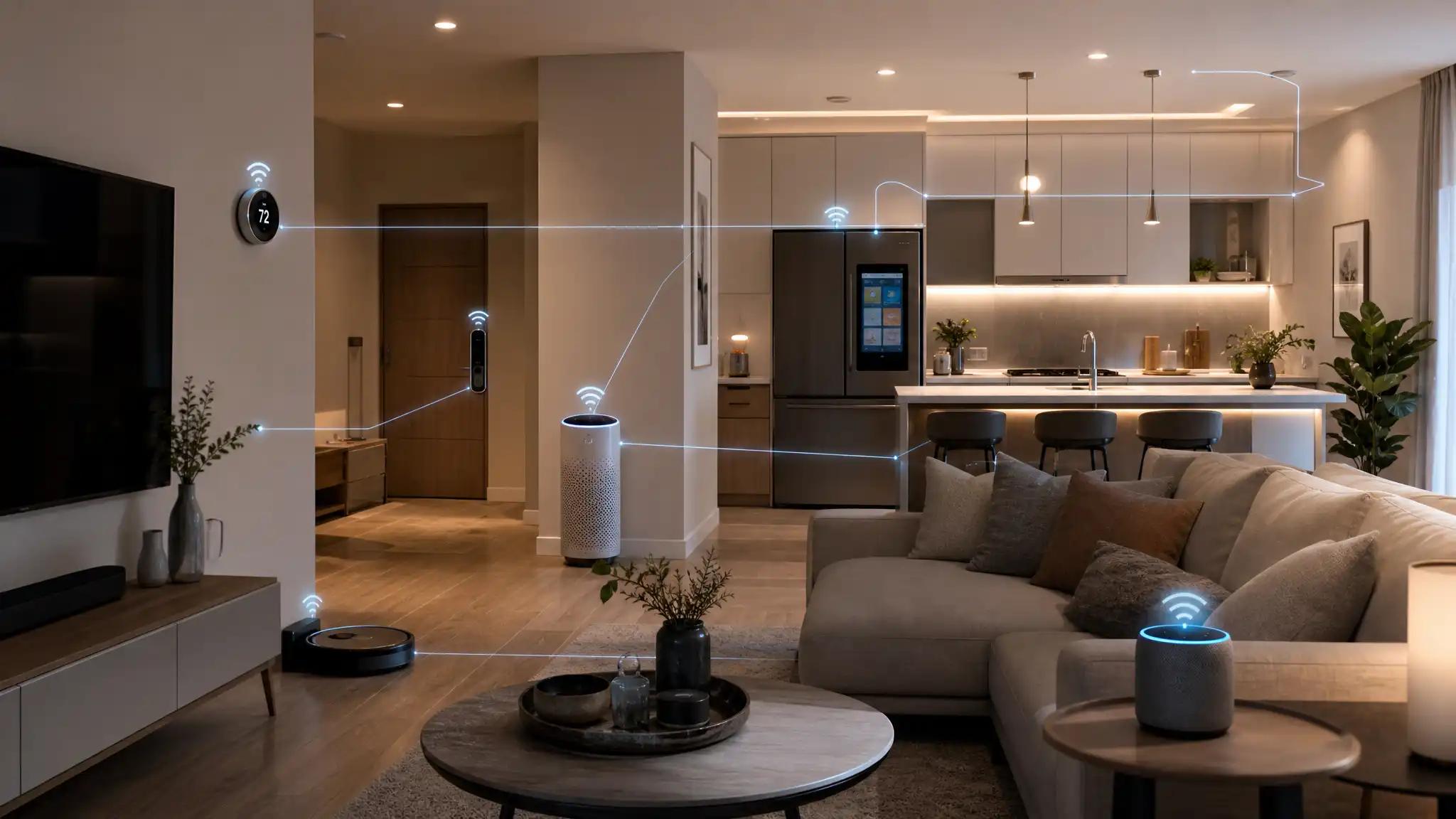
Recent Matter protocol updates have expanded the list of supported device types in meaningful ways. Instead of offering only basic automation products, Matter now covers categories that make the connected home more complete.
1. Refrigerators
Smart refrigerators represent one of the more practical additions to the Matter ecosystem. These devices can report status, send alerts, and integrate more smoothly into a broader home automation setup. For example, a refrigerator may share temperature data, door-open notifications, or maintenance warnings inside a unified smart home app.
This addition matters because it brings large home appliances into the cross-platform smart home world. It also shows that Matter home automation is moving toward full-home management instead of isolated device control.
2. Room Air Conditioners
Room air conditioners now have stronger Matter device support in newer updates. This category adds real convenience for users who want climate control without juggling multiple apps. A Matter-compatible air conditioner can work inside routines, voice commands, and energy-saving schedules.
For example, a homeowner can create an automation that lowers shades, turns on the air conditioner, and adjusts a smart ceiling fan when indoor temperatures rise. That type of seamless action reflects the real promise of a connected home ecosystem.
3. Dishwashers
Dishwashers may not sound exciting at first, but their inclusion shows how seriously Matter takes appliance integration. Smart dishwashers can share cycle status, send completion alerts, and support remote monitoring through compatible platforms.
This kind of support helps the smart home platform evolve beyond novelty. People do not just want flashy gadgets. They want useful, time-saving tools that fit naturally into daily life.
4. Laundry Washers and Dryers
Laundry appliances now stand out as another major category in the new Matter updates. Washers and dryers can notify users when a cycle ends, report operational states, and potentially work with routines in more intelligent ways.
Imagine receiving a voice alert through a smart speaker when the dryer finishes, or triggering a utility-room light when the washer starts. These are small improvements, but they make the home feel more responsive and integrated.
5. Robotic Vacuums
Robot vacuums are one of the most requested additions in the Matter ecosystem. Their support makes sense because they are now common in modern homes, yet they often depend on closed apps and brand-specific controls. With Matter, users gain a simpler way to control cleaning routines across platforms.
A Matter-enabled robot vacuum can become part of broader automation logic. For instance, it can start cleaning after everyone leaves the house or pause automatically when a door sensor shows someone has entered the room. This is a strong step forward for cross-platform smart devices.
6. Smoke and Carbon Monoxide Alarms
Safety devices now play a larger role in Matter protocol expansion. Smoke alarms and carbon monoxide alarms bring critical alerts into the smart home network. These products can help create a more unified home safety experience by sharing warnings with other systems.
For example, if a smoke detector triggers, connected lights may flash, smart speakers may announce an alert, and homeowners may receive a notification on their phones. This makes the smart home technology ecosystem more practical and protective.
7. Air Quality Sensors and Purifiers
Indoor air quality has become a major concern for many households. Matter updates now support devices such as air quality sensors and air purifiers more effectively. These products help users monitor pollutants, humidity, or particulate levels while linking that data to other smart systems.
A smart home setup can respond automatically. If air quality drops, the purifier can turn on, windows can stay closed, and fans can adjust accordingly. This kind of environmental intelligence helps Matter stand out as more than a convenience standard.
8. Fans and Enhanced Climate Devices
Fans have also gained better support under newer Matter specifications. Ceiling fans, room fans, and related airflow devices can now join broader automations with more consistency. This supports a more complete approach to home comfort, especially when combined with smart thermostats and sensors.
Instead of managing climate through separate control layers, users can now create a more unified smart home integration strategy. That leads to better energy efficiency and more personalized routines.
Why These Matter Updates Are Important for Consumers
These new supported devices do more than increase the product list. They change how people think about the smart home. In the past, many users saw smart devices as add-ons. Now, Matter makes them feel like connected parts of a larger system.
This development brings several real advantages:
- It reduces platform lock-in.
- It improves smart device compatibility.
- It simplifies setup and day-to-day control.
- It encourages brands to build around one common standard.
- It makes future upgrades easier for consumers.
That last point is especially important. Buyers do not want to replace devices every time a platform changes direction. Matter offers more stability, and that helps users build with more confidence.
How Matter Improves Smart Home Interoperability
Smart home interoperability remains the biggest reason for Matter’s growing relevance. A user may own an iPhone, a Google Nest speaker, and an Amazon-compatible TV in the same home. Without a shared standard, those devices may work in limited or awkward ways. Matter improves that situation by giving manufacturers one framework for communication.
It does not erase every difference between platforms, and some advanced brand-specific features may still stay inside native apps. Still, the base experience becomes smoother. Setup becomes easier. Control becomes more centralized. Automation becomes more reliable.
This balance matters because people want flexibility. They do not want to rebuild their homes around one company’s rules.
What This Means for Brands and the Future of the Smart Home
For manufacturers, wider Matter support creates both pressure and opportunity. Companies that adopt the standard can appeal to more buyers because they reduce compatibility concerns at the point of purchase. At the same time, brands that delay support risk looking outdated in a market that values openness.
For consumers, the future looks more practical than experimental. We are moving toward a smart home industry where devices cooperate more naturally. That trend should increase adoption, reduce frustration, and create better daily experiences.
Future Matter updates will likely keep expanding device categories and deepening functionality. Energy management products, home monitoring tools, and advanced automation accessories may continue to grow in importance. As this happens, Matter will become less of a feature badge and more of an expected standard.
Should You Buy Matter-Compatible Devices Now?
Yes, in most cases, buying Matter-compatible devices now makes sense. The ecosystem is more mature than it was in its earliest phase, and recent updates have made the standard much more useful. If you want a future-ready smart home, Matter gives you better odds of long-term flexibility.
However, buyers should still check a product’s exact Matter features before purchasing. Some devices may support core Matter functions but reserve more advanced settings for their own apps. That does not make them bad products, but it means expectations should stay realistic.
Still, the direction is clearly positive. Matter is no longer a promising idea alone. It is becoming a real foundation for the next generation of smart home devices.
Final Thoughts
Matter smart home protocol updates have expanded the ecosystem in ways that truly matter for everyday life. Support for refrigerators, air conditioners, dishwashers, laundry appliances, robotic vacuums, safety sensors, air quality products, and fans shows that the standard is becoming more complete and practical.
This evolution makes the connected home simpler, more open, and more useful. Instead of forcing users to choose between ecosystems, Matter encourages a more flexible model where devices can communicate across platforms. That is good news for homeowners, renters, and anyone who wants a smarter home without unnecessary complexity.
As brands continue to adopt the standard, Matter will likely become the backbone of modern smart home technology. For consumers, that means easier buying decisions, better interoperability, and more confidence that the devices they choose today will still make sense tomorrow.
Amazon.com Product Recommendation
Recommended product: Amazon Echo
Why this product works well:
- It supports a wide smart home setup.
- It helps manage Matter-compatible devices more easily.
- It also acts as a practical hub for voice control and automation.
- It fits well for users who want to build a flexible connected home ecosystem.