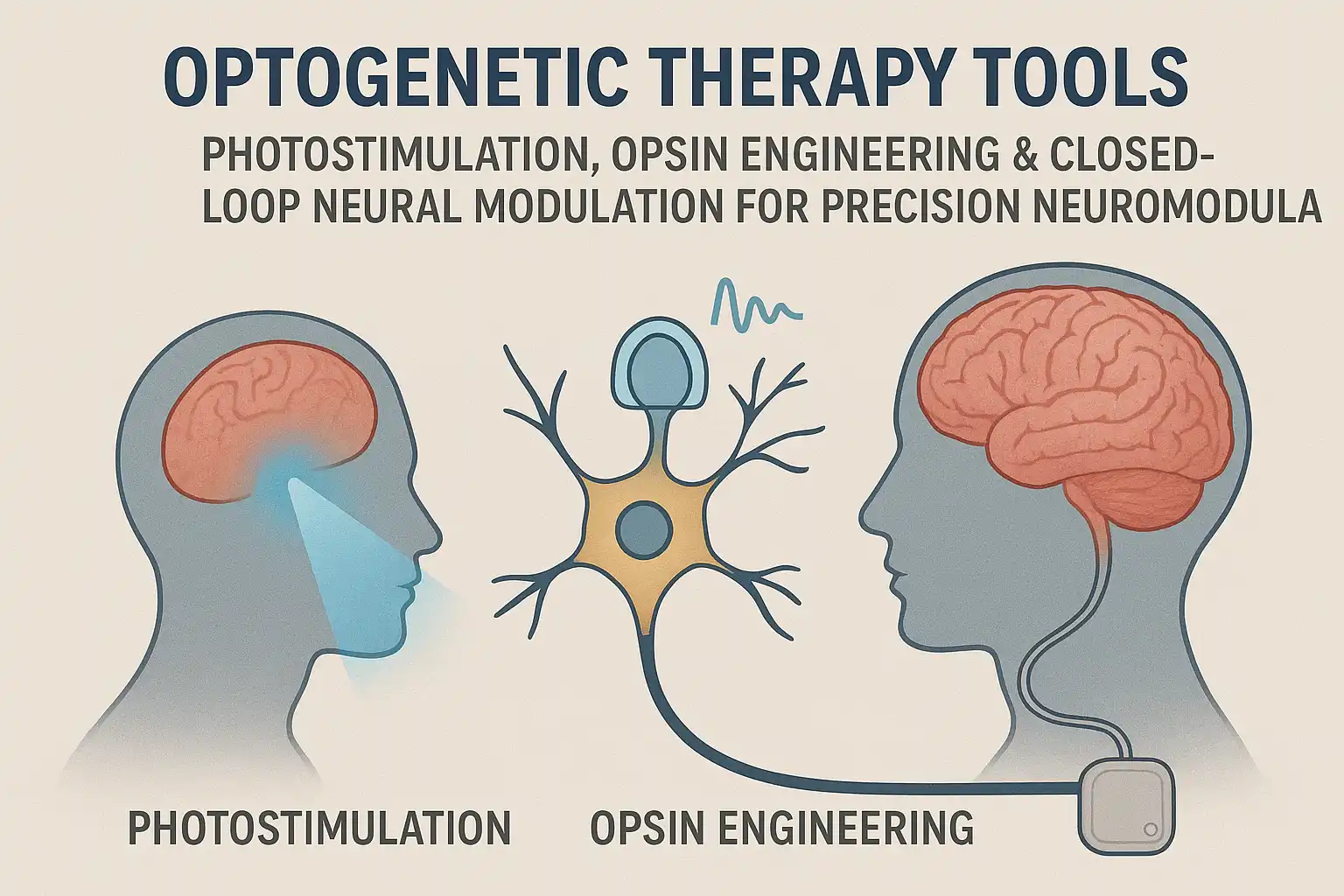

Optogenetic Therapy Tools — Controlling Neurons with Light
What is optogenetic therapy?
Optogenetics is a groundbreaking neurotechnology that combines genetics and optics to control specific populations of neurons with light. By introducing light-sensitive proteins—known as opsins—into targeted cells, researchers and clinicians can activate or inhibit neural activity with millisecond precision. Optogenetic therapy tools translate this capability into laboratory techniques and emerging treatments, offering unprecedented spatial and temporal control over brain circuits implicated in neurological and psychiatric disorders.
Core components of optogenetic systems
An optogenetic experiment or therapeutic approach typically relies on three components: a genetic strategy to express opsins in chosen cells, a light-delivery system to illuminate those cells, and a recording or behavioral readout to monitor effects. Each component has numerous technical variations, and the combination chosen depends on whether the goal is basic research, preclinical validation, or clinical translation.
Opsins: the molecular switches
Opsins are light-sensitive proteins, either natural or engineered, that control ion channels or G-protein pathways in response to specific light wavelengths. For instance, Channelrhodopsins (ChR) excite neurons with blue light, while halorhodopsins and archaerhodopsins inhibit them with yellow or green light. Modern opsin engineering has yielded red-shifted variants for deeper tissue penetration and step-function opsins for sustained modulation, broadening therapeutic possibilities.
Gene delivery and cell targeting
Delivering opsin genes to the right cells is central to optogenetic therapy. Viral vectors—especially adeno-associated viruses (AAVs)—are widely used because of their efficiency and relative safety. Cell-type specificity can be achieved through promoter selection, Cre-lox conditional systems, or retrograde vectors that target projection-defined neurons. Non-viral approaches, including nanoparticles and mRNA delivery, are being explored to address immunogenicity and regulatory concerns for human use.
Light delivery: from fibers to wireless implants
Light must reach opsin-expressing neurons without causing excessive heating or damage. In small animals, optical fibers coupled to lasers or LEDs are common. For larger brains and potential clinical applications, implantable optical probes, wireless micro-LED arrays, and flexible polymer waveguides allow chronic stimulation with reduced tethering. Advances in miniaturized electronics and biocompatible materials have enabled closed-loop devices that sense neural activity and adapt light delivery in real time.
Readouts and closed-loop control
Optogenetic interventions are paired with electrophysiological recordings, calcium imaging, or behavioral assays to measure outcomes. Closed-loop optogenetics integrates sensing and stimulation to modulate pathological activity patterns—for instance, detecting seizure onset and delivering inhibitory light pulses to abort an epileptic event. Closed-loop systems increase efficacy while minimizing unnecessary stimulation and side effects.
Research applications driving therapeutic ideas
Optogenetics has revolutionized systems neuroscience by allowing causal tests of circuit function. Studies manipulating specific cell types have clarified mechanisms underlying movement, reward, fear, and cognition. Those mechanistic insights guide therapeutic hypotheses: which circuit to target, when to stimulate or inhibit, and what temporal pattern might normalize function in disease. This bench-to-bedside pathway accelerates rational design of interventions for disorders like Parkinson’s disease, epilepsy, depression, and chronic pain.
Clinical and translational challenges
Translating optogenetic tools from animals to humans poses scientific, technical, and regulatory hurdles. Long-term expression of opsins must be safe and stable; vectors and genetic constructs need robust safety data. Light delivery in deep human brain structures requires minimally invasive, durable implants with low infection risk. Immune responses to viral vectors or opsin proteins must be managed. Finally, ethical considerations about manipulating neural activity—especially in psychiatric indications—demand careful consent frameworks and oversight.
Advantages over traditional neuromodulation
Optogenetic therapy offers key advantages relative to electrical stimulation approaches like deep brain stimulation (DBS). It enables cell-type selectivity, avoiding activation of passing fibers and non-target cells; it provides fine temporal control to match native firing patterns; and it can dissect circuit contributions to behaviors with higher specificity. These properties can reduce side effects and increase therapeutic precision when successfully translated.
Safety, ethics, and regulatory landscape
Safety evaluations focus on insertional mutagenesis risk, vector biodistribution, off-target expression, and phototoxicity. Ethical issues include identity and autonomy concerns, potential long-term cognitive effects, and equitable access to advanced therapies. Regulatory pathways for gene-based neuromodulation are still evolving; collaborative efforts among scientists, clinicians, regulators, and patient groups are essential to set standards for trials and eventual clinical use.
Current clinical progress and case studies
Early-phase clinical research has begun to test optogenetic strategies for vision restoration and sensory prosthetics. Retinal therapies, where light can access the target tissue noninvasively, are among the first realistic clinical applications. For deeper brain targets, hybrid approaches—combining viral delivery with implantable optics—are in preclinical development. Each incremental success yields data on durability, efficacy, and side-effect profiles necessary for larger trials.
Future directions: integration and personalization
Future optogenetic therapy tools will likely integrate multi-modal sensing (electrophysiology, optical imaging, biomarkers) with adaptive algorithms for personalized neuromodulation. Gene-delivery vectors will improve in specificity and safety; opsins will be engineered for different kinetics and spectral sensitivity; and light-delivery hardware will shrink further while enhancing biocompatibility. Combining optogenetics with pharmacology, cell therapy, or brain-computer interfaces may provide combinatorial strategies for complex disorders.
Practical considerations for researchers and clinicians
For laboratories, choosing the right opsin-vector-light combination depends on species, brain region, and experimental goals. Researchers should validate expression patterns, light penetration, and behavioral effects, and monitor for immunological responses. Clinicians aiming for translation must build multidisciplinary teams—neurosurgeons, neurologists, geneticists, bioengineers, ethicists—and work within evolving regulatory frameworks to design safe, ethical trials.
Conclusion
Optogenetic therapy tools represent a transformative approach to modulating brain circuits with unparalleled precision. Advances in opsin engineering, gene delivery, and implantable optics are making targeted, light-driven neuromodulation increasingly viable. Interdisciplinary collaboration is essential to translate mechanistic insights into safe, effective treatments.