
If you’re choosing between Google Pixel and Samsung Galaxy in 2025, you’re really deciding between two different visions of Android. Pixel prioritizes pure Android, AI-first features, and computational photography, while Galaxy offers powerhouse hardware, expansive displays, and a deep ecosystem with premium extras like S Pen support. This guide compares design, performance, cameras, battery, software, AI, ecosystem, updates, and price to help you make the right call.
Bottom line up front
- Choose Pixel if you want the cleanest Android experience, the smartest camera processing, long and fast updates, and Google AI features without bloat.
- Choose Galaxy if you want the best displays, top-tier performance, flexible hardware (foldables, S Pen), and a feature-rich ecosystem with robust customization.
Design and build quality
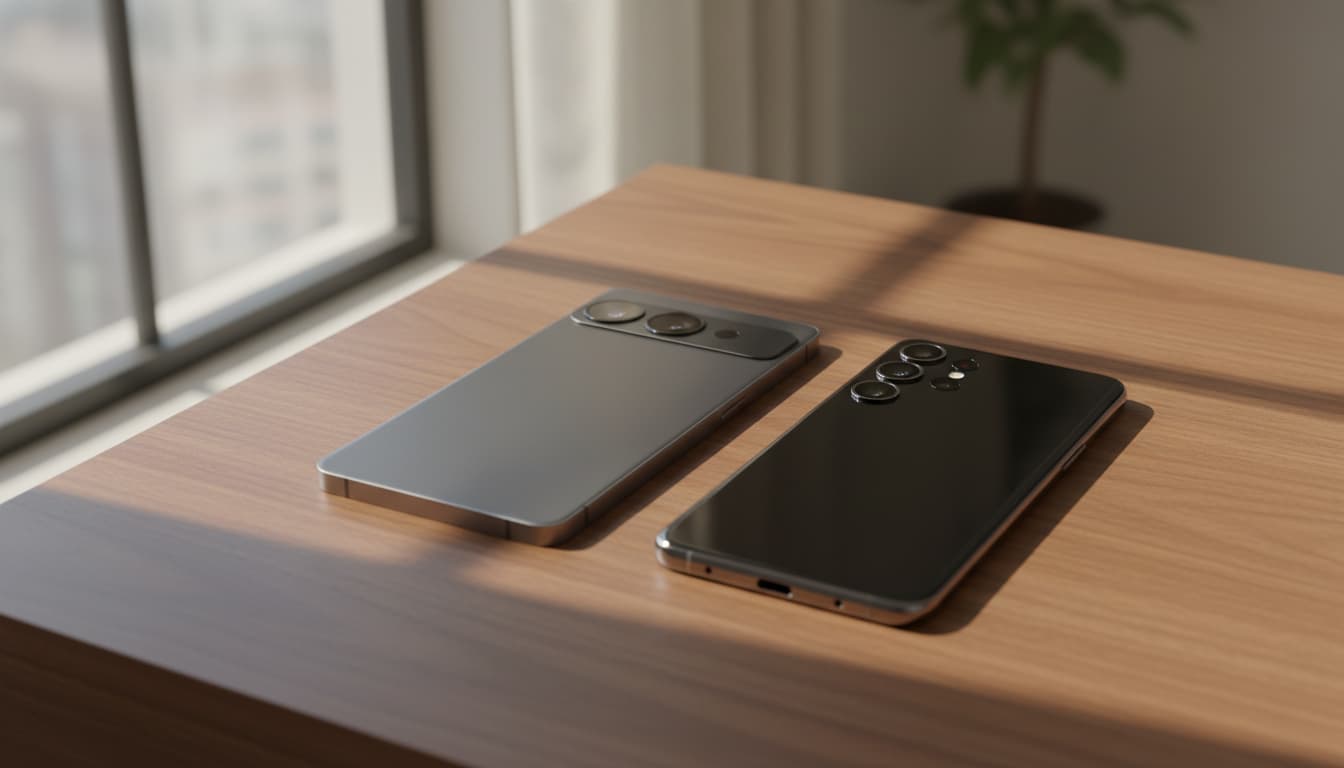
Samsung Galaxy phones typically lead in industrial design variety. In 2025, the Galaxy S line continues with squared, minimalist aesthetics, polished aluminum frames, and class-leading IP ratings. Samsung’s foldables have matured—hinges are sturdier, creases are less visible, and outer screens are more usable. The S Pen support on Ultra models adds genuine utility for notes, sketching, and precision editing.
Pixel’s design language is distinctive: the horizontal camera bar, matte or satin finishes, and ergonomic curves. While less flashy than Samsung, Pixels feel refined and purposeful. Build quality is excellent, and the camera bar helps with heat dissipation and stability when laid on a table. Still, if you want ultra-premium hardware variety or a foldable, Galaxy has the edge.
Verdict: Galaxy for hardware diversity and displays; Pixel for understated, functional elegance.
Display quality
Samsung continues to set the bar with AMOLED panels: brighter peak nits, adaptive refresh to 1–120Hz, and exceptional color accuracy after calibration. Outdoor visibility and HDR playback are best-in-class.
Pixel displays have improved steadily—great color, smooth 120Hz, and solid brightness—but Samsung generally ships the brightest screens with finer control over motion smoothness and color modes.
Verdict: Galaxy wins on display tech and brightness; Pixel is very good, but not the class leader.
Performance and thermals
- Galaxy: Flagship Snapdragon variants (or equivalent) deliver top-tier CPU/GPU performance for gaming, 8K/4K video, and multitasking. Samsung’s thermal management has improved to sustain performance longer under load.
- Pixel: Google’s Tensor chips lean into AI acceleration rather than raw benchmark domination. Everyday performance is smooth, but peak gaming or prolonged 4K editing can favor Galaxy. However, Tensor’s on-device AI enables unique features (transcription, call screening, real-time translation) with low power draw.
Verdict: Galaxy for maximum horsepower and gaming; Pixel for AI-accelerated smart tasks.
Camera systems
This is the closest fight—and where preference matters.
- Pixel strengths:
- Computational photography is still the gold standard for point-and-shoot excellence.
- Skin tones and dynamic range are consistently natural and balanced.
- Features like Best Take, Magic Eraser, Audio Magic Eraser, Photo Unblur, and advanced Night Sight make casual photography effortlessly great.
- Video has improved markedly, with better stabilization and noise handling.
- Galaxy strengths:
- Versatile hardware: higher-resolution sensors, long-range optical zooms (especially on Ultra), and more granular manual controls.
- Video features are robust, with reliable autofocus and steady stabilization.
- Detail retention at higher zoom levels often favors Galaxy, especially in daylight.
If you favor “press shutter, get a great photo,” Pixel feels magical. If you’re a power user who values long optical zoom and manual control, Galaxy might be better.
Verdict: Pixel for computational consistency and effortless portraits/night shots; Galaxy for telephoto versatility and pro control.
Battery life and charging
Samsung often wins on charging speeds and wireless power share, with faster wired charging and reliable all-day endurance on larger models. Pixel battery life is solid with adaptive features that learn your routine, and standby drain is low thanks to software optimization. Charging speeds, however, tend to trail Samsung’s.
Verdict: Galaxy for faster charging and slightly better endurance on Ultra-class devices; Pixel is efficient and consistent.
Software experience and updates
- Pixel: The cleanest version of Android, with day-one OS updates, monthly Feature Drops, and quick security patches. No duplicate apps, minimal preloads, and a cohesive design aligned with Material You. Google AI is deeply integrated into calling, texting, translation, and photo/video tools.
- Galaxy: One UI is polished and rich with features—multitasking tools, pop-up windows, split-screen, and routine automation. There are duplicates (Samsung and Google apps), but power users appreciate the depth. Samsung has matched or closely followed industry-leading update policies, offering many years of OS and security updates.
Verdict: Pixel for purity and fastest updates; Galaxy for feature depth and customization.
AI and smart features in 2025
AI is the headline feature for both.
- Pixel AI:
- On-device transcription and translation in Recorder and Live Caption.
- Call Screen and spam filtering that actually reduces interruptions.
- AI photo/video edits that are fast, accessible, and privacy-conscious.
- Contextual assistance within Android that feels natural and lightweight.
- Galaxy AI:
- Generative editing, transcription, translation, and note summaries integrated into One UI.
- Tight coupling with Samsung Notes, S Pen, and multitasking flows.
- Partnered AI services for image generation and productivity.
Both are excellent; Pixel’s AI feels more baked into the OS core, while Samsung blends AI with a broader productivity toolkit.
Verdict: Tie, with Pixel leaning OS-native and Galaxy leaning productivity-plus.
Ecosystem and accessories
Samsung’s ecosystem is expansive: Galaxy Buds, Watches, Tabs, SmartTags, TVs, and Windows integration via Quick Share and Link to Windows. If you’re already in the Samsung or SmartThings world, Galaxy is the seamless choice. S Pen support remains a unique differentiator.
Google’s ecosystem is simpler but clean: Pixel Buds, Pixel Watch, Nest devices, and Chromecast. Cross-device features are improving, and if you live in Google services (Gmail, Docs, Photos), Pixel feels frictionless.
Verdict: Galaxy for breadth and accessories; Pixel for simplicity with Google services.
Security and privacy
Both brands offer secure enclaves and long-term patching. Pixel emphasizes private compute for on-device AI tasks and rapid security updates. Samsung Knox provides enterprise-grade protections and robust work profiles. For fastest security patches and minimal bloat, Pixel has a slight advantage; for corporate/MDM use, Samsung’s tooling may be preferred.
Price and value
- Pixel typically offers aggressive value: competitive cameras, long updates, and AI features at prices that undercut Ultra-tier flagships.
- Samsung ranges from budget A-series to premium Ultras and foldables. Discounts are frequent, and trade-in deals can be excellent, making a Galaxy Ultra or Fold more attainable than sticker price suggests.
If you buy at MSRP, Pixel often feels like the smarter value. If you leverage Samsung’s promotions, a Galaxy model with superior hardware can be surprisingly affordable.
Who should buy what in 2025?
- Buy Pixel if you want:
- Best-in-class computational photography out of the box
- Clean Android with day-one updates
- Deep, on-device Google AI features
- Great value without chasing promos
- Buy Galaxy if you want:
- The best display and faster charging
- Long optical zoom and pro camera controls
- S Pen support, foldable options, and a wide accessory ecosystem
- Heavy multitasking and gaming performance
Final verdict
In 2025, “Pixel vs Galaxy” isn’t about better vs worse—it’s about priorities. For effortless photos, uncluttered software, and immediate updates, Pixel shines. For hardware excellence, premium displays, and ecosystem breadth, Galaxy leads. If you’re undecided, consider your top two priorities: if they’re camera simplicity and clean software, go Pixel; if they’re display quality and hardware versatility, go Galaxy.