
Power Solutions for International Travelers: Stay Charged Anywhere in the World
Traveling internationally is exciting, but nothing kills that excitement faster than a dead phone, a laptop that won’t turn on, or a hair dryer that short‑circuits a hotel room. Power solutions for international travelers are no longer a luxury; they are essential for safety, productivity, and comfort. Whether you are a digital nomad, a frequent flyer, or an occasional vacationer, understanding how to power your devices abroad will protect both your gadgets and your trip.
This guide explains the main types of travel power products, how they work, and how to choose the right combination for your needs. It also covers safety tips, packing strategies, and a practical product suggestion you can find on Amazon.
Why International Power Solutions Matter
Different countries use different plug types and voltages. If you plug your device directly into a foreign outlet without the right accessory, you may:

- Fail to charge your devices at all
- Damage or destroy your electronics
- Face unnecessary downtime while traveling for business or emergencies
Reliable power solutions for international travelers help you:
- Keep your phone and laptop charged for navigation, translation, and communication
- Use essential grooming tools and medical devices safely
- Maintain productivity if you work remotely or travel for business
Investing in the right equipment before you leave saves money, time, and frustration later.
Understanding Plugs, Sockets, and Voltage
Before choosing any device, you should understand two critical factors: plug type and voltage.
Plug Types Around the World
There are more than a dozen plug types globally, but the most common are:
- Type A/B: North America, parts of Central and South America, Japan
- Type C/E/F: Most of Europe, parts of Asia, South America
- Type G: United Kingdom, Ireland, UAE, parts of Asia and Africa
- Type I: Australia, New Zealand, China, Argentina
A universal travel adapter accepts different plug shapes and lets you connect to multiple outlet types. However, an adapter does not change the voltage by itself.
Voltage and Frequency Differences
Most countries use either:
- Around 110–120V / 60Hz (e.g., USA, Canada, Japan)
- Around 220–240V / 50Hz (e.g., Europe, UK, Australia, much of Asia and Africa)
Many modern electronics (like smartphones, laptops, and cameras) are dual-voltage. Their chargers usually say something like: Input: 100-240V, 50/60Hz.
- If you see this, you typically only need an adapter, not a converter.
- If your device is single-voltage (e.g., 110V only), you may need a voltage converter to prevent damage when using 220–240V outlets.
Essential Power Products for International Travelers
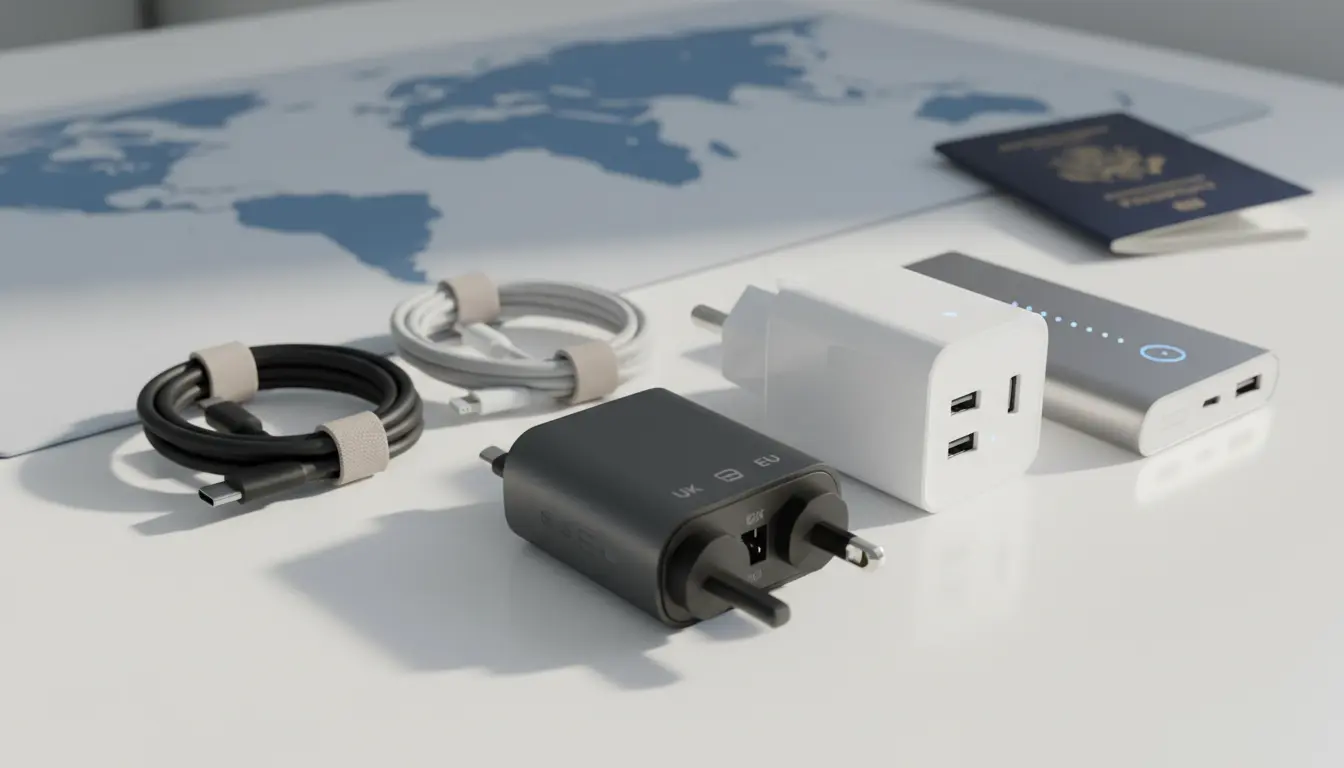
Choosing the right setup usually means combining several products. Each serves a different purpose and works together to keep you powered up in any country.
1. Universal Travel Adapter
A universal travel adapter is the foundation of any international power kit. It usually includes:
- Sliding or fold‑out prongs to fit different outlet types
- One or more AC outlets
- Multiple USB‑A and USB‑C ports
Benefits:
- Works in dozens or even 150+ countries
- Lets you charge multiple devices at once
- Compact and easy to pack in a carry‑on
Look for:
- Built‑in surge protection
- Clearly labeled country compatibility
- Sturdy construction and safety certifications (like CE, FCC, or RoHS)
2. Voltage Converter or Transformer
If you travel with devices like traditional hair dryers, curling irons, electric shavers, or other single‑voltage gadgets, a voltage converter may be necessary.
Converter vs. Adapter:
- Adapter: Changes the shape of the plug
- Converter: Changes the voltage (e.g., from 220–240V down to 110–120V)
Use a converter when:
- Your device is rated only for 110–120V
- The country you visit supplies 220–240V
- Your device is not easily replaceable or expensive to damage
For sensitive electronics such as laptops, it’s often safer to rely on their original dual‑voltage chargers rather than a cheap converter.
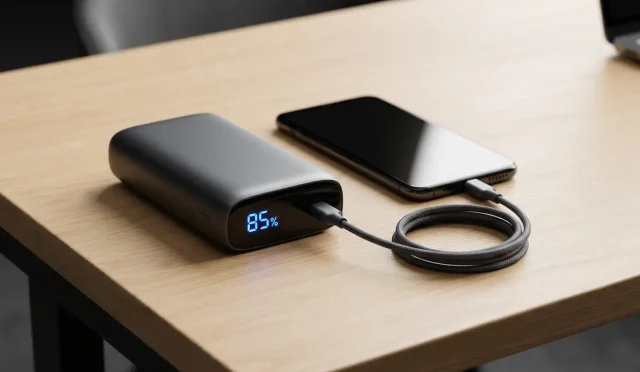
3. Portable Power Bank
A high‑capacity power bank is invaluable when:
- You spend long hours on trains, buses, or planes
- You use your phone heavily for maps, photos, or social media
- You have limited access to reliable outlets
Key features to look for:
- Capacity of 10,000–20,000mAh for typical travelers
- Fast‑charging support (e.g., Power Delivery via USB‑C)
- Multiple ports to charge several devices at once
- Airline‑approved capacity (generally less than 100Wh)
A good power bank ensures your phone, tablet, or earbuds stay alive between hotel stops and airport layovers.
4. Multi‑Port USB Charger
A multi‑port USB wall charger reduces clutter and lets you power multiple devices from a single outlet. This is especially useful in hotel rooms or cruise cabins with limited plugs.
Look for:
- Combination of USB‑C and USB‑A ports
- Support for fast‑charging standards like USB Power Delivery (PD) and Quick Charge
- Compact, foldable design for travel
Pairing a multi‑port charger with a universal adapter gives you a flexible and efficient charging “hub.”
Safety Tips for Using Power Products Abroad
Power solutions for international travelers must also be safe. Follow these guidelines to protect yourself and your equipment:
- Check device labels before every trip to confirm voltage compatibility.
- Avoid daisy‑chaining too many power strips or adapters together.
- Use surge‑protected devices, especially in regions with unstable power.
- Do not exceed the maximum wattage rating of your adapter or converter.
- Keep adapters and converters on hard, ventilated surfaces to prevent overheating.
- Buy from reputable brands with verifiable safety certifications.
Taking a few minutes to inspect your equipment before use prevents accidents and expensive replacements.
How to Choose the Right Power Setup for Your Trip
The best combination depends on your travel style and the countries you visit. Here is a simple decision framework:
- List your devices
- Phone, tablet, laptop, camera, e‑reader, wearables, grooming tools
- Check their voltage
- Are they dual‑voltage (100–240V)? If yes, you likely just need adapters and chargers.
- Identify plug types in your destination countries
- Match them to a universal adapter that covers all locations.
- Decide on extra capacity
- Long travel days? Add a power bank.
- Multiple devices? Bring a multi‑port USB charger.
- Add a converter only if necessary
- Single‑voltage, high‑wattage tools might require a dedicated voltage converter or simply a travel‑friendly dual‑voltage replacement device.
By planning this in advance, you avoid buying overpriced or low‑quality adapters at airports and tourist shops.
Packing Strategy for an Efficient Travel Power Kit
Organized packing keeps your gear accessible and reduces the risk of loss or damage.
- Use a dedicated tech pouch for cables, chargers, adapters, and power banks.
- Label or color‑code cables so you can find the right one quickly.
- Keep one compact adapter and short USB‑C cable in your daypack for flights and day trips.
- Store higher‑wattage chargers and voltage converters in your checked or main luggage (respecting airline rules).
A neatly organized kit makes it easy to set up your “mobile office” or charging station anywhere in minutes.
Amazon Product Recommendation
One practical, widely used product that many international travelers rely on is the EPICKA Universal Travel Adapter, available on Amazon.com.
Key advantages:
- Works in 150+ countries, including the US, UK, EU, and Australia
- Has multiple USB‑A and USB‑C ports for charging several devices at once
- Includes built‑in safety shutters and fuse protection
- Compact design suitable for both leisure and business travel
Pairing an adapter like this with a solid power bank and a multi‑port USB charger will cover most power needs on the road.