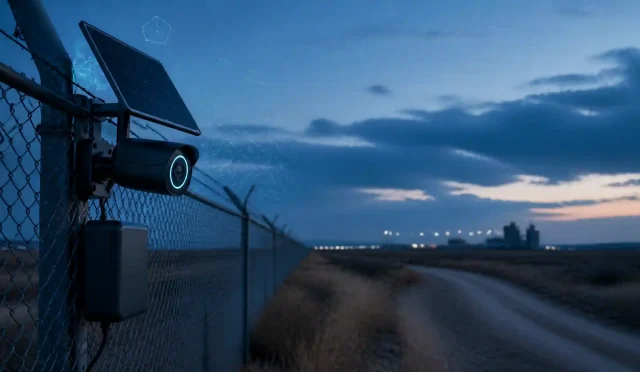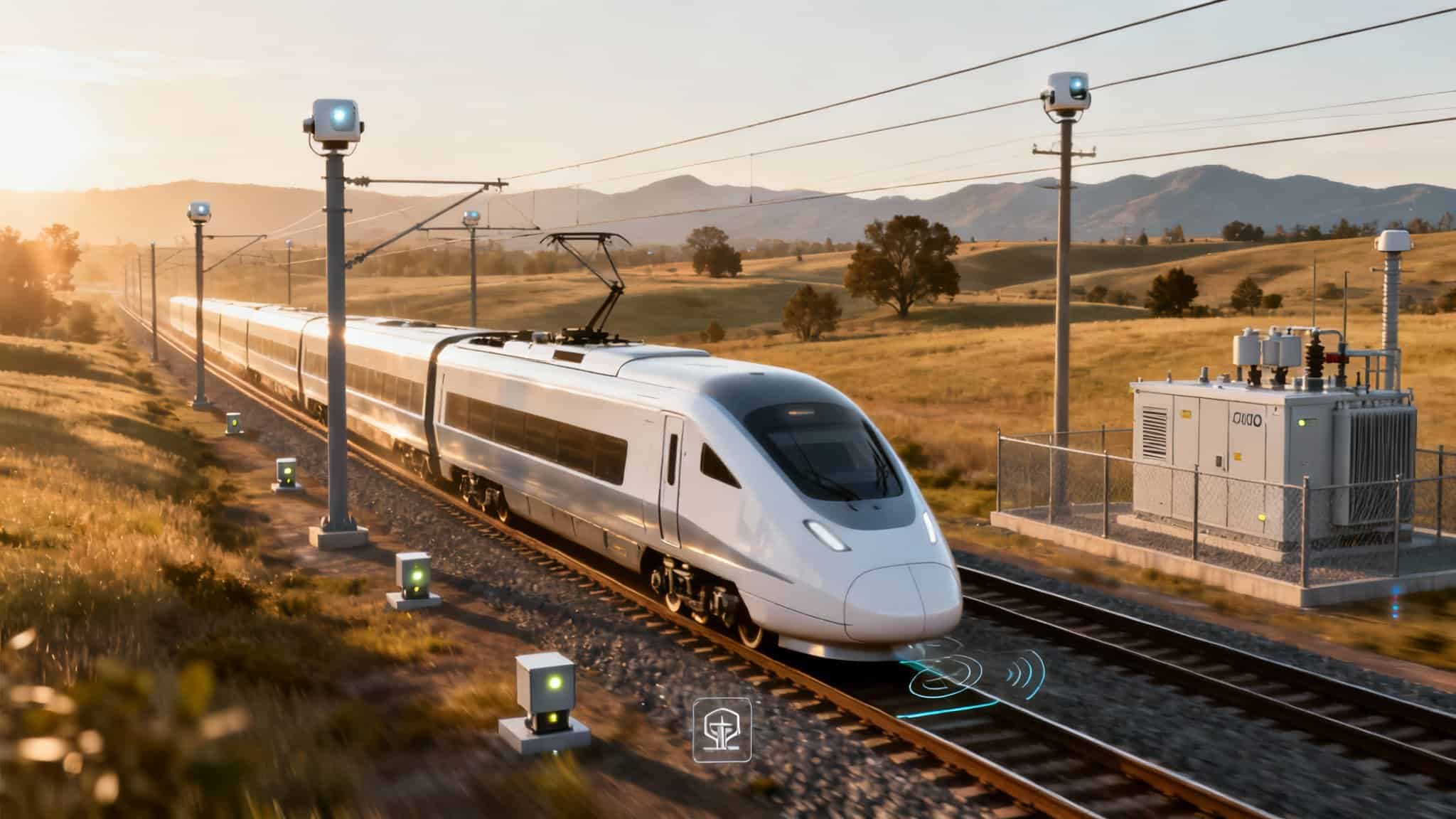

Smart railways are redefining the future of transportation by integrating autonomous operations, AI-driven analytics, and energy-efficient technologies across rolling stock and rail infrastructure. As U.S. cities and logistics corridors pursue greener, safer, and more reliable mobility, autonomous and energy-optimized trains offer a scalable pathway to lower operating costs, fewer emissions, and higher on-time performance. From real-time condition monitoring to driver-assist automation and predictive energy management, the rail sector is undergoing a profound digital transformation that aligns with sustainability mandates and the economics of modern mobility.
What Makes a Railway “Smart”
A smart railway leverages connected sensors, high-bandwidth communications, and edge/cloud AI to orchestrate end-to-end operations:
- Sensing and connectivity:
- IoT sensors across locomotives, carriages, tracks, switches, and overhead lines capture vibration, temperature, power draw, braking patterns, and wheel-rail interface health.
- 5G/FRMCS, LTE-R, and fiber backbones enable low-latency data exchange for control and diagnostics.
- Digital twins and analytics:
- Virtual twins mirror assets and routes to simulate energy usage, wear rates, and timetable scenarios.
- Predictive maintenance models forecast component failures, minimizing downtime and service disruptions.
- Automation layers:
- ATO (Automatic Train Operation) overlays train control to optimize acceleration, cruising, and braking.
- CBTC/ETCS signaling enhances headways, capacity, and safety with continuous speed supervision.
Together, these layers reduce variability, lower energy consumption, and enhance service reliability while maintaining rigorous safety standards.

Autonomous Trains: From Assist to Full Automation
Rail autonomy exists on a spectrum, often beginning with driver-assist and advancing toward unattended operation:
- Grade-of-Automation (GoA) overview:
- GoA1: Manual driving with signaling supervision.
- GoA2: ATO with a driver on board for doors and exceptions.
- GoA3: Driverless operation with staff on board for customer service and emergencies.
- GoA4: Unattended operation—no staff on board, fully automated control and safety.
- Safety architecture:
- Redundant sensors (LIDAR, radar, cameras), positioning (GNSS + inertial), and signal integration (balises, track circuits).
- Fail-safe design ensures any anomaly triggers controlled stops, not unsafe states.
- Use cases:
- Urban metro systems benefit from high-frequency, low headway services.
- Regional and freight corridors adopt automation for energy-optimal cruising, fuel savings, and consistent throughput.
In the U.S. context, automation can complement Positive Train Control (PTC), enhancing situational awareness, speed enforcement, and energy management while meeting Federal Railroad Administration safety expectations.
Energy Efficiency: Optimizing Every Watt
Rail’s inherent efficiency already outperforms road transport, but smart energy strategies unlock additional gains:
- Regenerative braking and onboard storage:
- Trains capture braking energy, feeding it back to the grid or storing in batteries/supercapacitors for reuse during acceleration.
- Eco-driving algorithms:
- AI models adapt speed profiles to gradients, curves, station spacing, and traffic conditions, minimizing peak loads and unnecessary braking.
- Lightweighting and traction:
- Advanced materials reduce mass; permanent magnet or synchronous motors improve drivetrain efficiency.
- Grid and infrastructure integration:
- Wayside energy storage and smart substations stabilize voltage, shave peaks, and buffer renewables.
- Shore power management for yard operations curbs idling and diesel consumption.
- Timetable and dwell optimization:
- Coordinated schedules and platform operations reduce congestion-induced stops, which dramatically cuts wasted energy.
Quantitatively, operators frequently report double-digit percentage reductions in energy consumption when combining ATO, regenerative systems, and timetable optimization—without compromising punctuality.
Predictive Maintenance and Reliability
Energy savings are amplified when trains and infrastructure operate in peak condition:
- Condition-based maintenance:
- Wheel flats, bearing wear, and HVAC inefficiencies are detected early via vibration signatures and power anomalies.
- Track and catenary monitoring:
- Smart inspection cars and fixed sensors detect rail corrugation, ballast degradation, and wire tension deviations.
- Outcome:
- Fewer unscheduled outages, improved mean time between failures, lower lifecycle costs, and safer operations.
For U.S. freight and passenger operators, predictive maintenance dovetails with workforce optimization and parts logistics, ensuring assets spend more time earning revenue and less time in shops.
Cybersecurity and Safety-by-Design
As connectivity grows, so does the attack surface. Smart railways embed cybersecurity at every layer:
- Zero-trust networking across onboard and wayside systems.
- Segmented operational technology (OT) networks, hardened gateways, and continuous anomaly detection.
- Secure OTA updates, cryptographic signing, and rigorous incident response playbooks.
Safety remains paramount: independent safety layers, formal verification of control logic, and compliance with standards such as IEC 62443, EN 50126/8/9, and applicable U.S. regulations safeguard automated decisions.
U.S. Deployment Considerations
For American railroads and transit agencies, practical deployment blends innovation with legacy integration:
- Interoperability with PTC and existing signaling to avoid stranded assets.
- Phased rollout beginning with energy optimization and driver-assist, followed by higher automation grades on controlled corridors.
- Funding and incentives aligned with federal sustainability goals, Buy America provisions, and state-level climate targets.
- Freight corridors targeting fuel savings and velocity improvements, while commuter rail and metro systems prioritize capacity and on-time performance.
Public-private partnerships, open data standards, and vendor-neutral platforms help future-proof investments and accelerate ROI.
Measuring ROI and Sustainability
Decision-makers should anchor business cases in quantifiable outcomes:
- KPIs:
- Energy per seat-mile or ton-mile, on-time performance, headway variability, mean time to repair, safety incident rate, and lifecycle cost per mile.
- Environmental impact:
- Scope 1 and 2 emissions reductions from electrification, hybridization, and energy optimization.
- Financial outcomes:
- Reduced traction energy costs, optimized crew scheduling, fewer penalties for delays, and improved asset utilization.
Transparent reporting strengthens stakeholder trust and aligns with ESG frameworks increasingly valued by investors and regulators.
The Roadmap to Implementation
A pragmatic path to smart, autonomous, and energy-efficient rail includes:
- Baseline assessment:
- Audit energy profiles, timetable adherence, maintenance regimes, and network constraints.
- Data platform foundation:
- Implement a scalable, secure data lakehouse and edge processing for real-time ingestion and analytics.
- Pilot programs:
- Start with eco-driving ATO overlays and predictive maintenance on a contained route segment.
- Feedback loops:
- Continuously refine algorithms with operational data; update digital twins to reflect real-world performance.
- Scale and standardize:
- Extend to additional lines, integrate wayside storage, and expand automation grades where safety and business cases align.
- Governance:
- Establish cross-functional teams for safety, cybersecurity, and compliance; adopt model risk management for AI systems.
Conclusion
Smart railways—anchored by autonomy and energy efficiency—offer a compelling blueprint for the U.S. transportation future. By fusing sensor-rich infrastructure, AI optimization, and secure automation layers, rail operators can deliver cleaner, safer, and more reliable service at scale. Whether moving people across metro regions or goods across national supply chains, autonomous and energy-optimized trains are poised to become a cornerstone of sustainable American mobility.