
Best Smart Thermostats for New York Winter Heating Costs
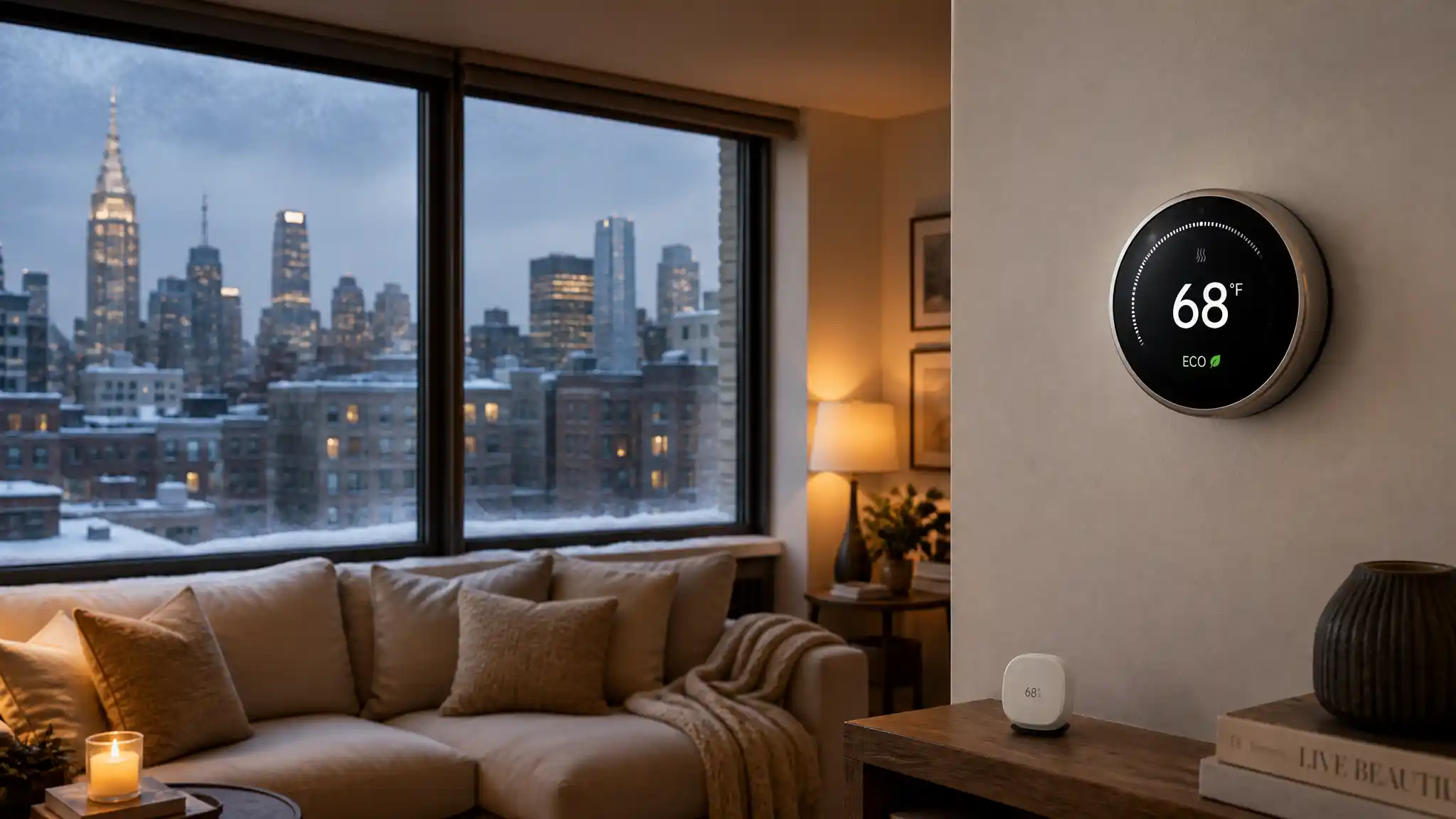
New York winters can place significant pressure on household budgets. Cold temperatures, long heating seasons, and rising energy use often lead to higher utility bills. A smart thermostat can help homeowners manage indoor comfort more efficiently by automating temperature settings, monitoring energy use, and adjusting heating schedules throughout the day.
However, the best device depends on your heating system, home size, insulation, and preferred smart-home platform. Before buying, you should check whether the thermostat works with your HVAC equipment and whether your home has a compatible C-wire.
Why Smart Thermats Can Reduce Heating Costs
A traditional thermostat usually turns the heating system on or off based on one temperature reading. A modern Wi-Fi thermostat can do much more. It can create customized schedules, respond to your location, provide energy usage reports, and let you control the temperature remotely through a smartphone app.


For example, you can reduce the temperature while you are at work and warm the home before you return. You can also create separate settings for sleeping, mornings, weekends, and vacations. These small adjustments may support winter energy savings without requiring you to sacrifice comfort.
Many models also include geofencing. This feature uses your smartphone’s location to recognize when you leave or return home. When configured correctly, geofencing can reduce unnecessary heating in an empty house.
What New York Homeowners Should Check First
New York homes use several types of heating systems. Many apartments and houses rely on gas furnaces, oil boilers, heat pumps, or electric baseboard heating. A thermostat that works well with one system may not work with another.
HVAC Compatibility
Always confirm HVAC compatibility before purchasing. Low-voltage central heating and cooling systems commonly support popular smart thermostats, but high-voltage electric systems require specialized products. Electric baseboard heating, radiant systems, and some older boilers may need a model designed specifically for that equipment.
C-Wire Requirements
Many smart thermostats require a C-wire, also known as a common wire, to provide continuous power. Some devices include a power adapter or installation kit, while others may work without a C-wire in certain setups. If you are unsure about your wiring, consult a qualified HVAC professional before installation.
Remote Sensors
Remote temperature sensors can improve comfort in multi-level homes or rooms that heat unevenly. A sensor placed in a bedroom, nursery, or home office can help the thermostat respond to the temperature where people actually spend time instead of relying only on the hallway reading.
Best Smart Thermostat Features for Cold Weather
The most useful smart thermostat features for New York winters focus on automation and accurate temperature control.
Programmable Scheduling
A programmable thermostat lets you create heating routines for different times of the day. A practical winter schedule might use a comfortable setting in the morning, a lower setting during work hours, and a warmer setting before the household returns.
Avoid creating extreme temperature setbacks. If your home takes too long to warm up, the heating system may run continuously and reduce potential savings. Moderate adjustments usually offer a better balance between comfort and efficiency.
Energy Usage Reports
Energy usage reports show how often your heating system operates and may identify patterns that increase costs. These reports can help you understand whether your home loses heat quickly, whether your schedule needs adjustment, or whether your equipment requires maintenance.
Geofencing and Away Modes
Geofencing automatically switches between home and away settings based on your location. Away modes can be useful for commuters, frequent travelers, and owners of vacant properties. In winter, however, avoid lowering the temperature so far that pipes become vulnerable to freezing.
Smart-Home Integration
Alexa compatibility, Google Home support, and Apple Home integration allow you to control heating with voice commands or smart-home routines. This feature provides convenience, but it should not be the only reason to choose a thermostat. Compatibility with your heating system remains more important.
Popular Smart Thermostat Options
The Ecobee Smart Thermostat Premium is a strong choice for homeowners who want advanced comfort control. It includes a remote sensor, indoor air-quality monitoring, voice assistant support, and detailed energy features. The sensor can help balance temperatures between different rooms, which is useful in larger New York homes.
The Google Nest Learning Thermostat is appealing to users who prefer automatic learning and a polished interface. It can learn temperature preferences, provide energy information, and work with a compatible remote sensor. It may be particularly convenient for households already using Google Home products.
The Amazon Smart Thermostat offers a more budget-friendly option for Alexa users. It supports app-based control, scheduled settings, and Alexa-based adjustments. It has fewer advanced sensor features than premium models, but its simpler design may suit homeowners who want basic automation at a lower initial cost.
For electric baseboard heating, the Mysa Smart Thermostat is one of the most relevant options. Unlike many standard smart thermostats, it is designed for compatible high-voltage electric heating systems. It offers scheduling, geofencing, and energy-focused controls. Before purchasing, confirm that your specific baseboard system meets the product’s requirements.
Independent testing and buying guides from Wirecutter and PCMag also highlight differences in sensors, installation, compatibility, smart-home support, and energy features. Product availability and prices can change, so check the current listing before ordering.
Installation and Winter Safety Tips
Before installation, photograph the wiring on your existing thermostat and label each wire carefully. Turn off power to the HVAC system at the circuit breaker, not only at the thermostat. Follow the manufacturer’s instructions and complete the compatibility check inside the companion app.
After installation, test heating, cooling, fan control, and remote access. Check the thermostat’s temperature against a separate thermometer if one room feels unusually warm or cold.
Keep the thermostat away from direct sunlight, drafts, exterior doors, radiators, and heat-producing appliances. Clean or replace furnace filters according to the equipment manufacturer’s instructions. A smart thermostat cannot compensate for blocked airflow, poor insulation, or a malfunctioning boiler.
Amazon.com Product Recommendation
For many New York homeowners with compatible central HVAC systems, the Amazon Smart Thermostat is a practical recommendation. It provides app control, scheduled heating, Alexa integration, and energy information without the higher cost of premium models. It is best suited to buyers who want straightforward automation and already use Alexa devices. Check the current Amazon Smart Thermostat information on PCMag and verify your HVAC compatibility before buying.
A smart thermostat will not guarantee a lower bill by itself. The greatest results usually come from combining a suitable thermostat with sensible schedules, proper insulation, regular HVAC maintenance, and careful winter temperature management.