
Choosing between the Sonos Era 100 and the Sonos Era 300 looks simple at first, but the decision becomes more interesting when you compare how each speaker fits real listening habits. Both models come from the same premium ecosystem, both support modern streaming features, and both aim to improve your daily audio experience. Still, they serve different types of buyers.
If you want a practical wireless home speaker with strong everyday performance, the Era 100 makes a compelling case. If you want a more cinematic, room-filling experience with Dolby Atmos sound and a wider presentation, the Era 300 stands in a different class. Price also matters. Many buyers do not just want the “better” speaker. They want the better choice for their room, budget, and listening style.
In this guide, we will compare sound quality, design, connectivity, smart features, room performance, and overall value so you can decide which Sonos speaker truly deserves your money.


Design and Size: Compact Practicality vs Bold Presence
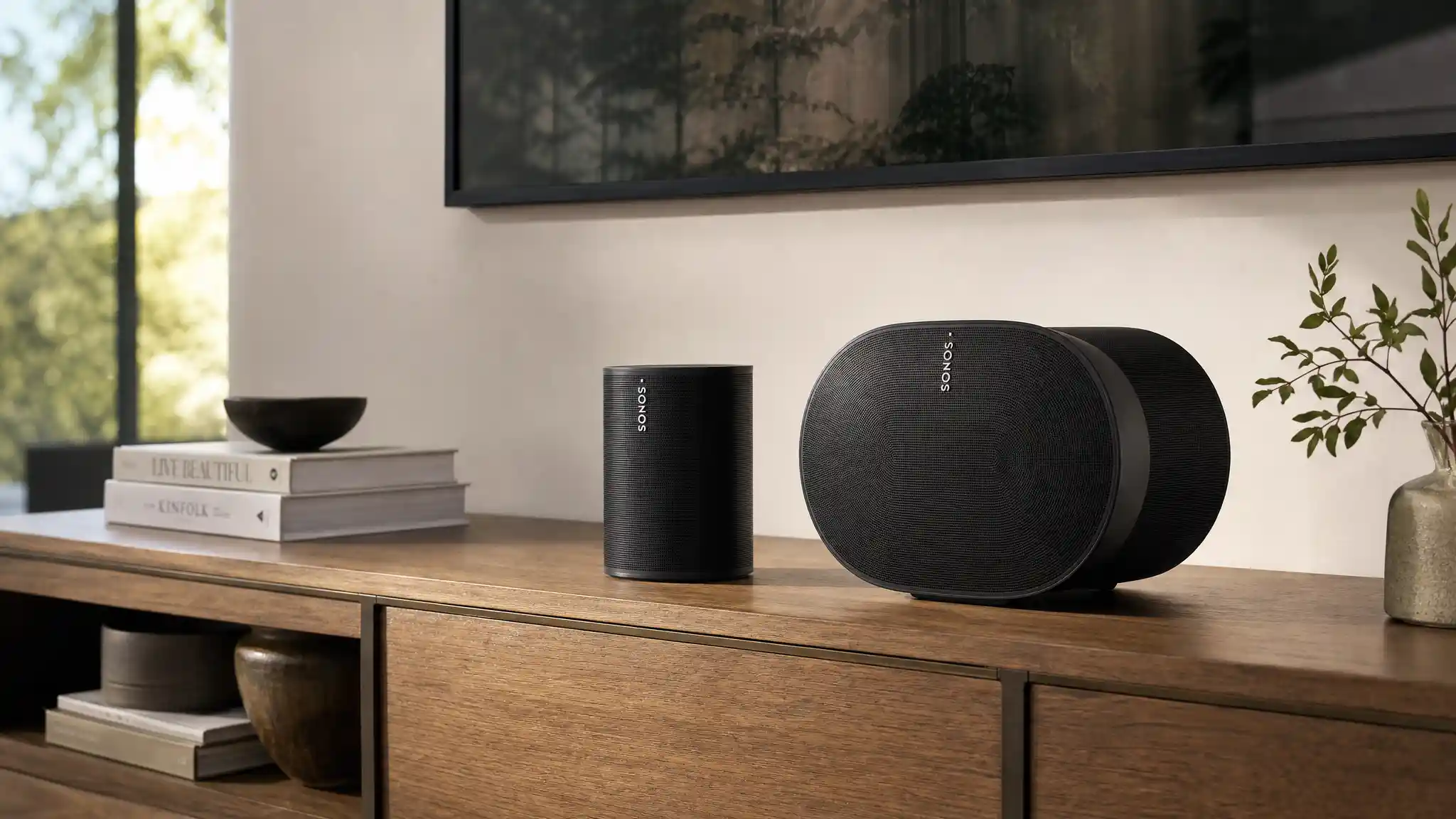
The first difference you will notice is size. The Sonos Era 100 looks clean, compact, and easy to place. It works well on a shelf, desk, kitchen counter, or bedside table. If you want a small room speaker, the Era 100 feels more flexible. It slips into spaces where larger premium speakers often look awkward or overpower the room.
The Era 300 takes a more dramatic approach. Its shape looks unique and more sculptural. Sonos clearly designed it to stand out, not disappear. That design is not just visual flair. It supports the speaker’s wider directional output, which helps create a more expansive and immersive presentation. If you want a speaker that feels like a true centerpiece, the Era 300 wins on presence.
For some users, the Era 100 also works as a strong bookshelf speaker alternative. It avoids the extra amplifier and wiring that traditional shelf speakers require, while still giving you refined everyday performance. The Era 300, however, feels less like an alternative and more like a lifestyle premium audio product built for listeners who care about spatial presentation.
Sound Quality: This Is Where the Real Difference Starts
Sound is the main reason most people compare these two models, and this is where the buying decision becomes easier.
The Sonos Era 100 sounds clean, balanced, and punchy. It improves on earlier compact Sonos speakers by offering better stereo separation and fuller bass. Vocals come through clearly, and the speaker handles pop, acoustic, podcasts, and casual streaming with ease. It creates a polished sound that feels larger than its footprint suggests. For many people, this is more than enough.
The Era 300 pushes much further. It delivers a broader, taller, and more layered sound. Instead of simply playing music well, it tries to surround you with it. That makes it a true spatial audio speaker rather than just a premium smart speaker. Songs with detailed production sound more open, and live recordings feel more atmospheric. You hear more space around instruments, more motion in the mix, and a more dramatic sense of scale.
If you mostly listen to stereo tracks in a bedroom, office, or apartment corner, the Era 100 will likely satisfy you. If you want a premium soundstage and more impressive room-filling performance, the Era 300 clearly justifies its higher position.
Dolby Atmos and Spatial Audio: The Era 300’s Biggest Advantage
The biggest technical advantage of the Era 300 is its support for immersive formats in a way that actually feels meaningful. Plenty of speakers advertise advanced audio features, but not all of them make those features easy to hear. The Era 300 does.
With supported content, the speaker delivers convincing immersive music playback that gives tracks more dimension. Instead of hearing sound only from the front, you get a stronger sense of width and height. That makes a difference with well-produced modern mixes on supported services. If you care about Dolby Atmos sound, the Era 300 is the obvious choice.
The Era 100 does not compete in the same way here. It sounds very good for stereo listening, but it does not aim to recreate the same three-dimensional effect. That does not make it weak. It simply means it serves a different buyer. The Era 100 focuses on dependable, high-quality daily listening. The Era 300 focuses on immersion.
So if spatial audio matters to you, the answer is easy: buy the Era 300. If it does not, the Era 100 becomes much harder to beat on value.
Everyday Use: Which Speaker Fits Real Life Better?
The Era 100 feels like the more practical speaker for most homes. It works beautifully as a smart speaker for music, podcasts, radio, and casual background listening. You can place it almost anywhere, stream quickly, and enjoy strong sound without reorganizing your room. It is the kind of speaker you use every day without overthinking it.
It also works well for people building a compact home audio system. You can start with one unit, add another later, and expand into more rooms over time. That flexibility matters because many buyers want good sound today without committing to an expensive multi-speaker plan immediately.
The Era 300 feels more specialized. It still works for daily listening, but its strengths shine most when you sit down and pay attention. It rewards focused listening more than passive use. If your goal is background audio in a kitchen or office, it may be more speaker than you need. If your goal is a premium listening experience in your living room, it starts to make much more sense.
Features and Connectivity: Modern Sonos Convenience on Both
Both speakers offer the features people expect from Sonos. You get streaming over Wi-Fi, Bluetooth support, voice control options, and app-based integration. That means either model can function as a WiFi Bluetooth speaker for users who want flexibility between home streaming and quick device pairing.
Both models also fit seamlessly into the Sonos multi-room audio ecosystem. If you already own Sonos products, setup feels smooth. If you plan to build your system gradually, either speaker gives you a solid entry point. That matters because ecosystem value often shapes long-term satisfaction more than raw specs.
You can also use each speaker as a voice assistant speaker, which adds convenience for daily playback, timers, and smart-home use. In addition, both speakers support line-in via USB-C adapter options, which makes them useful if you want a speaker for vinyl setup with the right accessories. That flexibility gives Sonos an edge over speakers that only focus on streaming.
Still, shared features do not mean equal experience. The Era 100 gives you strong convenience at a lower price. The Era 300 gives you that same convenience with more ambitious sound.
Stereo Pairing, TV Use, and Room Matching
If you plan to buy two speakers, pairing matters. A stereo pair setup with two Era 100 speakers makes a lot of sense for music lovers who want balanced, wide stereo sound without overspending. Two Era 100 units can outperform a single premium speaker in certain listening situations, especially for left-right imaging and room coverage.
Two Era 300 speakers create a far more luxurious result, but the cost rises quickly. That setup appeals more to enthusiasts than average buyers.
For TV and living-room use, the Era 300 also holds more appeal if you plan a home theater upgrade later. It fits better into a premium entertainment environment and complements immersive content more naturally. The Era 100 can still work in a Sonos ecosystem, but it feels more like a versatile all-rounder than a theater-focused choice.
Room size also matters. The Era 100 suits bedrooms, offices, smaller apartments, and compact listening spaces. The Era 300 performs best when it has a bit more air around it. In a larger room, it sounds more comfortable and more convincing.
Price and Value: Which One Is Actually Worth the Money?
This is the most important question, and the answer depends on what “worth it” means to you.
If value means getting the best balance of price, sound, convenience, and placement flexibility, the Sonos Era 100 is the better buy. It gives most users exactly what they want from a premium connected speaker without pushing them into a higher spending tier. It sounds excellent for its class, works in many spaces, and offers a clean path into the Sonos ecosystem.
If value means paying more for a clearly more advanced and more emotionally engaging sound experience, the Sonos Era 300 earns its price. It does not just sound a little better. In the right room with the right content, it sounds more dramatic, more spacious, and more memorable. That difference matters to listeners who actively care about audio performance.
So which one is worth your money?
- Buy the Sonos Era 100 if you want the smartest balance of cost and everyday performance.
- Buy the Sonos Era 300 if you want immersive listening, stronger scale, and a premium audio experience that goes beyond casual use.
Final Verdict
For most buyers, the Sonos Era 100 is the smarter purchase. It offers strong sound, modern features, easy placement, and excellent everyday value. It is the speaker that makes the most financial sense for the widest range of people.
But the Sonos Era 300 is the more exciting speaker. If you want richer immersion, bigger sound, and a more future-facing listening experience, it justifies the extra cost. It is not the best choice for everyone, but it is the better choice for listeners who truly want to hear what premium spatial audio can do.
In simple terms, the Era 100 wins on practicality, while the Era 300 wins on ambition. Your best pick depends on whether you want smart value or standout performance.
Amazon.com Product Recommendation
Recommended product on Amazon.com: Sonos Era 100