
Sony WH-1000XM5 vs. Bose Ultra: Which Has Better ANC?
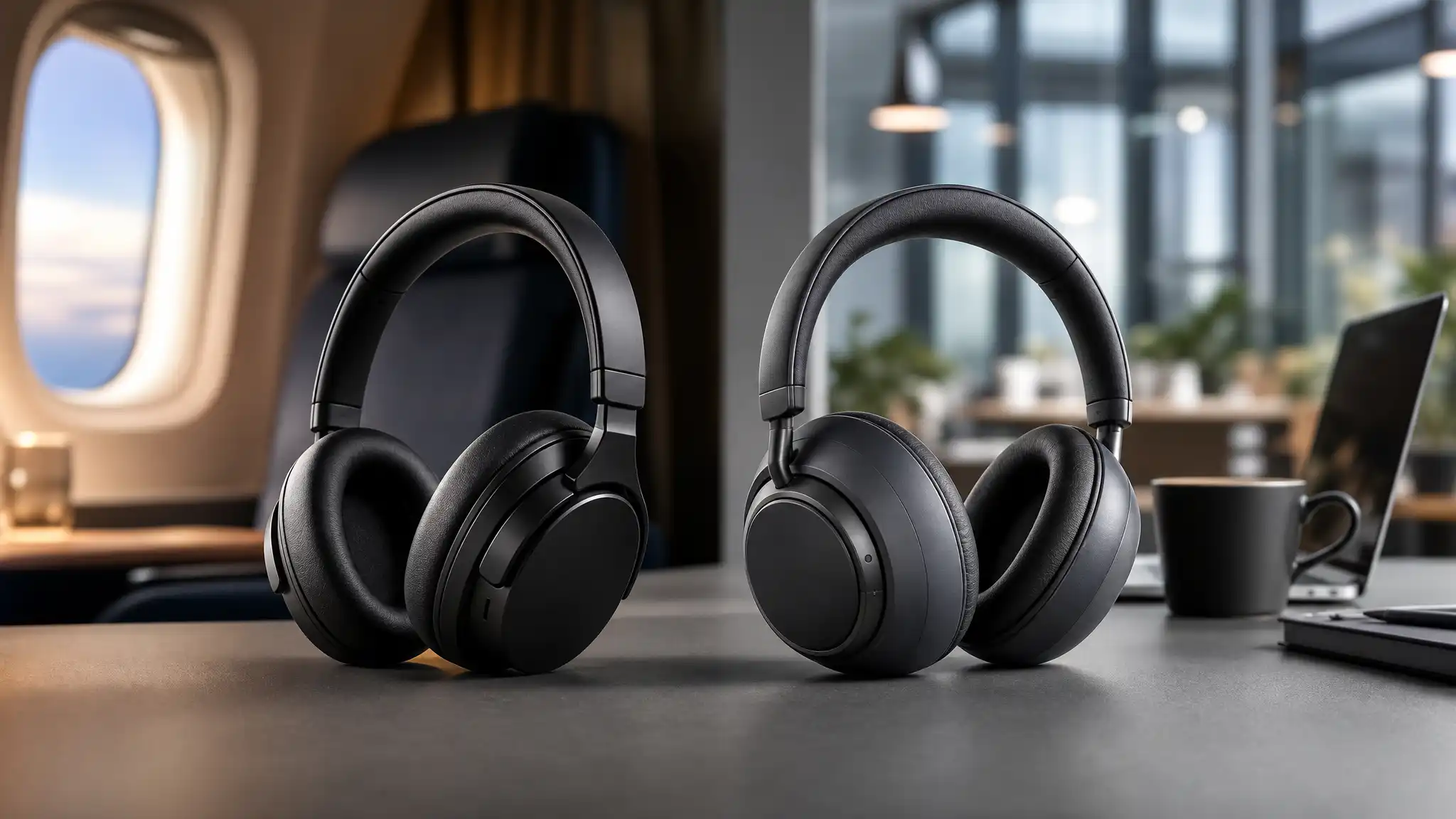
If you’re choosing between the Sony WH-1000XM5 and the Bose QuietComfort Ultra Headphones, you’re already looking at two of the strongest options in the premium noise cancelling headphones category. Both models aim to silence your commute, shrink airplane roar, and reduce office chaos. But when you narrow the decision to one question—which has better ANC—small differences in tuning, fit, and “real life” performance start to matter.
In this guide, I’ll compare their active noise cancellation in a clear, practical way, then help you pick the best option for your habits: travel, open offices, calls, or everyday listening.
What “Better ANC” Actually Means (Not Just Silence)
ANC isn’t a single on/off feature. Good cancellation depends on what kind of noise you face:

- Low-frequency rumble (bus engines, HVAC, airplane cabin noise)
- Mid-frequency chatter (voices, café noise, keyboards)
- High-frequency sounds (clinks, sharp clicks, sudden squeaks)
Headphones also combine two defenses:
- Passive isolation (how well the earcups physically block sound)
- ANC processing (how microphones + algorithms cancel what leaks in)
That’s why two top models can feel different in the same environment—especially if the seal and fit changes on your head.
Quick Snapshot: XM5 vs. QC Ultra ANC Philosophy
Sony WH-1000XM5 approach
Sony focuses on a strong, controlled “quiet bubble,” with emphasis on smoothing out steady noise and letting you fine-tune behavior through the Sony Headphones Connect app. The XM5 also tends to deliver a very “calm” sound floor, which can feel less fatiguing in long sessions.
Bose QuietComfort Ultra approach
Bose has a long reputation for elite cancellation and usually targets maximum perceived reduction, especially in noisy, unpredictable environments. Many listeners describe Bose ANC as more aggressively “vacuum-like,” which can make the world feel farther away.
ANC Performance: Who Cancels More?
1) Airplane and transit rumble (low frequencies)
In planes, trains, and buses, both do excellent work. Still, the Bose Ultra often edges ahead in “instant hush” perception—particularly when engines shift or the cabin noise changes.
- Bose Ultra: commonly feels slightly stronger at suppressing changing low-frequency noise, a key part of airplane cabin noise comfort.
- Sony XM5: extremely strong, often close enough that your music volume choice matters more than the last few percent of cancellation.
Verdict for rumble: Slight advantage to Bose Ultra, but the XM5 stays in the top tier.
2) Voices and office noise (mid frequencies)
Mid frequencies expose the limits of ANC because human voices vary quickly and contain complex harmonics. Here, fit and algorithm behavior matter a lot.
- Bose Ultra tends to reduce the presence of voices more noticeably, especially in open-plan spaces with irregular conversation.
- Sony XM5 does very well, but you may still notice a bit more “voice texture” depending on your head shape and pad seal.
Verdict for office chatter: Small advantage to Bose Ultra for office distractions, though both remain excellent.
3) Sudden sounds (high frequencies)
ANC struggles more with sharp, high-frequency sounds because they happen too fast and often don’t propagate like a steady wave.
- Both headphones rely more on passive isolation here.
- Your best results come from a firm seal and correct earcup placement.
Verdict for sudden high sounds: Tie overall; fit decides more than brand.
The Hidden Winner: Fit, Seal, and Comfort
ANC isn’t just “the chip.” You can lose a big portion of cancellation if the pads don’t seal well around your jaw or glasses.
- If you wear glasses, move the temples slightly and re-seat the cups to improve the seal and fit.
- If you have smaller or narrower faces, you may notice different pressure distributions that change the seal.
Both models aim to be comfortable over-ear headphones, but comfort is personal:
- Some people prefer Sony’s gentler clamp for long workdays.
- Others prefer Bose’s earcup shape and consistent seal during movement.
If you can try both for 10 minutes, do it. A perfect seal can outweigh small algorithm differences.
Adaptive Behavior, Transparency, and Wind Handling
Adaptive cancellation (real-world intelligence)
Both implement some form of adaptive ANC that reacts to your environment. In practice, Bose often feels more assertive in switching into “maximum quiet,” while Sony offers a smoother, more configurable experience.
Transparency and awareness
A great ANC headphone should also offer a natural “hear-through” when you need it.
- Sony and Bose both provide strong transparency mode options.
- Sony usually gives you more granular control in the app.
- Bose typically delivers a very convincing, easy-to-use awareness mode that feels plug-and-play.
Outdoor use and wind
Wind can overwhelm ANC microphones and create annoying buffeting.
- Sony often handles wind well when you enable wind noise reduction (or similar wind-focused settings).
- Bose also performs strongly, but actual results depend on how the mics sit relative to the wind direction.
If you walk outside a lot, test both in windy conditions if possible.
Apps and Control: Tweaking the ANC Experience
- Sony Headphones Connect app: usually offers deeper customization and features that help you shape how the XM5 behaves in daily life.
- Bose Music app: generally feels simpler and more “set it and forget it,” which many users prefer.
If you love tuning and personalization, Sony tends to feel more flexible. If you want the fastest path to “quiet,” Bose tends to feel more direct.
Battery, Multipoint, and Calls (Because ANC Isn’t the Only Thing)
Even if ANC is your #1 priority, these supporting factors influence satisfaction:
- Battery life: Sony typically has a strong reputation for long runtime in this class. Bose also performs well, but your usage patterns (codec, volume, ANC level) affect results.
- Bluetooth multipoint: both can support Bluetooth multipoint, which matters if you switch between laptop and phone all day.
- Call quality microphones: both include beamforming and processing, but performance varies by environment. If you take calls in noisy areas, test how your voice sounds on the other end—call quality microphones matter more than spec sheets suggest.
So…Which Has Better ANC?
If you judge purely by “how quiet can it get in tough environments,” the Bose QuietComfort Ultra usually takes the win by a small margin—especially for travel and dynamic noise. If you want an ANC champion that also brings rich features, a strong app ecosystem, and a smoother long-session experience, the Sony WH-1000XM5 remains an outstanding choice and may feel “better” depending on your comfort and seal.
Best Choice by Use Case
Choose Bose Ultra if you…
- Prioritize the strongest perceived ANC for travel and commuting
- Want top-tier reduction of rumble + chatter in mixed environments
- Prefer a simple experience with minimal tweaking
Choose Sony XM5 if you…
- Want elite ANC plus deep customization and smart features
- Value long sessions, tuning control, and a calm noise floor
- Prefer to adjust profiles and behaviors through the app
Amazon.com Product Recommendation (1 item)
If your main goal is maximum quiet for travel and offices, a strong single-pick recommendation is: Bose QuietComfort Ultra Headphones (available on Amazon.com).