
Liveness Detection in Face Recognition: The Key to Spoof‑Resistant Security
Face recognition has become one of the most popular biometric authentication methods in the world. From unlocking smartphones to accessing banking apps and secure facilities, it offers a fast and convenient way to verify a person’s identity. However, as usage has grown, so have the security risks. Attackers now try to fool face recognition systems with printed photos, high‑resolution videos, or even 3D masks. This is where liveness detection – also called liveness recognition or anti‑spoofing – becomes critical.
Liveness detection ensures that the system is interacting with a real, live human being instead of a fake or reproduced face. By combining advanced computer vision, artificial intelligence (AI), and sometimes hardware sensors, liveness detection helps organizations build spoof‑resistant face recognition systems that are reliable, scalable, and compliant with modern security and privacy standards.
What Is Liveness Detection in Face Recognition?
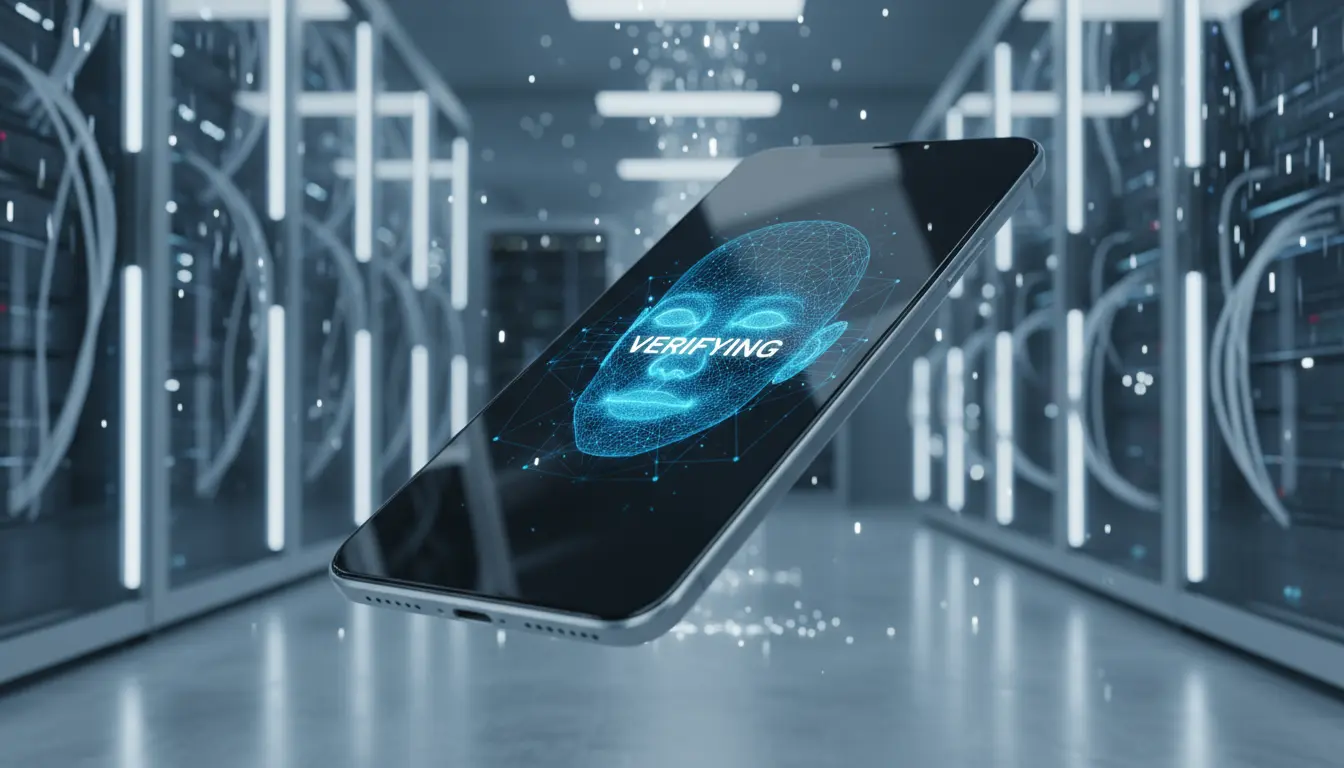
Liveness detection is a security layer integrated into a face recognition system that checks whether the face in front of the camera belongs to a live person. Instead of merely matching facial features against a database, the system analyzes signals that indicate life, such as natural movements, depth information, or biological patterns.
Traditional face recognition can be tricked with a clear photograph, a replayed video, or a realistic mask. Liveness detection reduces this risk by requiring proof of “being alive” before allowing any match or authentication to succeed. As a result, it significantly improves the robustness of digital identity verification and access control systems.
Why Liveness Detection Is Essential for Spoof‑Resistant Face Recognition
1. Protection Against Presentation Attacks
A presentation attack happens when someone presents a fake biometric sample to the system, such as a printed image, a phone screen showing a video, or a molded mask. Without liveness detection, many legacy systems have limited ability to distinguish a fake from a real person.
Liveness detection technologies are specifically designed to identify and block these attempts. By analyzing texture, depth, motion, and other subtle indicators, they can effectively filter out non‑live samples and prevent unauthorized access.
2. Strengthening Digital Identity Verification
Online onboarding and remote identity verification are now common in banking, fintech, insurance, healthcare, and government services. Users expect to open accounts or verify identities using only their smartphones.
In this context, liveness detection becomes a critical trust mechanism. It ensures that the person submitting an ID document and a selfie is physically present and not using a stolen photo or recorded video. This reduces fraud, supports Know‑Your‑Customer (KYC) and Anti‑Money‑Laundering (AML) processes, and builds confidence in remote customer acquisition.
3. Improving User Trust and Compliance
Organizations face growing regulatory and consumer expectations around security and privacy. Data breaches, account takeovers, and deepfake‑based identity fraud erode trust quickly.
By deploying spoof‑resistant face recognition with liveness detection, companies demonstrate a commitment to strong authentication practices. This not only helps with compliance in regulated industries, but also reassures users that their biometric data is protected by advanced safeguards, not just basic face matching.
Types of Liveness Detection Techniques
Liveness detection methods are often grouped into active, passive, and hardware‑assisted approaches. Each has different usability, security, and implementation characteristics.
1. Active Liveness Detection
Active liveness detection requires users to perform simple actions during the verification process. Examples include:
- Blinking on command
- Turning the head left or right
- Smiling or opening the mouth
- Following a moving object on the screen with their eyes
The system analyzes these movements to ensure they are natural and correspond to a real 3D face. Since attackers usually rely on static images or pre‑recorded videos, they struggle to replicate dynamic and unpredictable prompts in real time.
The downside of active liveness detection is that it slightly increases friction. Users must follow instructions and perform gestures, which can slow down onboarding or access. However, in high‑risk scenarios like financial transactions, this trade‑off is often acceptable.
2. Passive Liveness Detection
Passive liveness detection works silently in the background, without requiring any specific action from the user. It typically uses AI algorithms and computer vision to examine:
- Skin texture and reflectance
- Micro‑movements and natural facial expressions
- Image artifacts from screens, printers, or masks
- Depth cues and perspective changes
Because the user does not have to do anything special, passive liveness detection provides a smoother and more user‑friendly experience. It is ideal for smartphone login, continuous authentication, and low‑friction remote verification flows.
Advanced passive liveness models leverage deep learning trained on large, diverse datasets of both genuine and spoof attempts. This allows them to generalize well against many kinds of attacks, including new or previously unseen ones.
3. Hardware‑Assisted and 3D Liveness Detection
Some systems combine software‑based analysis with specialized hardware to further enhance security. Examples include:
- Infrared (IR) or near‑infrared cameras to detect heat patterns and eliminate printed or screen‑based attacks
- Time‑of‑flight (ToF) or structured light sensors to capture depth maps and 3D facial structure
- Multi‑camera setups for stereo vision and more robust 3D reconstruction
Hardware‑assisted liveness detection is especially powerful against 3D mask attacks and high‑quality forgeries. It is commonly used in high‑security environments, government solutions, and premium consumer devices that require stronger protection.
How Liveness Detection Works in a Typical Face Recognition Pipeline
A modern face recognition system with spoof resistance usually follows a structured pipeline:
- Face Capture
The camera records a short video or a sequence of images. This step may be triggered by a login attempt, onboarding flow, or physical access request. - Liveness Analysis
The captured frames are passed through liveness detection algorithms. The system checks for signs of life, authentic motion, or 3D depth information. If the sample fails, the process stops and access is denied. - Face Detection and Alignment
If liveness is confirmed, the system detects the face region and aligns it for more accurate matching. This normalizes pose, lighting, and scale. - Feature Extraction and Matching
A neural network or other feature extractor converts the face into a numerical representation (embedding). This embedding is compared with stored templates in a secure database. - Decision and Response
Based on similarity scores and security thresholds, the system decides whether to grant or deny access. All steps can be logged for auditing and compliance.
By placing liveness detection before or tightly coupled with matching, organizations ensure that only genuine, live samples are ever compared with enrolled identities.
Key Benefits of Implementing Liveness Detection
Enhanced Security Against Spoofing
The primary benefit is obvious: strong defense against spoofing and identity fraud. Liveness detection dramatically reduces the chance that an attacker can use stolen photos, manipulated videos, or masks to impersonate someone else.
Better User Experience
When designed carefully, liveness detection can remain invisible or minimally intrusive for legitimate users. Passive methods, in particular, allow people to authenticate with a simple look at their device while still enjoying strong protection.
Scalability for Remote and Mobile Use Cases
Because liveness detection is largely software‑based, it can be deployed at scale across smartphones, laptops, kiosks, and web cameras. This makes it suitable for global digital businesses that operate remote onboarding, e‑KYC, or identity verification programs.
Support for Compliance and Risk Management
Many industries must demonstrate that their authentication processes are resistant to known attack vectors. A documented liveness detection solution contributes directly to risk management frameworks, audit trails, and compliance with biometric security guidelines.
Challenges and Best Practices
While liveness detection is powerful, it is not trivial to implement or evaluate.
- Balancing security and convenience: Stronger checks may increase false rejections and frustrate users. Systems must be tuned to the specific risk level of each use case.
- Handling diverse lighting and devices: Liveness algorithms should be robust across different cameras, resolutions, and environmental conditions.
- Mitigating bias and ensuring fairness: Training data should represent diverse demographics to avoid biased performance across age, gender, and ethnicity.
- Privacy and data protection: Face images and liveness signals are highly sensitive. Encryption, on‑device processing where possible, and strict retention policies help protect user privacy.
The most successful implementations combine passive and active liveness detection, continuous model improvement, and regular testing against new attack techniques.
Future of Liveness Detection and Face Recognition
As deepfakes, generative AI, and increasingly realistic forgeries become more accessible, the role of liveness detection will only grow. Future systems are expected to:
- Use multimodal signals like voice, motion, and device data alongside facial cues
- Employ federated learning and on‑device models to improve privacy
- Integrate with broader digital identity frameworks and risk engines
Organizations that invest early in robust liveness detection for spoof‑resistant face recognition will be better positioned to protect their users, comply with regulations, and prevent emerging fraud vectors in digital channels.