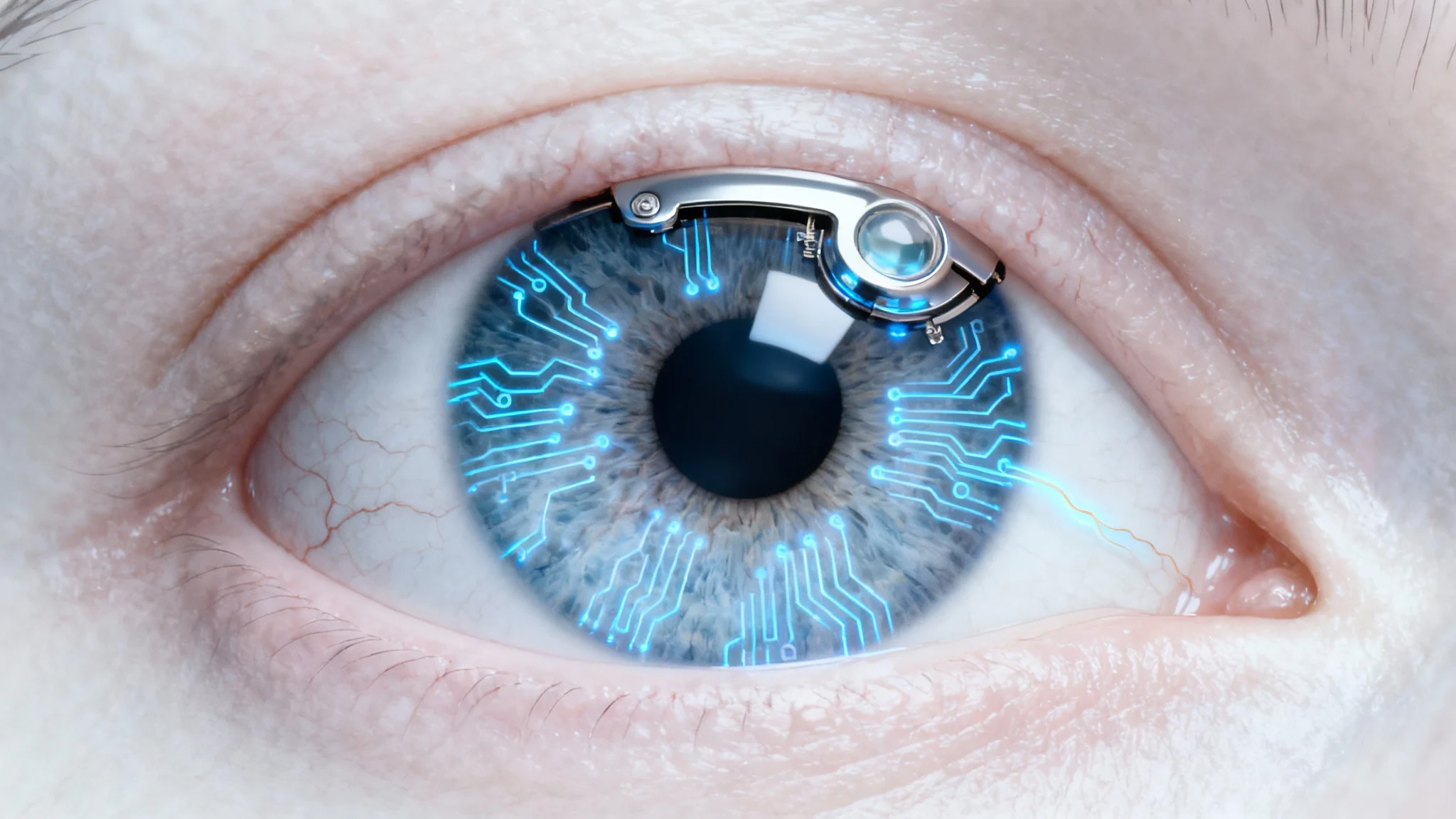

For centuries, blindness and severe vision loss were considered permanent conditions. But with the invention of the bionic eye, science and technology are bringing hope to millions. A bionic eye is not simply a medical device—it represents the merging of biology and electronics to restore one of the most vital human senses: sight.
What is a Bionic Eye?
A bionic eye, often called an artificial retina or visual prosthesis, is a medical device designed to partially restore vision in people who are blind or visually impaired.
- It typically consists of a camera, processor, and microelectrode array implanted in or near the retina.
- The system captures visual information, converts it into electrical signals, and transmits them to the brain.
This technology does not yet restore perfect sight but allows patients to detect shapes, movement, and even large objects.
How Bionic Eyes Work
Bionic eyes function by bypassing damaged photoreceptor cells in the retina:
- Image Capture – A miniature camera (often embedded in glasses) records the surrounding environment.
- Signal Processing – A computer unit translates images into electrical impulses.
- Retinal Implant Stimulation – Electrodes stimulate remaining retinal cells, sending signals to the optic nerve.
- Brain Interpretation – The brain processes these signals into a rough image.
Major Milestones in Bionic Eye Research
- Argus II: The first FDA-approved retinal implant, allowing patients to perceive shapes and light.
- Alpha IMS: A German-developed device implanted directly into the retina for more detailed vision.
- Cortical Implants: New research bypasses the retina entirely, directly stimulating the visual cortex.
These advancements show that each generation of technology brings patients closer to functional vision.
Healthcare Impact
Bionic eyes have transformed lives in powerful ways:
- Blind individuals can regain partial navigation ability.
- Patients are able to recognize doors, large text, and safe pathways.
- Psychological benefits: Restoring sight improves independence and reduces social isolation.
For many, this technology is more than medical—it represents dignity, freedom, and hope.
Challenges and Limitations
Despite breakthroughs, bionic eyes are still at an early stage:
- Limited resolution: Current implants provide only rough vision.
- High cost: Devices can range over $100,000.
- Surgical risks: Implantation is complex and invasive.
- Long training periods: Patients must adapt to interpreting new vision patterns.
The Future of the Bionic Eye
Researchers are developing next-generation devices that may provide:
- Higher resolution with thousands of electrodes.
- Color vision capabilities.
- Brain-machine integration, directly stimulating the visual cortex.
- Affordable solutions, making the technology accessible worldwide.
In the future, bionic eyes could give millions of people near-normal vision, revolutionizing healthcare as much as the invention of eyeglasses centuries ago.
Conclusion
The bionic eye showcases the extraordinary potential of merging biology and technology. While current devices are still limited, they already restore independence for patients with severe vision loss. With ongoing breakthroughs in biomedical engineering, artificial vision may no longer be science fiction but a standard part of healthcare.
The journey from darkness to light has begun, and the future of sight is brighter than ever.