
What did the James Webb telescope bring to us earthlings?
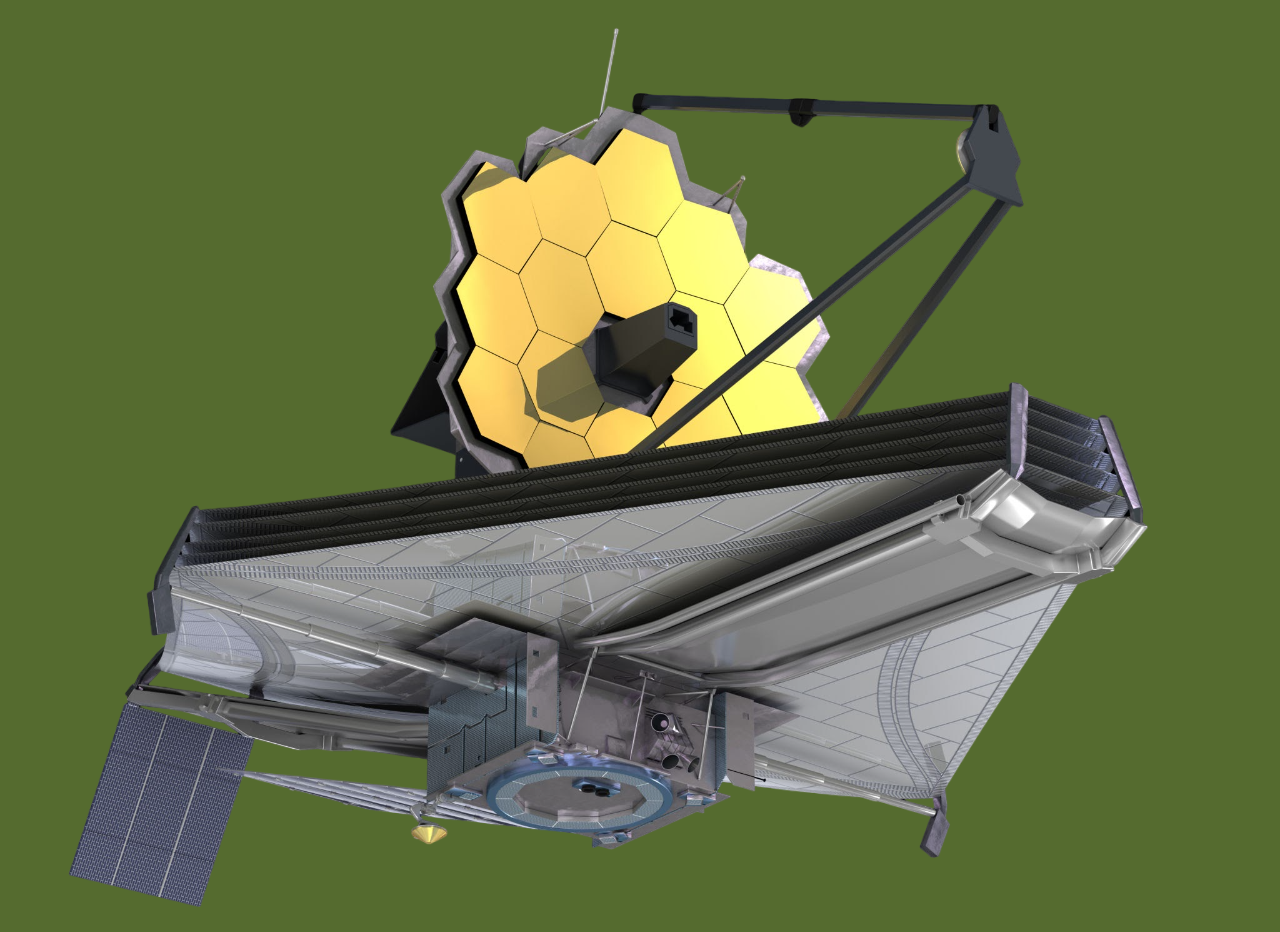
The James Webb Space Telescope (JWST) will certainly enable us to discover extraterrestrial events, especially through scientific discoveries and technological developments. The James Webb telescope gives us, humanity, a wider view of what the outer universe is like.
What did this telescope bring to us?
- Technology and Innovation contribution: The advanced engineering, material science and optical technologies used in the construction of James Webb have created new opportunities in many sectors. In particular, nanotechnology has enabled advances in optical sensors and materials engineering.
- As Data Analytics and Computer Power: The massive amount of data obtained by JWST has increased the need for advanced data analytics and big data solutions. This has created new business opportunities for companies offering cloud computing and data analysis services.
- New Industries and Markets formedInformation gained through space observations laid the groundwork for new industries such as space tourism, space mining, and other commercial space ventures. The James Webb Telescope contributes to the development of these sectors by providing information on the detection and discovery of potential resources in the universe.
- Inspiration and Investment created: Major scientific projects such as JWST have inspired new initiatives and R&D efforts, increasing investments in innovative technologies. In particular, high-tech companies are investing more in space research and technology, inspired by the successes of the James Webb project.
- Cooperation and International Projects: James Webb was realized in cooperation with international institutions such as NASA, ESA (European Space Agency) and CSA (Canadian Space Agency). This sets an example of how major projects in global business can be successfully carried out through collaboration and partnerships.
As a result, the successes of the James Webb telescope in the scientific world, its technological developments and its contributions to the growth of the space economy have brought about various innovative opportunities and developments in the business world.
The most interesting photographs taken by the James Webb telescope
We see the James Webb Space Telescope (JWST) probing deep into the universe, taking a series of striking and scientifically important photographs. I hear you say we would like to see some of the most interesting images.
1. Karina Bulutsusu (Carina Nebula)
The Carina Nebula is one of the most impressive images taken by Webb. This massive stellar nursery provides the perfect place to study star formation processes. JWST’s image revealed young stars, gas clouds, and dust structures in never-before-seen detail.
2. Stephan Beşlisi (Stephan’s Quintet)
The Stephan Quintet, imaged by JWST, is a group of five nearby galaxies. The photograph showing the interactions of these galaxies helps us understand galaxy mergers and the effects of these mergers on large structures in the universe.
3. Southern Ring Nebula
JWST took two different images of the Southern Ring Nebula: one showing the star’s dying structure, and the other showing it surrounded by background galaxies. This nebula is represented by a remarkable photograph taken as it formed clouds of gas and dust around a white dwarf.
4. SMACS 0723: Deep Field Imagery
One of Webb’s first full-color images, SMACS 0723 provided the deepest and most detailed photograph of the universe ever taken. This image shows details of galaxies billions of years away and allows us to examine even more distant galaxies thanks to gravitational lensing.
5. Tarantula Bulutsusu
The Tarantula Nebula was photographed in high resolution by Webb. This nebula is located in the Large Magellanic Cloud, a neighboring galaxy of the Milky Way, and is experiencing intense star formation. The images taken by Webb revealed previously unknown details about star formation.
6. Jupiter and its Moons
JWST also imaged Jupiter and its moons in detail. Jupiter’s rings, auroras and moons around the giant planet were clearly imaged. These photographs provided more information about Jupiter’s atmospheric and magnetic structure.
7. Atmospheric Analysis of Exoplanet WASP-96 b
James Webb observed the atmosphere of an exoplanet and detected traces of water vapor there. This observation is of a gas giant called WASP-96 b and showed that JWST could support the search for extraterrestrial life with such observations.
These images show that JWST is providing extraordinary discoveries, both scientifically and visually, by shedding light on the mysteries of the universe.
Have you ever thought about what we aim for in the future with this telescope?
The James Webb Space Telescope (JWST) aims to achieve several important goals. Its mission is to unravel the deepest mysteries of the universe in the coming years. The telescope’s objectives include exploring the origins of cosmic structures. It also seeks to understand the formation of the universe. Additionally, JWST will focus on the search for life beyond Earth.
1. The First Stars and Galaxies of the Universe
One of JWST’s biggest goals is to The first stars and galaxies formed just after the Big Bang Learn more about. The telescope aims to examine the early stages of galaxy formation by providing images of the universe as it was 13.5 billion years ago. In this way, we will be able to better understand the expansion process and cosmological evolution of the universe.
2. Star Formation and Evolution of Stars
JWST, birth and death of stars aims to obtain more detailed information about. By studying how new stars form within clouds of interstellar gas and dust, we gain insights into star formation. This research allows us to observe the various stages of a star’s life cycle. We also examine what happens after stars die. This includes investigating neutron stars and black holes left behind after stellar deaths. Understanding these phases helps us see their impact on the universe.
3. Planetary Systems and Exoplanets
The telescope aims to investigate whether exoplanets, planets located outside the Solar System, have suitable conditions for life. It will examine the atmospheres of these distant worlds. A key focus will be on detecting the atmospheric structure of Earth-like planets. The presence of compounds important for life, such as water and methane, will be closely studied. This research could provide crucial insights into the potential for life beyond Earth. JWST, looking for evidence of life, extraterrestrial life can play a critical role in the search.
4. Black Holes and Galactic Centers
JWST, supermassive black holes and aims to study their interactions with galaxies. Understanding how these giant black holes located in the centers of galaxies are formed, how they affect the evolution of galaxies, and how they are related to dark matter are among the long-term goals of the telescope.
5. Dark Matter and Dark Energy
JWST aims to examine phenomena like dark matter and dark energy, which make up most of the universe but remain mysterious. These elements are still not fully understood. By studying them, scientists hope to better grasp their roles in the expansion of galaxies and the universe. This research could help answer some of the biggest questions in cosmology.
6. Solar System Reviews
JWST focuses on more than just distant stars and galaxies. It will also study planets, moons, and comets within our Solar System. The telescope’s mission includes examining the atmospheres of these celestial bodies. It will also analyze their surfaces in detail. This research will provide valuable insights into the origin and evolution of these objects.
JWST is a major breakthrough aimed at providing new discoveries in astronomy, cosmology, and various other fields like biology, physics, and space science. It seeks to help answer the big questions of the universe.