
Launching a YouTube channel is one of the best ways to build a personal brand, grow a business, and create a long-term content asset. Whether you’re starting from scratch or repositioning an existing channel, success comes from strategic planning, consistent execution, and smart optimization. This guide walks you through each step—from defining your niche to mastering SEO, production, analytics, and monetization—so you can grow organically and sustainably.
1) Define Your Niche and Audience
The most important decision is your niche. A clear niche helps YouTube understand your content and recommend it to the right viewers. Go specific rather than broad:
- Example niches: minimalist lifestyle for students, budget travel in Southeast Asia, Python tutorials for beginners, meal prep for busy parents.
- Validate demand: search your niche on YouTube, note view counts, post frequency, and comment sentiment. Aim for niches with consistent interest and room to differentiate.
Create a simple audience profile:
- Demographics: age, location, language.
- Pain points: what do they struggle with?
- Desired outcomes: what transformation do they want?
- Content preferences: tutorials, vlogs, reviews, shorts, long-form.
Positioning tip: Define a unique value proposition like “no-fluff, step-by-step guides for absolute beginners.” This guides your tone, structure, and content choices.
2) Brand Foundations: Name, Visuals, and Channel Setup
Your brand should be memorable and consistent:
- Channel name: easy to spell, niche-relevant, unique. Avoid hard-to-pronounce names.
- Visual identity:
- Logo and banner: clean design, clear tagline, readable on mobile.
- Color palette and fonts: pick 2–3 colors and 1–2 fonts; use them across thumbnails and end screens.
- About section: include keywords naturally, a concise mission statement, upload schedule, and a CTA to subscribe or visit your site.
- Links: add social links and your website. Use UTM parameters to track traffic.
- Playlists: group content into series with keyword-rich titles and descriptions to improve watch time and discoverability.
3) Content Strategy: Pillars, Formats, and Calendar
Plan around 3–5 content pillars that map to your audience’s core needs. For each pillar, create formats that are repeatable:
- Formats: tutorials, how-tos, product reviews, comparisons, reaction/commentary, case studies, shorts/highlights, livestreams.
- Cadence: start with a realistic schedule (e.g., 1 long-form + 2 shorts per week). Consistency beats intensity.
- Research pipeline:
- Mine YouTube’s “Search” and “Suggested” topics.
- Use competitor channels, comments, and Reddit/Quora for topic ideas.
- Validate with Google Trends and YouTube search autocomplete.
Batching workflow: research on Monday, scripting on Tuesday, filming Wednesday, editing Thursday, publishing Friday. Batching saves time and reduces context switching.
4) Scripting and Storytelling for Retention
Retention drives recommendations. Hook viewers fast and deliver value continuously:
- Hook (first 5–10 seconds): promise a clear outcome, tease a result, or show a quick before/after.
- Structure: quick intro, agenda, main points with progressive payoffs, summary, CTA.
- Pattern interrupts: change camera angle, overlay B-roll, add on-screen text, show results early, use chapter markers.
- Clarity: avoid rambling; use short sentences and remove filler.
- CTA placement: early soft subscribe CTA and a strong end CTA to watch a related video or playlist.
5) Production Basics: Audio, Video, and Thumbnails
You don’t need expensive gear—prioritize clarity and consistency:
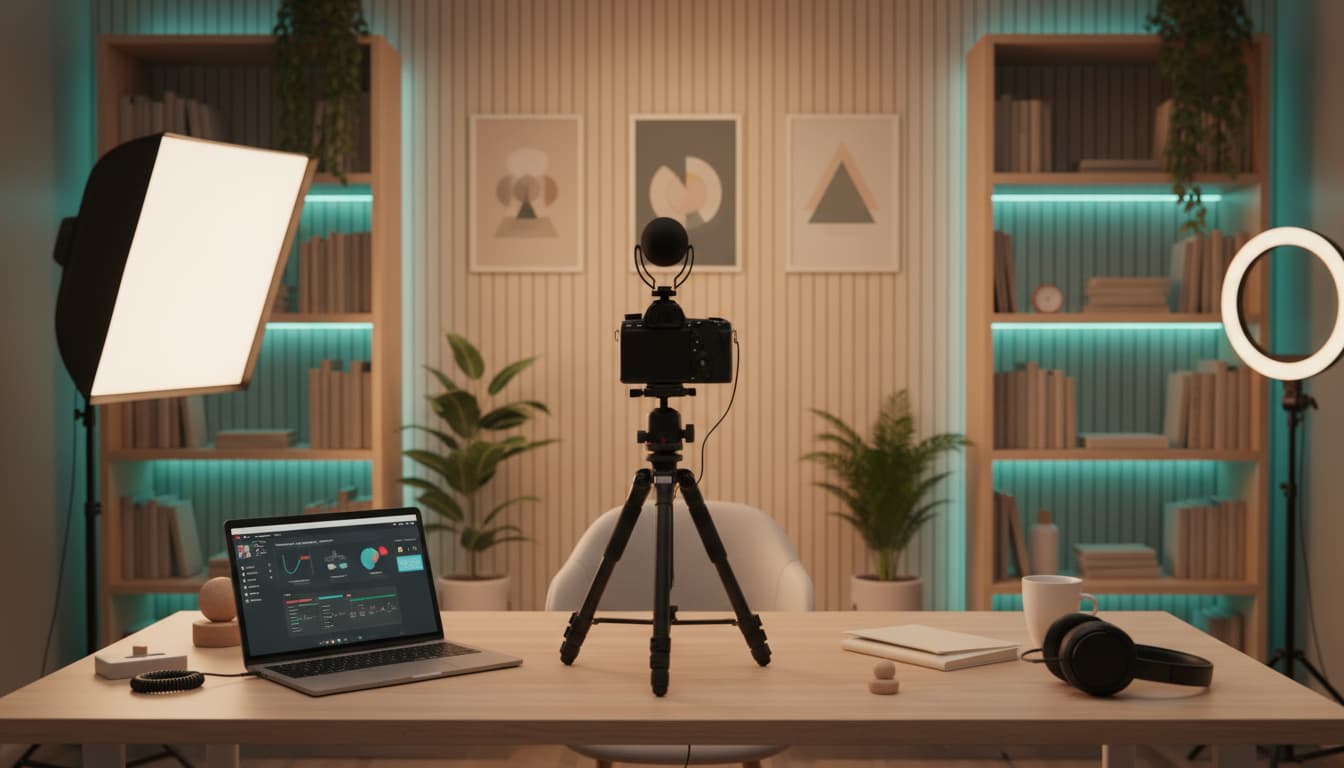
- Audio: use a budget lavalier or USB mic; record in a quiet room; reduce echo with soft furnishings.
- Lighting: window light + reflector or an affordable LED key light. Avoid mixing color temperatures.
- Camera: modern smartphones work well. Use 1080p or 4K if storage allows. Lock exposure/white balance.
- Framing: rule of thirds, headroom, background depth. Keep branding elements subtle.
- Thumbnails: design with a clear focal point, bold readable text (3–5 words), high contrast, expressive face or object. Test variants with different colors or text hooks.
Editing tips:
- Cut aggressively at the start to reach the value fast.
- Add subtitles or on-screen text for key points.
- Music: low volume, non-distracting, consistent vibe.
- Pace: remove dead space; use jump cuts and b-roll to illustrate steps.
6) YouTube SEO: Research, On‑Page, and Engagement Signals
SEO is vital for organic growth. Aim to satisfy search intent and maximize watch metrics.
Keyword research:
- Start with your main topic (e.g., “YouTube channel launch guide”).
- Use YouTube autocomplete, related searches, competitor titles, and Google Trends to find variants and long-tail keywords.
On-page optimization:
- Title: lead with the primary keyword and a benefit. Example: “YouTube Channel Launch Guide: Step‑by‑Step Strategy to Grow Organically.”
- Description: the first 2–3 sentences should summarize the value with natural keywords. Add timestamps/chapters, resources, and a subscribe CTA.
- Tags: use relevant variations and LSI keywords (not stuffed).
- Thumbnails: align with title promise.
- Chapters: improve UX and increase retention for specific sections.
- End screens and cards: suggest the next best video to boost session time.
Engagement signals:
- Prompt comments with specific questions.
- Pin a comment with resources and a CTA.
- Respond to early comments quickly to encourage more interaction.
- Encourage likes and shares sparingly; focus on value first.
7) Shorts and Long‑Form Synergy
Shorts are a discovery engine; long-form builds depth and loyalty:
- Repurpose highlights or summarize key lessons in 30–45 seconds.
- Use identical hooks/themes between Shorts and long-form to create a cross-funnel.
- Add a strong CTA in Shorts to watch the full tutorial or playlist.
8) Analytics and Iteration
Use YouTube Studio to refine your approach:
- Impressions and CTR: low CTR suggests title/thumbnail misalignment or weak promise. Test new thumbnails.
- Average view duration (AVD) and audience retention: identify drop-off spikes and rework hooks/intros and pacing.
- Traffic sources: balance Search, Suggested, and Browse. If Search-heavy, experiment with Suggested-friendly topics and packaging.
- Top videos: make sequels, updates, and related spins on what already works.
- Cohort consistency: track how new subscribers behave over time.
Small testing protocol:
- Change one variable at a time (title, thumbnail, intro).
- Note the first 48-hour performance for early signals, but evaluate fully after 7–28 days.
9) Community Building and Collaboration
- Engage: reply to comments, ask for topic requests, and build a feedback loop.
- Collaboration: partner with adjacent creators; swap shoutouts; do co-tutorials or reaction videos.
- Live Q&A: strengthens trust and surfaces new content ideas.
- Off-platform: build an email list or Discord for deeper community and direct reach.
10) Monetization and Sustainable Growth
Monetization options:
- YouTube Partner Program: Ad revenue once you meet eligibility.
- Affiliate marketing: recommend relevant tools/products with disclosure.
- Sponsorships: start with micro-sponsorships tied to your niche.
- Digital products: templates, e-books, courses, memberships.
- Services: coaching, consulting, editing packages tied to your expertise.
Sustainability tips:
- Create evergreen tutorials that compound views over time.
- Build series/playlists for bingeability.
- Document processes to streamline production.
- Outsource editing or thumbnails once revenue allows to maintain consistency.
Focus on organic growth:
- Avoid clickbait that doesn’t deliver; it harms retention and trust.
- Optimize for watch time and satisfaction, not just clicks.
- Keep content authentic; prioritize long-term audience value over short-term spikes.