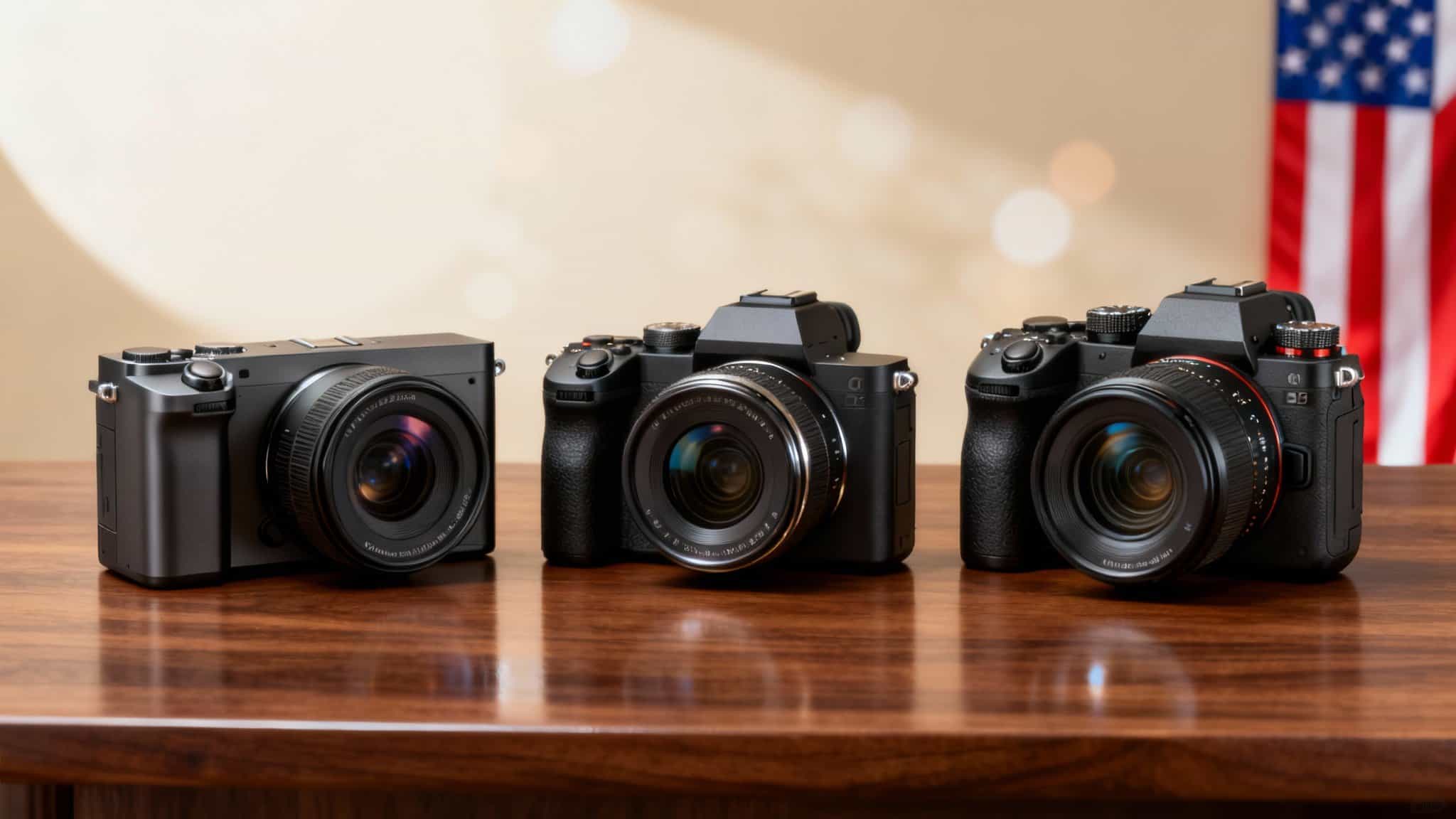

If you’re shopping for a mirrorless camera in the United States right now, chances are you’re comparing Sony, Canon, and Nikon. These three brands dominate the mirrorless market with compelling options across entry-level, enthusiast, and professional segments. The challenge isn’t whether mirrorless is the right move—it absolutely is for speed, portability, and cutting-edge autofocus—it’s figuring out which ecosystem is best for your needs and budget. This guide breaks down image quality, autofocus, lenses, video features, ergonomics, battery life, and long-term system value so you can buy with confidence.
Why Mirrorless—And Why These Three?
Mirrorless cameras offer advanced on-sensor autofocus, real-time exposure previews in the EVF, and lighter bodies compared to DSLRs. Sony, Canon, and Nikon each invest heavily in mirrorless platforms:
- Sony: Alpha (A7, A7C, A9, A1) on the E-mount
- Canon: EOS R system (R50 to R1) on the RF mount
- Nikon: Z system (Z5 to Z9) on the Z mount
All three provide full-frame and APS-C bodies, deep lens lineups, and professional support in the U.S. market.



Image Quality: Sensors and Color Science
- Sony: Famous for class-leading sensors and dynamic range, especially in the A7R series for high-resolution stills. Colors are more neutral by default, and files are flexible for post-production. If you shoot landscapes, commercial, or products and demand detail, Sony full-frame sensors shine.
- Canon: Excellent skin tones and pleasing out-of-camera color. The latest full-frame bodies deliver competitive dynamic range and impressive high-ISO performance. For portrait and wedding photographers who value color rendering, Canon remains a favorite.
- Nikon: Consistently great dynamic range with natural color and superb highlight recovery. The Z series is a strong pick for landscape and wildlife shooters who push files hard in post.
Bottom line: All three deliver outstanding image quality. If you prefer “neutral and flexible” go Sony; “pleasing and ready-to-share” go Canon; “balanced with strong dynamic range” go Nikon.
Autofocus and Subject Tracking
- Sony: Industry-leading real-time tracking and AI-based subject detection across people, animals, birds, cars, and more. The A9 III and A1 are standouts for sports and action; even mid-tier A7 IV offers excellent AF reliability.
- Canon: Dual Pixel CMOS AF II is fast, sticky, and intuitive. Eye-detection in the EOS R6 Mark II and R5 is superb, and subject recognition continues to improve via firmware updates.
- Nikon: Major leap with the Z8 and Z9—fast, confident, and accurate tracking that rivals Sony and Canon. For wildlife and birds, Nikon’s AF has become a top choice thanks to robust subject recognition and blackout-free shooting on flagship bodies.
If your priority is action, sports, or wildlife, all three have legitimate options, with Sony slightly ahead in breadth, Canon shining in usability, and Nikon delivering flagship performance at aggressive value (Z8).
Lens Ecosystem and Third-Party Support
- Sony E-mount: The most mature mirrorless lens ecosystem with broad first-party glass and robust third-party options (Sigma, Tamron, Samyang). Sony makes it easy to build any kind of kit at any price point.
- Canon RF: Canon’s RF lenses are optically fantastic—sharp, stabilized, and innovative (e.g., RF 28-70mm f/2). However, Canon restricts third-party AF lenses in RF mount, limiting budget alternatives. If you’re okay with Canon-first pricing for premium optics, RF is incredible. If you want inexpensive third-party glass, consider carefully.
- Nikon Z: Rapidly expanding lens lineup with excellent S-line optics and growing third-party support. Nikon offers compelling value primes (like 40mm/50mm) and pro zooms that are optically superb. Third-party AF options are improving year by year.
If lens variety and affordable third-party choices matter most, Sony wins. Canon RF is the pinnacle for premium optics but more closed. Nikon strikes a sensible balance with great optical quality and increasing third-party availability.
Video Capabilities for Creators
- Sony: A hybrid powerhouse. Excellent 10-bit 4:2:2 internal, advanced codecs, strong rolling shutter control on newer models, and heat management that’s among the best. The S-series (A7S III) and FX line are industry mainstays for videographers.
- Canon: Beautiful color, reliable autofocus, and thoughtful ergonomics for video. The R6 Mark II and R5 offer strong 4K; Canon Log options and focus breathing correction are practical for creators. Watch for heat in certain modes on older bodies; newer models improved.
- Nikon: Z8 and Z9 offer pro-grade video specs (8K options, robust internal recording, excellent heat performance) at highly competitive prices. Nikon’s video color and AF have improved significantly, making them a credible choice for hybrid shooters and filmmakers.
For pure video, Sony has the widest creator ecosystem and best heat management on compact bodies. Canon is beloved for color and usability. Nikon’s Z8/Z9 are exceptionally strong for serious video at aggressive price points.
Ergonomics, Handling, and Menus
- Sony: Modern menu system is much improved but still dense. Grips are smaller on compact lines (A7C), larger on A7/A9/A1. Custom buttons and Fn menu offer deep control; EVFs are bright and detailed on premium bodies.
- Canon: Arguably the most intuitive menus and best button layouts. The AF point joystick, fully articulating screens, and tactile design make Canon bodies feel natural from day one.
- Nikon: Comfortable, DSLR-like ergonomics with excellent EVFs and logical menus. If you’re used to Nikon DSLRs, the transition to Z is seamless. Great weather sealing on mid-to-pro bodies.
Try them in-hand if possible. Comfort and control placement dramatically affect your shooting experience over time.
Battery Life and Reliability
- Sony: Strong battery life with NP-FZ100 across most modern bodies. Great for event shooters and travel.
- Canon: Competitive battery life on R6/R5 class; efficient standby and fast wake make a difference in the field.
- Nikon: Z8/Z9 offer excellent endurance, especially with larger batteries and efficient blackout-free shooting.
For long events or destination work in the U.S., all three are reliable. Consider spare batteries irrespective of brand.
Price and Value in the U.S. Market
- Best budget APS-C: Sony’s A6700 and Canon R50/R10 are popular; Nikon Z50/Zfc are stylish and capable. Lens costs may sway you: Sony’s third-party ecosystem reduces total spend.
- Best mid-range hybrid: Sony A7 IV, Canon R6 Mark II, Nikon Z6 II/Z6 III (depending on availability). Each is a superb all-rounder with 10-bit video and excellent AF.
- Best pro action/wildlife: Sony A9 III/A1, Canon R3/R1 (as available), Nikon Z9/Z8. Nikon Z8 offers exceptional flagship-level features at a more attainable price, making it a standout value.
- Best high-resolution stills: Sony A7R V, Canon R5, Nikon Z7 II—all deliver stunning detail for landscapes, fashion, and commercial.
Look for U.S. warranties, bundle deals, and seasonal promotions. Authorized dealers like B&H, Adorama, and major retailers often offer lens kits, memory cards, or battery bundles.
Which Brand Should You Choose?
- Choose Sony if:
- You want the largest lens ecosystem with many affordable third-party options.
- You prioritize cutting-edge autofocus and hybrid video performance.
- You anticipate growing into cinema-focused bodies or specialty lenses.
- Choose Canon if:
- You love Canon’s color science and want intuitive ergonomics.
- You shoot portraits, weddings, or social content where pleasing out-of-camera color matters.
- You’re comfortable investing in premium RF lenses.
- Choose Nikon if:
- You value dynamic range, robust build quality, and DSLR-like handling.
- You want incredible performance-per-dollar with bodies like the Z8.
- You shoot wildlife/action and want reliable pro features without flagship pricing.
Practical Buying Tips for U.S. Shoppers
- Rent before buying: Services in the U.S. let you demo bodies/lenses for a weekend. Your real-world feel will beat spec sheets.
- Think in systems: The body is step one. Consider the lenses you’ll want over the next 2–3 years and total system cost.
- Memory/media: Check whether your camera uses SD, CFexpress Type A, or Type B, and budget appropriately—especially for 4K/8K video.
- Stabilization and IBIS: Most mid-to-pro bodies include effective IBIS; pair with stabilized lenses for gimbal-like steadiness.
- Firmware updates: Sony, Canon, and Nikon frequently add features or improve AF with updates. Keep your gear current.
There’s no wrong choice among Sony, Canon, and Nikon for mirrorless in 2025. Choose Sony for the largest ecosystem and top-tier hybrid performance, Canon for beautiful color and best-in-class ergonomics, and Nikon for pro-grade value—especially for wildlife and action. Decide based on your shooting style, lens roadmap, and budget, and you’ll be set for years of creative growth.