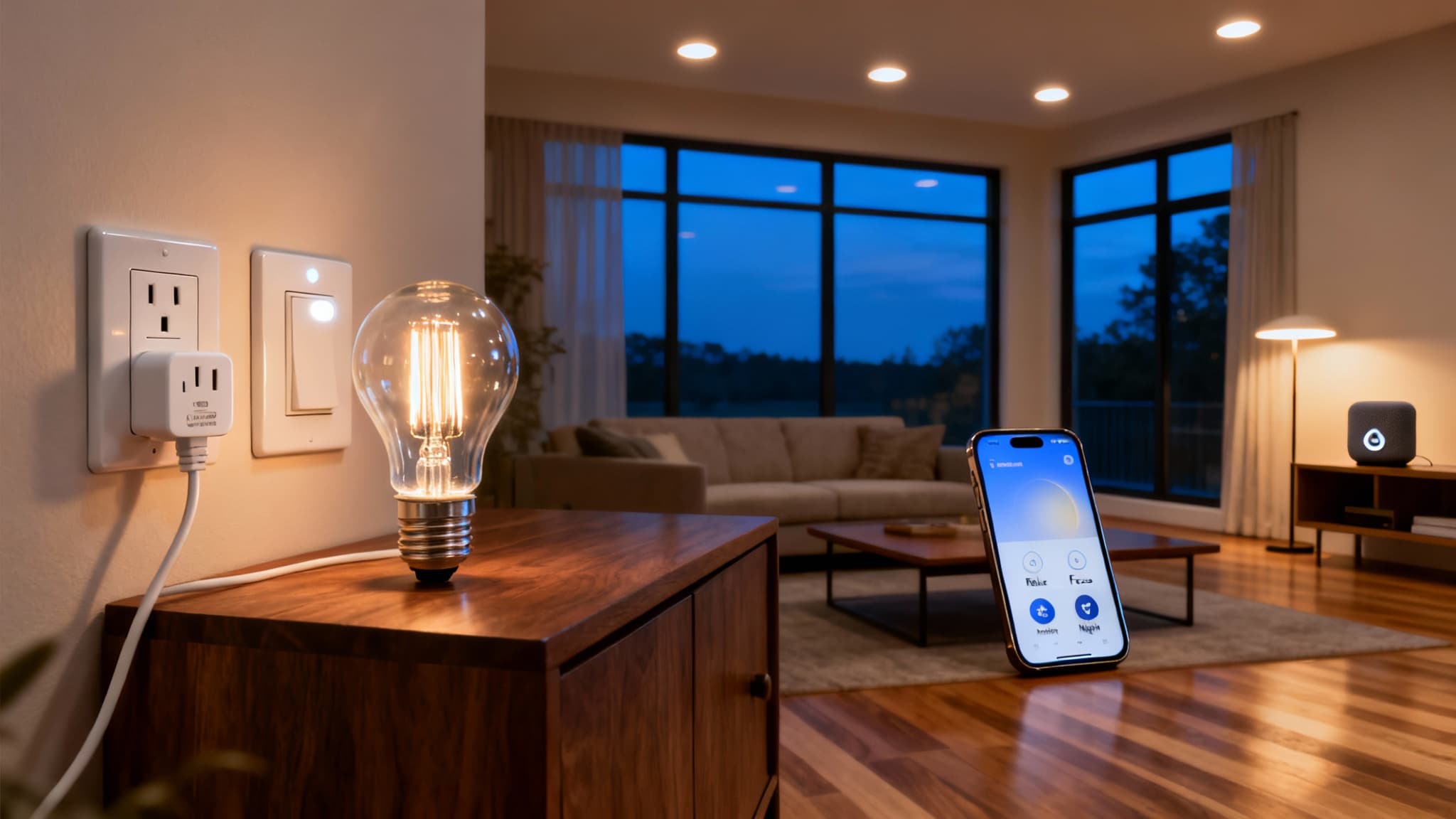

If you’re upgrading your home lighting and power control, choosing between smart bulbs, smart plugs, and smart switches can feel overwhelming. Each category offers unique benefits, and the best choice often depends on your fixtures, wiring, budget, and the smart home ecosystem you already use. This comprehensive guide breaks down the differences, compatibility with U.S. standards, and the key buying considerations—so you can pick the right devices for your American home with confidence.
Smart Bulbs: Instant Smart Lighting Without Rewiring
Smart bulbs are the fastest way to add smart lighting to any lamp or compatible fixture. Just screw in the bulb, connect it to your app, and you’re ready to dim, schedule, and even change colors (with RGB or tunable white models). Most smart bulbs in the U.S. fit standard E26 base sockets, and many also offer BR30 shapes for recessed cans and A19 for table lamps and ceiling fixtures.
Pros:

- Easiest setup—no electrician required
- Per-fixture and per-room scene control
- Color and white temperature options for mood and circadian lighting
- Great for renters and temporary setups
Cons:
- Physical wall switches can cut power, disabling smart control
- Multiple bulbs per fixture can get expensive
- Not ideal for ceiling fans with dimmer circuits or multi-switch wiring
Best for:
- Lamps, bedside tables, accent lighting, apartments, and rooms where color scenes matter
Key Specs to Check:
- Base and shape: A19/E26, BR30/E26 for U.S. fixtures
- Brightness: Measured in lumens (800 lm ~ 60W equivalent)
- Color: Full RGB vs. tunable white (2700K–6500K)
- Connectivity: Wi‑Fi, Bluetooth, Thread, or Zigbee
- Ecosystem: Matter support, Alexa, Google Home, Apple Home
Pro tip for switch issues: Add a smart switch cover or replace the wall switch with a smart switch that supports “always on” for the circuit—so bulbs stay powered for app control.
Smart Plugs: Make Almost Any Device “Smart”
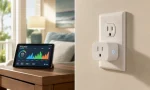
Smart plugs sit between your outlet and your device, letting you automate on/off and track energy in some models. In the U.S., look for 120V, 15A plugs (NEMA 5-15) that fit standard duplex outlets without blocking the second receptacle.
Pros:
- No wiring changes; quickly smarten lamps, fans, coffee makers
- Energy monitoring in select models
- Affordable entry point to home automation
Cons:
- On/off control only—no dimming for lamps unless paired with a dimmable smart plug designed for lighting
- Bulky designs can block adjacent sockets
- Not suitable for high-draw appliances beyond rated amperage
Best for:
- Table lamps, small appliances, holiday lights, air purifiers, dehumidifiers
Key Specs to Check:
- Rating: 15A/120V, UL certification for safety
- Size: Slim profile to avoid blocking outlets
- Energy Monitoring: Optional but useful for tracking costs
- Connectivity: Wi‑Fi for simple setups; Thread or Zigbee for mesh reliability
- Outdoor use: Look for weatherproof plugs with NEMA 3R or IP ratings and protective covers
Pro tip for lamps: If you want dimming, consider a smart dimmer plug specifically designed for lighting loads and compatible bulbs.
Smart Switches: Whole-Room Control at the Wall
Smart wall switches replace your existing switches and let you control one or more fixtures—even if they have regular bulbs. This gives you reliable control without worrying about someone turning off a wall switch. For U.S. homes, ensure devices match 120V circuits and U.S. wall box dimensions; most smart switches require a neutral wire.
Pros:
- Keeps fixtures controllable from the wall and the app
- Works with standard bulbs (LED, incandescent, CFL if compatible)
- Three-way and four-way options for hallway and staircase circuits
- Clean, permanent solution; ideal for homeowners
Cons:
- Installation requires basic electrical skills; power off at breaker
- Often needs a neutral wire; older homes may lack it
- Dimming models must be matched with dimmable bulbs and correct load types
Best for:
- Overhead lights, multi-bulb fixtures, recessed lighting, three-way circuits
Key Specs to Check:
- Wiring: Neutral wire required vs. “no-neutral” models
- Load support: LED, incandescent, max wattage, minimum load for LEDs
- Form factor: Decora style for standard U.S. wall plates
- 3-way/4-way compatibility: Use the right companion switch or supported wiring method
- Safety: UL/ETL listed; follow NEC guidelines
Pro tip for older homes: If you don’t have a neutral wire, look for “no-neutral” smart dimmers that work with a bypass or require specific bulbs. Alternatively, choose smart bulbs with a smart remote or a battery-powered wall keypad.
Connectivity: Wi‑Fi vs. Zigbee vs. Thread vs. Matter
- Wi‑Fi: Easy and hub-free but can get congested. Great for small setups or where you want simple app control and cloud routines.
- Zigbee: Low-power mesh with excellent reliability, but usually needs a hub (some smart speakers can act as hubs).
- Thread: Modern low-power mesh, fast and robust. Many Thread devices pair beautifully within Matter ecosystems.
- Matter: A unifying standard that lets devices work across platforms like Apple Home, Alexa, and Google Home. If future-proofing matters, prioritize Matter-compatible products.
Tip: If you already own an Echo, Nest Hub, or Apple HomePod, pick devices that integrate natively for the smoothest experience.
Safety, Compliance, and U.S. Standards
- Voltage and frequency: 120V, 60Hz for U.S. circuits
- Plug type: NEMA 5-15 for smart plugs
- Listings: UL or ETL safety certification is critical
- Dimmers: Ensure compatibility with your LED bulbs to avoid flicker or buzz
- Outdoor use: Choose weather-rated plugs and enclosures
Always switch off the breaker before installing smart switches and follow local electrical codes. If in doubt, hire a licensed electrician.
Energy Savings and Automation Ideas
- Use motion sensors with smart switches to light hallways automatically and save energy.
- Schedule porch and landscape lights to turn on at sunset and off at sunrise.
- Create vacation mode randomization using smart plugs to simulate occupancy.
- Pair tunable white bulbs with morning cool white and evening warm white to improve comfort and sleep hygiene.
- Track energy with monitoring plugs to find vampire loads and reduce utility bills.
Ecosystem Compatibility Checklist
- Apple Home (HomeKit/Matter): Look for Matter over Thread or certified HomeKit devices.
- Amazon Alexa: Choose devices marked “Works with Alexa” or Matter-compatible.
- Google Home: “Works with Google Home” or Matter-compatible devices integrate smoothly.
- SmartThings: Zigbee, Z-Wave, Thread, and Matter options are well supported.
Future-proofing tip: Matter over Thread devices provide robust local control, fast response times, and multi-ecosystem compatibility—ideal for U.S. homes prioritizing reliability and long-term support.
Which Should You Choose?
- Pick smart bulbs if you want color scenes, individual lamp control, and zero rewiring—perfect for renters and accent lighting.
- Choose smart plugs for simple on/off automation of lamps and small appliances, plus optional energy tracking.
- Go with smart switches for whole-room, family-proof control that works even when the wall switch is used—best for permanent, clean installs.
Many homes use a hybrid approach: smart switches for main rooms and hallways, smart bulbs for ambiences like living rooms and bedrooms, and smart plugs for appliances and seasonal decor. Start with one category that solves your biggest pain point, then expand with devices that share the same ecosystem and support Matter where possible.
Buying Quick-Check
- Verify UL/ETL certification and U.S. voltage/plug type
- Confirm neutral wire requirement for switches
- Match dimmers with dimmable LED bulbs and correct wattage
- Prefer Matter/Thread for future-proof smart homes
- Check 3-way compatibility for multi-location circuits
Build your smart home step-by-step, and you’ll enjoy reliable lighting, lower energy costs, and convenient control from your phone, voice assistant, or wall switch—engineered for American standards.