
What is Voice Cloning?
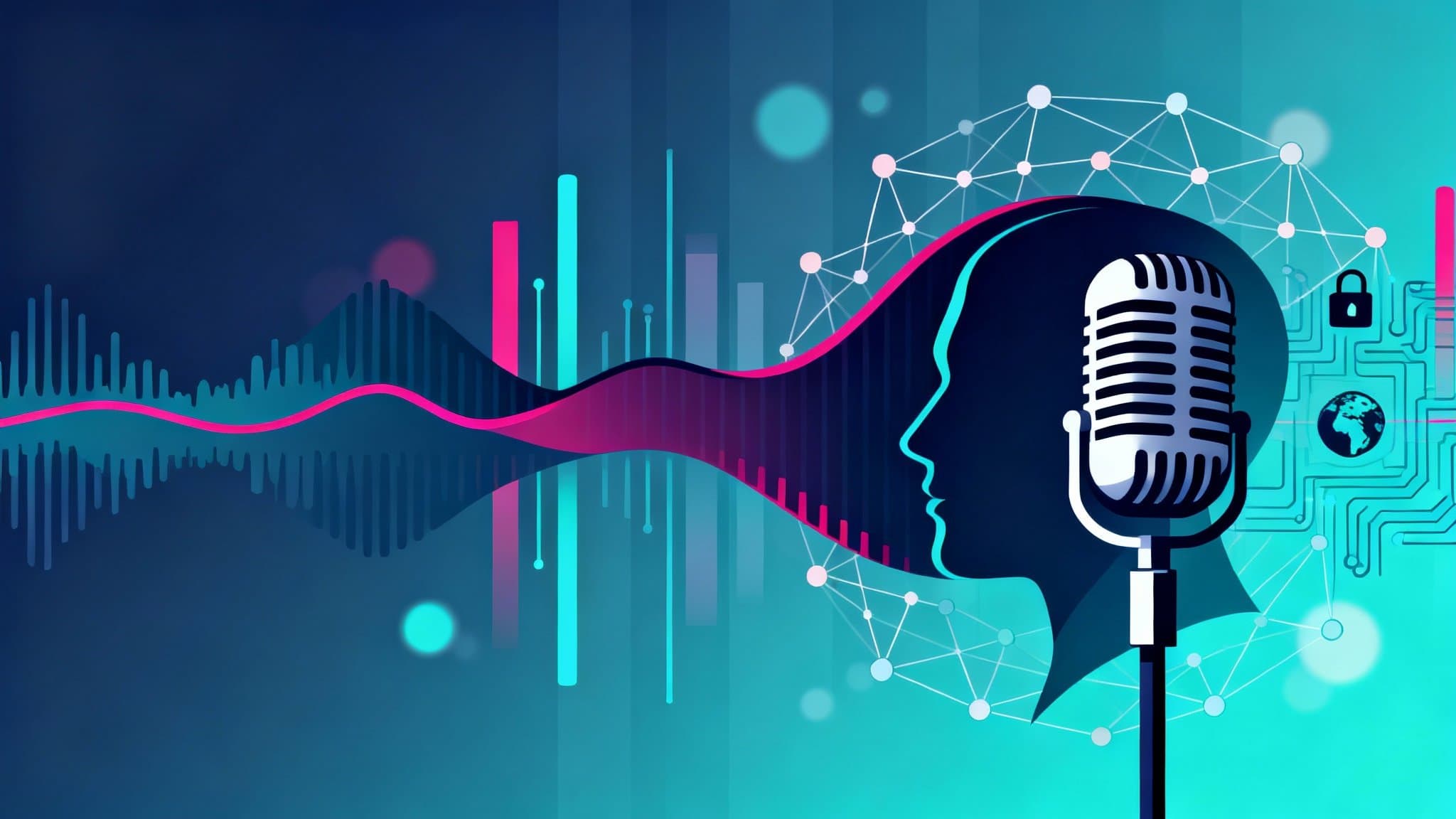
Voice cloning is the process of creating a digital replica of a person’s voice using machine learning. Unlike traditional text-to-speech (TTS), which outputs a generic synthetic voice, voice cloning models capture a speaker’s timbre, accent, prosody, and speaking style. With only a few minutes of reference audio (and in some cases less), modern systems can generate highly realistic speech that sounds like the original speaker. This capability powers use cases in accessibility, entertainment, virtual assistants, audiobooks, and personalized brand voices.
How Natural Speech Synthesis Works
Natural speech synthesis combines multiple subfields:
- Acoustic modeling: Neural networks convert linguistic input (text, phonemes, or semantic tokens) into acoustic features like mel spectrograms.
- Vocoding: Neural vocoders (e.g., WaveNet, HiFi-GAN) transform those features into waveforms that sound like human speech.
- Speaker representation: Embeddings learned from reference audio capture voice identity and style. These embeddings guide the model to speak “as” a specific person.
- Prosody and style transfer: Advanced models control rhythm, emphasis, and emotion to produce expressive, context-aware delivery.
End-to-end architectures reduce error propagation between stages, resulting in higher fidelity, fewer artifacts, and more “human” intonation. Combined with large-scale pretraining and fine-tuning on curated datasets, current systems can synthesize natural, conversational speech that aligns with context and audience.
Key Use Cases in the United States Market
- Accessibility and assistive tech: Personalized voices for users with speech impairments or degenerative conditions. Individuals can bank their voices and speak through an AAC device that sounds like them.
- Media, film, and games: Consistent character voices, ADR cleanup, and multilingual dubbing while preserving the actor’s voice identity.
- Marketing and brand: On-brand, consistent voiceovers for campaigns, product videos, and IVR systems without repeated studio sessions.
- Education and e-learning: Course narration tailored to the learner’s language and speed preferences; quick updates without re-recording.
- Enterprise operations: Custom voices for chatbots and customer support, improving user trust and comprehension.
- Audio publishing: Audiobooks and podcasts generated at scale with reliable quality and style control.
Benefits: Why Businesses Adopt Voice Cloning
- Cost efficiency at scale: Reduce studio time, talent scheduling, and re-recording costs.
- Speed and iteration: Update scripts in minutes instead of days; A/B test voice styles and messaging.
- Brand consistency: A recognizable voice across channels boosts recall and trust.
- Localization: Retain voice identity across languages via cross-lingual synthesis.
- Accessibility and inclusion: Give users more choice in how they consume content.
Technical Considerations for Quality
- Data quality: Clean, high-SNR reference recordings produce better voice embeddings. Avoid background noise and compression artifacts.
- Sufficient duration: While few-shot cloning is possible, 10–60 minutes of diverse, well-annotated speech improves timbre, range, and phoneme coverage.
- Balanced phonetics: Include varied phonemes, numbers, names, and domain terms to minimize mispronunciations.
- Prosody prompts: Provide style references or text annotations (pauses, emphasis) to achieve natural cadence.
- Post-processing: Light normalization, de-essing, and room tone blending can close the gap to studio-quality audio.
Ethical, Legal, and Compliance Factors in the U.S.
Operating a site in the United States means aligning with evolving laws and platform policies:
- Consent and rights: Always obtain explicit, written consent from the voice owner. If using actors or employees, ensure contracts cover synthetic voice usage, territories, and duration.
- Deception safeguards: Disclose when audio is AI-generated where appropriate. Never use voice clones to impersonate, defraud, or violate publicity/privacy rights.
- Copyright and publicity rights: Names, voices, and likenesses may be protected under state right-of-publicity laws (e.g., California). License usage carefully.
- Platform and telecom policies: If deploying cloned voices via phone, check robocall and telemarketing rules (TCPA) and carrier guidelines.
- Watermarking and detection: Consider audio watermarking, provenance metadata, and internal review workflows to prevent misuse and prove authenticity.
- Data protection: Securely store reference audio and embeddings; restrict access and log usage for audits. Follow your privacy policy and applicable state privacy laws.
Consult counsel for jurisdiction-specific guidance, especially if you serve multiple U.S. states with differing publicity and privacy frameworks.
Evaluating Vendors and Tools
When selecting a voice cloning or TTS provider, assess:
- Naturalness and intelligibility: Listen for sibilance, plosives, breathiness, and prosody. Check performance in noisy channels (phone lines, in-car).
- Latency and scaling: For IVR and assistants, real-time or near-real-time synthesis is crucial. Verify throughput under peak loads.
- Customization: Ability to fine-tune style, emotion, pace, and pronunciation dictionaries. Look for SSML or style tokens.
- Multilingual capacity: Cross-lingual cloning and code-switching support if you target bilingual audiences.
- Security and compliance: SOC 2, data encryption, content filters, consent management, and abuse prevention.
- Cost model: Compare per-character, per-minute, or seat-based pricing and consider total cost of ownership (TCO), including storage and egress.
Best Practices for Deployment
- Script design: Write for the ear. Use shorter sentences, clear structure, and explicit pronunciations for tricky terms. Maintain brand tone.
- Pronunciation control: Use SSML or custom lexicons for acronyms, numbers, and names. Review samples for domain-specific jargon.
- Style guides: Define voice persona, energy level, pacing, and emotional range. Provide audio references that demonstrate the target delivery.
- QA workflow: Human-in-the-loop review for sensitive content. Spot-check multi-minute outputs for artifacts and prosody drift.
- A/B testing: Experiment with tempo, pitch, and emphasis to improve comprehension and conversion metrics.
- Accessibility: Offer transcripts and captioning. Allow users to choose voice variants and playback speed.
- Security and governance: Enforce consent tracking, usage quotas, and anomaly detection to flag unusual cloning requests.
SEO Tips for U.S.-Based Sites Targeting Voice AI
- Search intent alignment: Create pages for specific intents like “AI voice cloning for call centers,” “voice banking for ALS,” or “brand voice TTS for marketing.”
- Structured data: Use schema.org for products, FAQs, and audio objects to enrich search results.
- E‑E-A-T signals: Publish bylines with expertise, case studies, technical explainers, and compliance statements to build trust.
- Fast media delivery: Host compressed, high-quality audio samples with optimized streaming to reduce bounce rates.
- Content clusters: Build internal links between guides on TTS, SSML, dubbing, voice privacy, and AI ethics to strengthen topical authority.
- Local compliance content: Add state-specific guidance pages (e.g., California, New York, Texas) to capture long-tail queries and demonstrate diligence.
Future Trends to Watch
- Expressive control and emotions: Finer-grained, token-level control over emotions and conversational dynamics.
- Cross-lingual parity: Better accent preservation and natural code-switching, enabling global brand continuity.
- Real-time cloning: Lower-latency pipelines unlock live translation, dubbing, and on-device synthesis.
- Watermarking and provenance: Standardized audio provenance frameworks will help platforms detect synthetic content at scale.
- On-device privacy: Edge models allow voice cloning and inference without sending raw audio to the cloud, improving privacy and latency.
Getting Started: A Practical Checklist
- Collect consented, clean reference audio (ideally 20–60 minutes, 16-bit, 44.1–48 kHz, quiet room).
- Draft a pronunciation lexicon for brand terms and proper nouns.
- Define your voice persona: age range, energy, warmth, formality, and domain context.
- Choose a provider with SSML, lexicons, and security certifications relevant to your industry.
- Produce a pilot: 3–5 scripts covering different scenarios (marketing, support, compliance).
- Run user tests in your U.S. target segments; measure clarity, trust, and conversion.
- Set governance: consent tracking, usage monitoring, and a review policy for synthetic media.
Conclusion
Voice cloning and natural speech synthesis have matured into reliable tools for building personalized, scalable, and accessible voice experiences. With the right data, vendor, and governance, U.S.-based businesses can unlock brand consistency, faster production cycles, and better customer engagement—while respecting consent, privacy, and emerging regulations. As expressive control, multilingual parity, and watermarking advance, synthetic voices will feel even more natural and trustworthy, making now a strong time to invest.