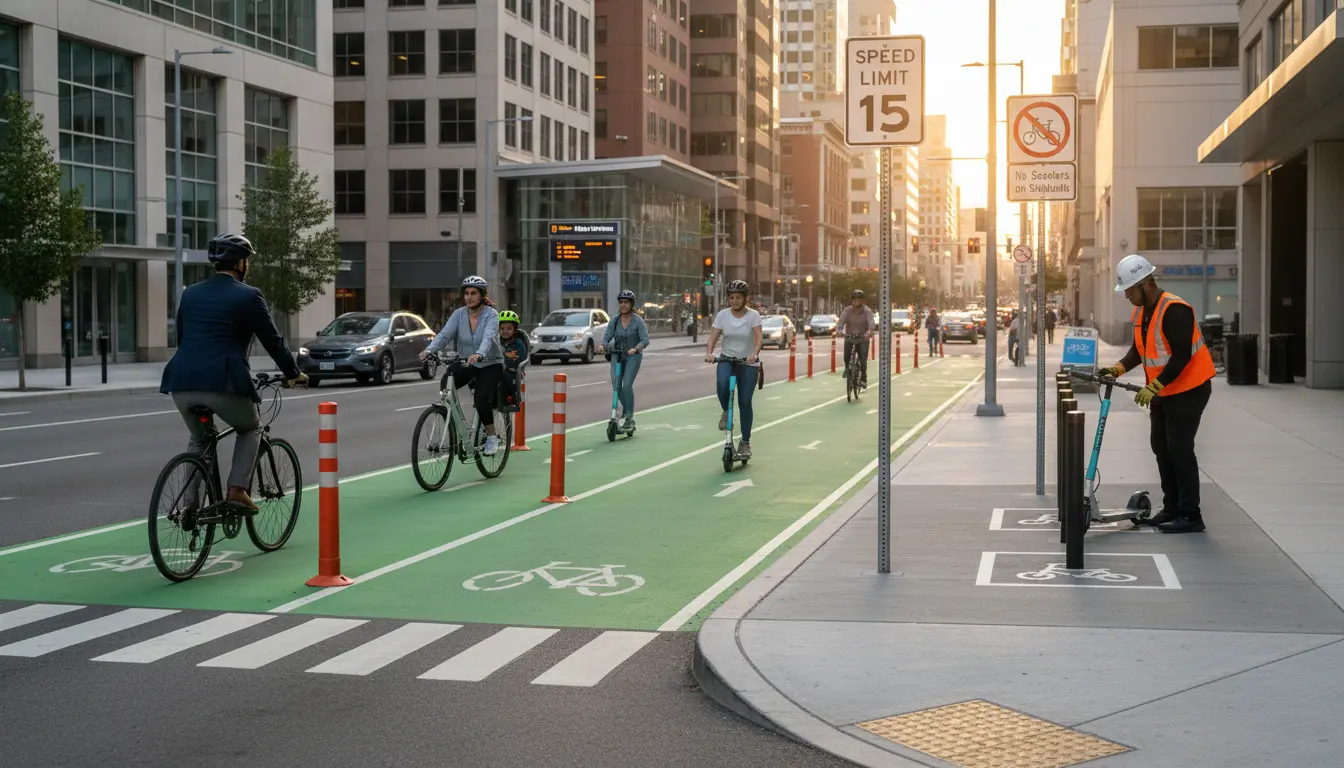

E-bikes and electric scooters have rapidly transformed urban mobility across the United States, offering a convenient, low-cost, and low-emission alternative to car trips and crowded transit. But as adoption surges, city governments are racing to create clear, enforceable rules that balance safety, equity, and innovation. This guide explains how U.S. cities regulate e-bikes and scooters, what riders and operators need to know, and how policies are evolving to support safer, more sustainable micromobility ecosystems. It is written to be comprehensive and search-friendly, with semantic coverage to help rank organically.
How U.S. Cities Classify E-bikes and Scooters
Most states and cities rely on a three-class system for e-bikes:
- Class 1: Pedal-assist up to 20 mph, no throttle.
- Class 2: Throttle and pedal-assist up to 20 mph.
- Class 3: Pedal-assist up to 28 mph, often restricted to riders 16+ and sometimes requiring helmets.
Electric scooters (stand-up e-scooters) are typically capped at 15–20 mph and treated separately from bicycles. Many cities set different rules for vehicle classes—such as where they can ride (bike lanes vs mixed traffic), speed limits, age restrictions, and whether helmets are required. Understanding classification is the first step for compliance, especially if you travel across municipalities with differing codes.
Where You Can Ride: Bike Lanes, Streets, and Sidewalks
- Bike lanes: Most cities allow e-bikes and scooters in protected or painted bike lanes, often with speed limits. Class 3 e-bikes may be restricted to streets or specific lanes.
- Streets: Low-speed residential streets are generally open to micromobility. Some cities permit riding in traffic lanes where bike infrastructure is absent, subject to posted speed limits.
- Sidewalks: Frequently restricted or prohibited for scooters and faster e-bikes in dense downtowns to protect pedestrians. Exceptions sometimes apply in suburban areas or where bike lanes are missing. Always look for signage and local ordinances.
Cities like New York City, Los Angeles, Austin, and Washington, D.C. publish specific maps of permitted areas, slow zones, and no-ride or no-park zones through operator apps. Geofencing technology increasingly enforces these rules in real time.
Speed Limits, Helmets, and Age Requirements
- Speed: Typical scooter caps range from 12 to 15 mph downtown, with higher limits on trails or wider bike lanes. E-bikes follow class-based limits.
- Helmets: Helmet mandates vary. Many cities strongly recommend helmets for all riders, require them for minors, and sometimes specifically for Class 3 e-bike users.
- Age: Scooter share programs usually set 18+ for rentals, while private ownership rules vary by city and state.
Compliance is monitored through a mix of on-street enforcement, in-app speed controls, and education campaigns. Some operators deploy “beginner mode” with lower speeds for first-time riders.
Parking, Dockless Systems, and Clutter Prevention
Improperly parked devices can block sidewalks and curb ramps. To manage clutter, cities:
- Require parking in designated corrals or at bike racks.
- Use mandatory “end-of-ride photo” verification.
- Impose fines on operators for repeated violations.
- Employ in-app guidance, QR codes, or wayfinding to direct riders to legal parking areas.
Many downtown cores now feature painted micromobility parking boxes and curbside corrals to keep sidewalks clear and ADA-compliant.
Permits, Fleet Caps, and Equity Zones for Shared Operators
Shared scooter and e-bike systems operate under permits that typically define:
- Fleet size caps and dynamic scaling tied to performance.
- Equity requirements to deploy devices in underserved neighborhoods.
- Service-hour windows, rebalancing standards, and response times for complaints.
- Data-sharing requirements via MDS/GBFS feeds to support planning and oversight.
- Insurance, maintenance, and battery safety compliance.
Cities often evaluate operators on safety records, device uptime, customer service, and community engagement. High-performing operators may earn larger fleets or longer contracts.
Safety Infrastructure: The Real Key to Success
Regulations work best when paired with safe infrastructure. Protected bike lanes, intersection treatments, traffic-calming, and micromobility hubs reduce conflicts and injuries. Many cities use scooter and e-bike fee revenue to fund:
- Protected lanes and low-stress networks.
- Lighting and signage for night riding.
- Charging and parking stations to minimize sidewalk clutter.
- Public education campaigns on right-of-way and safe passing.
Evidence from leading cities shows that coherent networks and clear wayfinding promote safer, more predictable rider behavior—benefiting drivers and pedestrians, too.
Data, Privacy, and Enforcement Innovations
To measure performance, cities request anonymized trip data that supports:
- Hot-spot analysis for near-miss and crash-prone segments.
- Dynamic slow zones and pop-up infrastructure pilots.
- Equity audits for service coverage and affordability.
Geofencing enforces no-ride zones (e.g., waterfront promenades, campuses), slow zones in crowded areas, and no-parking areas near transit hubs. In-app education, ride quizzes, and penalty structures for repeat violations are increasingly common, while privacy policies aim to protect individual riders.
Battery Safety and Sustainability Standards
With more high-energy batteries on streets, safety is a top priority:
- UL-certified batteries and chargers are often mandated for operators.
- Storage and charging rules apply to warehouses and sometimes multi-unit buildings.
- End-of-life recycling plans are required in several jurisdictions.
- Cities encourage swappable batteries to reduce van miles for recharging.
Sustainability targets also consider operations: incentives for e-cargo bikes for rebalancing, requirements to use renewable energy for warehouses, and reporting on lifecycle emissions.
Accessibility and ADA Considerations
Regulations emphasize keeping sidewalks accessible:
- Clear minimum sidewalk widths and setback rules for parked devices.
- Rapid retrieval of improperly parked units.
- Integration of adaptive devices (e.g., seated scooters, e-trikes) to broaden mobility options.
- Tactile cues and audible signals in high-conflict zones where feasible.
Community feedback loops—hotlines, app-based reporting, and 311 integration—help cities and operators promptly address issues.
Equity, Affordability, and First/Last Mile Integration
To ensure access for all residents, cities often require:
- Discounted fare programs for low-income riders.
- Cash-based and text-to-unlock options without smartphones or credit cards.
- Multilingual customer support and safety materials.
- Deployment minimums in historically underserved neighborhoods.
Partnerships with transit agencies align micromobility with first/last mile needs through co-located parking at stations, integrated trip-planning, and transit fare bundling pilots. These integrations help shift short car trips to sustainable modes.
Enforcement and Education: Getting the Balance Right
Effective enforcement pairs penalties with education:
- Graduated penalties for dangerous riding or repeated parking violations.
- Mandatory safety modules after infractions.
- Community rides and on-street ambassadors to teach rules.
- Collaboration with universities and employers for campus and commuter programs.
Cities are also clarifying liability, insurance minimums, and crash reporting standards to streamline claims and improve safety analytics.
Trends to Watch in 2025 and Beyond
- Standardized rules across metro regions to reduce rider confusion.
- More protected lanes and “slow streets” that welcome micromobility.
- Enhanced geofencing precision and context-aware speed controls.
- Battery safety regulations harmonized across states.
- Growth of cargo e-bikes for deliveries and fleet operations.
- Tighter integration with transit passes and mobility-as-a-service platforms.
The most successful cities approach e-bike and scooter regulation as part of a broader mobility strategy—linking street design, safety culture, data governance, and equitable access.
Practical Tips for Riders
- Check local rules before riding; classifications matter.
- Use bike lanes where available; avoid sidewalks unless explicitly allowed.
- Respect speed limits and slow zones; yield to pedestrians.
- Park responsibly in corrals or at bike racks; follow in-app guidance.
- Wear a helmet, especially on higher-speed e-bikes.
- At night, use lights and reflectors; ride predictably and signal turns.
By staying informed and riding courteously, you support safer streets and help keep these sustainable options available.
Micromobility can meaningfully reduce congestion and emissions, but it requires clear, consistent rules backed by safe infrastructure and strong community engagement. As U.S. cities refine their policies, riders and operators who understand the evolving regulatory landscape will be best positioned to benefit—safely, affordably, and sustainably.