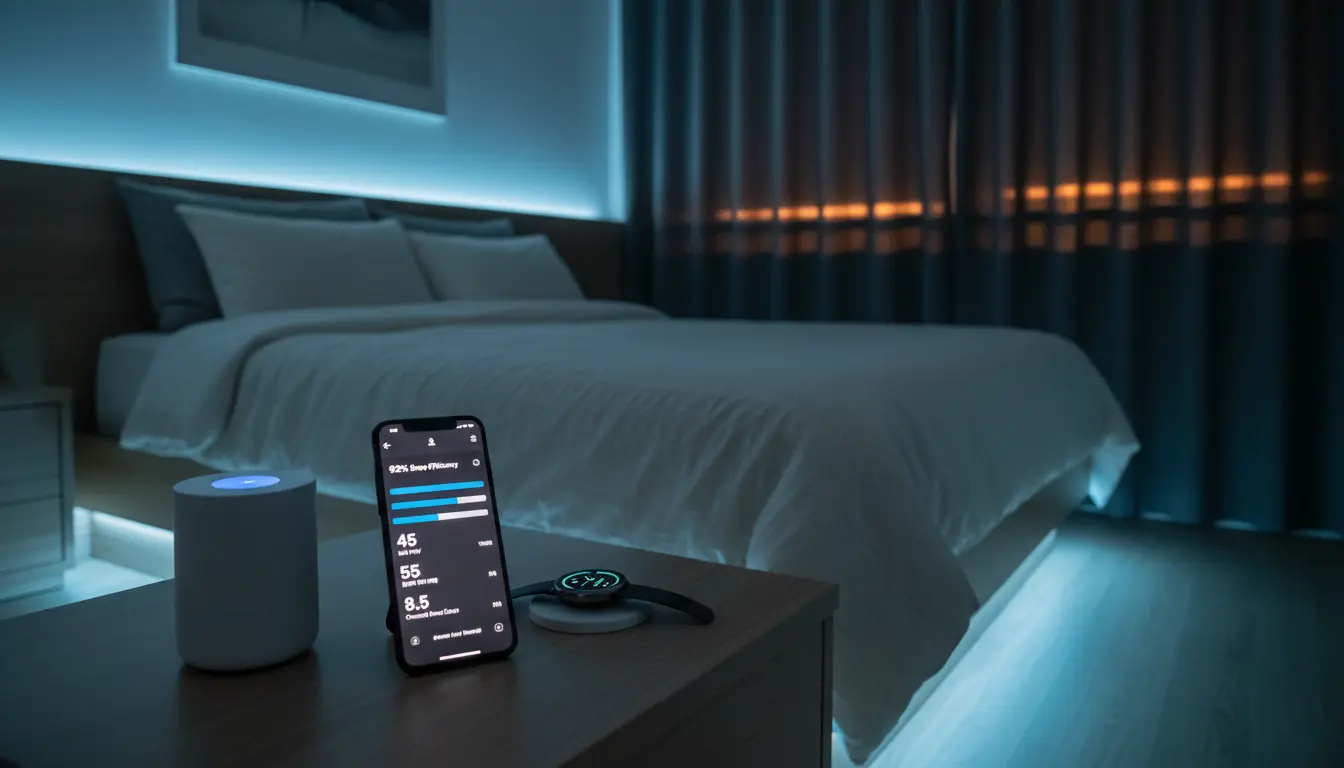

Sleep tracking has become a cornerstone of modern wellness, empowering people to understand their sleep patterns, optimize recovery, and support mental and physical performance. Yet not all sleep trackers are equally accurate, and the settings you choose can make a substantial difference. This guide explains how sleep tracking works, what affects accuracy, how to configure your device for the best results, and how to interpret your data in a realistic, actionable way.
How Sleep Trackers Measure Sleep
Most consumer-grade sleep trackers use one or more of the following sensors:
- Accelerometers to detect movement and infer sleep/wake states.
- Optical heart rate sensors (PPG) to track pulse and heart rate variability (HRV).
- Skin temperature sensors to detect circadian shifts, illness, or environmental changes.
- SpO2 sensors to estimate blood oxygen saturation and potential breathing irregularities.
- Microphones or sonar (in some devices) to detect breathing patterns and snoring.
These inputs are processed by algorithms to estimate sleep stages—light, deep, and REM—as well as sleep onset, wake-ups, total sleep time, and sleep efficiency. While research-grade polysomnography (PSG) remains the gold standard, many modern wearables achieve reasonable agreement with PSG for sleep/wake detection and total sleep duration. Stage classification is more variable: REM vs. deep sleep estimation can be less precise, especially in users with atypical sleep or certain health conditions.
What Impacts Sleep Tracking Accuracy
- Fit and placement: Loose wear can introduce motion noise and reduce optical signal quality. Follow manufacturer guidance—typically snug on the non-dominant wrist or as specified for rings and headbands.
- Skin tone, tattoos, and hair: Dark tattoos, thick hair, and certain skin characteristics can affect optical readings. Adjusting strap tightness and sensor contact helps.
- Motion artifacts: Restless sleepers, co-sleeping with pets or partners, and vigorous late-evening activity can confuse algorithms, leading to false wake detections or delayed sleep onset.
- Environmental factors: Temperature swings, excessive light, or high ambient noise can degrade signal stability and sleep quality—both of which show up in your data.
- Firmware and algorithm updates: Periodic updates can change how metrics are calculated. Review release notes and expect small shifts in reported stages after major updates.
- Battery level: Low battery can downsample sensors or disable advanced metrics, lowering accuracy.
Key Settings to Improve Accuracy
- Sleep schedule/bedtime window: Set your typical bedtime and wake time. Many trackers use this window as a prior to identify sleep onset more reliably.
- Sensitivity or detection mode: If your device offers “sensitive” vs. “balanced” modes, pick sensitive if you’re a very still sleeper who needs precise wake detection, and balanced if you move a lot to reduce false wake events.
- HR and HRV sampling frequency: Enable continuous heart rate tracking at night. Higher sampling improves stage estimation and recovery metrics.
- Snore and sound detection: Enable if available and you’re comfortable with the privacy trade-offs; it can help flag breathing-related disturbances.
- Temperature tracking: Turn on nightly skin temperature logging to detect illness or circadian drift that may explain unusual sleep scores.
- Movement data sources: If you use a phone on the mattress, ensure it’s placed consistently. For wearables, ensure snug fit and proper sensor alignment.
Best Practices Before Bed
- Keep a consistent sleep-wake schedule, even on weekends. Consistency stabilizes your circadian rhythm and improves the reliability of trend data.
- Avoid heavy meals, alcohol, and intense exercise within 2–3 hours of bedtime. These can alter HR, HRV, and sleep architecture, confusing stage detection.
- Limit bright screens and blue light. If you must use devices, enable night modes and reduce brightness.
- Optimize your sleep environment: cool (about 18–20°C), dark, and quiet. Consider blackout curtains, a white noise machine, and a comfortable mattress and pillow.
Interpreting Your Sleep Data
- Focus on trends, not single nights: Night-to-night variability is normal. Look for 7–14 day trends in total sleep time, sleep efficiency, and time in each stage.
- Use ranges, not absolutes: If your tracker reports 90 minutes of deep sleep one night and 60 the next, the difference may be within normal estimation error. Prioritize how you feel and performance in your day.
- Cross-reference with subjective measures: Morning energy, mood, and perceived sleep quality add context that algorithms can’t fully capture.
- Watch for consistent anomalies: Regular low SpO2, frequent awakenings, or irregular breathing may warrant a conversation with a healthcare professional.
Advanced Tips to Boost Reliability
- Calibrate with reality checks: Mark nights when you know you slept poorly or woke frequently, then see how your tracker recorded them. Adjust sensitivity if your device allows it.
- Nap detection: Some devices miss short naps or misclassify quiet time as sleep. Log naps manually if daytime sleep is part of your routine.
- Jet lag and shift work: Enable “travel” or “shift worker” modes if your device supports them. Otherwise, expect temporary inaccuracies during circadian disruptions.
- Combine metrics wisely: Look at total sleep time, sleep efficiency, HRV, resting heart rate, and temperature together. Consistent improvements across multiple metrics are more meaningful than changes in a single stage.
- Privacy and data export: Review what your device records and where it syncs. If you analyze sleep in third-party apps, export raw data (CSV/JSON) when available for deeper insights.
When to Seek Professional Evaluation
Consumer devices can flag patterns that merit further evaluation, such as:
- Persistently low SpO2 events or loud, frequent snoring.
- Excessive daytime sleepiness despite adequate time in bed.
- Frequent awakenings, insomnia, or suspected parasomnias.
For diagnosis, consult a clinician; they may recommend PSG or a home sleep apnea test. Use your tracker data as a conversation starter, not a diagnostic tool.
Building a Sustainable Sleep Routine
- Aim for 7–9 hours of sleep for most adults, adjusting based on your daytime functioning.
- Anchor your wake time first; your bedtime will follow naturally.
- Create a pre-sleep wind-down: stretching, light reading, or breathing exercises to reduce heart rate and prepare your body for sleep.
- Iterate your bedroom setup: temperature, bedding, and noise control can meaningfully impact both sleep quality and how your tracker perceives movement and physiology.
Common Myths About Sleep Tracking
- “My tracker’s deep sleep is exact.” No consumer wearable can perfectly stage sleep; take stage data as estimates.
- “More deep sleep is always better.” Balance across stages matters; REM supports memory and mood, deep sleep supports physical recovery.
- “A low score means a bad day.” Use scores as feedback, not as fate. Prioritize recovery behaviors and test how you feel.
Putting It All Together
Improving sleep tracking accuracy is a combination of choosing the right device, wearing it correctly, enabling the right settings, and focusing on consistent habits. Treat your data as a guide, emphasize trends, and use subjective experience as a crucial cross-check. When in doubt, consult a professional—especially for breathing irregularities or chronic sleep difficulties.