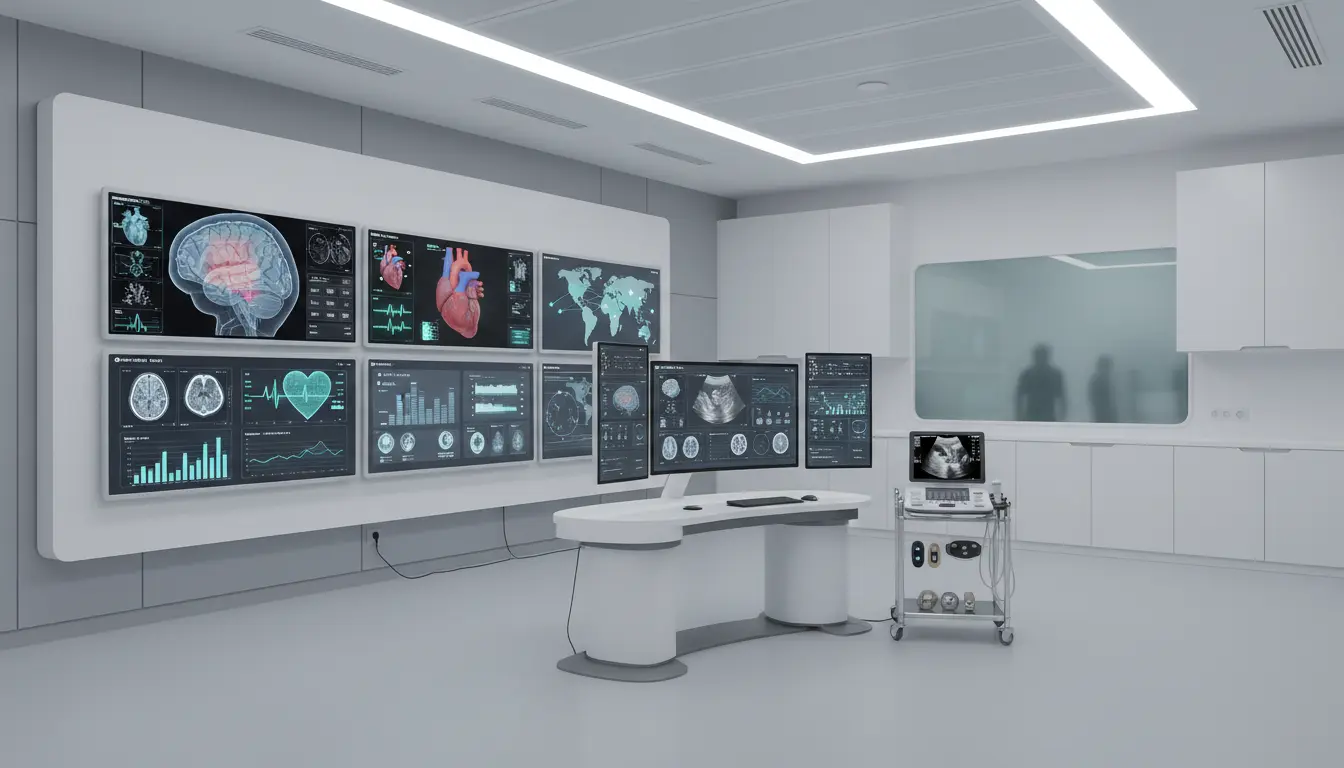

How AI‑Powered Medical Diagnostic Devices Are Transforming U.S. Hospitals and Global Clinics
Artificial intelligence (AI) is rapidly reshaping how healthcare providers detect, diagnose, and manage disease. AI‑powered medical diagnostic devices are now embedded in emergency rooms, radiology suites, outpatient clinics, and even patients’ homes. From large U.S. hospital systems to small global clinics, these intelligent tools are changing clinical workflows, improving accuracy, and expanding access to high‑quality care.
This article explains how AI diagnostic technologies work, where they are used, and what they mean for hospitals, clinicians, and patients worldwide.
1. What Are AI‑Powered Medical Diagnostic Devices?
AI‑powered diagnostic devices use machine learning and deep learning algorithms to interpret medical data and support clinical decisions. Instead of only capturing images or signals, these devices analyze:

- Medical images (X‑ray, CT, MRI, ultrasound)
- Physiological signals (ECG, vital signs, wearable sensor data)
- Laboratory results and electronic health records (EHRs)
- Patient‑reported symptoms and histories
The AI model identifies patterns, predicts risk, and flags abnormalities in real time, giving clinicians a second, data‑driven opinion at the point of care.
2. The Transformation in U.S. Hospitals
2.1. Faster and More Accurate Imaging Diagnostics
In many U.S. hospitals, AI now supports radiologists and emergency physicians by:
- Automatically detecting critical findings such as stroke, pulmonary embolism, fractures, and lung nodules
- Prioritizing urgent cases in the worklist so radiologists read high‑risk scans first
- Reducing human error by highlighting subtle abnormalities that can be missed in time‑pressured environments
This leads to shorter turnaround times, more consistent image interpretations, and earlier interventions for life‑threatening conditions.
2.2. AI‑Driven Clinical Decision Support
AI systems also run in the background of hospital information systems. They continuously scan EHR data to:
- Predict sepsis or clinical deterioration
- Estimate readmission risk
- Detect potential medication errors or drug interactions
Clinicians receive alerts and risk scores at the bedside. This proactive approach supports more personalized treatment decisions and helps hospitals improve quality metrics and patient safety.
2.3. Operational Efficiency and Cost Savings
AI‑powered diagnostic tools do more than interpret clinical data; they optimize the entire workflow. Hospitals use AI to:
- Automate routine documentation and coding tasks
- Reduce unnecessary imaging and laboratory tests through evidence‑based recommendations
- Allocate staff and resources based on predicted patient volumes and case complexity
These improvements free up clinicians’ time, reduce burnout, and help hospitals manage rising costs while maintaining high‑quality care.
3. Global Impact: From Large Medical Centers to Remote Clinics
3.1. Expanding Access in Low‑Resource Settings
AI‑enabled portable ultrasound devices, smartphone‑based ECGs, and cloud‑connected imaging tools are particularly valuable in underserved regions. They allow:
- Non‑specialist providers to perform scans that AI analyzes and interprets
- Remote expert review of complex cases through telemedicine platforms
- Earlier detection of conditions like heart disease, pneumonia, tuberculosis, and pregnancy complications
This technology narrows the gap between advanced U.S. hospitals and resource‑limited global clinics by bringing expert‑level diagnostics closer to the point of care.
3.2. Telehealth and Remote Monitoring
Wearables and home‑based diagnostic devices transmit continuous health data to AI platforms. Clinicians can:
- Monitor chronic conditions such as heart failure, diabetes, and hypertension remotely
- Detect early warning signs and intervene before hospital admission is required
- Provide virtual check‑ins backed by objective, real‑time data
This model supports global telehealth, especially for patients who cannot easily travel to major hospitals.
4. Key Benefits for Patients and Clinicians
4.1. Earlier and More Precise Diagnoses
AI models are trained on millions of clinical images and records. When properly validated and regulated, they:
- Improve sensitivity in detecting early‑stage cancers and subtle lesions
- Reduce variability between different human readers
- Help tailor treatment to the patient’s specific risk profile
Patients benefit from earlier diagnosis, more targeted therapies, and better long‑term outcomes.
4.2. Reduced Diagnostic Errors
Diagnostic errors are a significant challenge in healthcare. AI‑powered decision support can:
- Flag conflicting information in the medical record
- Suggest overlooked differential diagnoses
- Prompt follow‑up tests when data are incomplete
Clinicians retain final responsibility, but AI acts as a safety net, reducing missed or delayed diagnoses.
4.3. Enhanced Patient Experience
When diagnostic pathways become faster and more accurate, patients spend less time waiting, undergo fewer unnecessary tests, and receive clearer explanations about their condition. AI‑driven chatbots and virtual assistants also help answer routine questions and guide patients through preparation, follow‑up, and medication schedules.
5. Challenges: Ethics, Regulation, and Data Quality
Despite enormous promise, AI‑powered medical diagnostic devices raise important questions.
5.1. Data Privacy and Security
These systems process sensitive health information. Hospitals and clinics must:
- Comply with regulations such as HIPAA and GDPR
- Implement strong encryption, access controls, and audit trails
- Ensure that third‑party vendors follow rigorous security standards
Trust in AI depends on robust protection of patient data.
5.2. Algorithmic Bias and Fairness
If training data do not adequately represent all populations, AI models can perform worse for certain demographic groups. Healthcare organizations need to:
- Monitor performance across age, gender, ethnicity, and geography
- Continuously retrain and validate models with diverse datasets
- Maintain human oversight to catch systematic biases
Ethical deployment requires transparency and active mitigation of bias.
5.3. Regulatory Approval and Clinical Validation
In the U.S., the FDA evaluates AI‑based medical devices. Globally, local regulators and standards bodies perform similar roles. To earn clinical trust, vendors and hospitals must:
- Conduct rigorous clinical trials and real‑world validation
- Publish performance metrics and limitations
- Update models responsibly without compromising patient safety
Regulation ensures that AI supports, rather than replaces, sound clinical judgment.
6. The Future of AI‑Driven Diagnostics
The next wave of AI‑powered medical diagnostic devices will:
- Combine multi‑modal data (imaging, genomics, lab results, and wearable data)
- Provide real‑time, personalized risk profiles for complex diseases
- Integrate seamlessly with hospital EHR systems and telemedicine platforms
As these technologies mature, U.S. hospitals and global clinics will move from reactive care to proactive, preventive, and precision‑driven care. The institutions that invest in responsible AI adoption today will be better positioned to deliver safer, more efficient, and more equitable healthcare tomorrow.