
What Is Web Development? A Complete Guide to the Most In-Demand Web Technologies Worldwide
Web development is the process of building, maintaining, and optimizing websites and web applications that run on the internet. It covers everything from simple static pages to complex, data-driven platforms used by millions of users every day. In today’s digital-first world, web development has become one of the most in-demand and future-proof career paths, driven by rapid technological innovation and the constant need for businesses to establish a strong online presence.
At its core, web development can be divided into three main areas: front-end development, back-end development, and full-stack development. Understanding these layers—and the technologies behind them—is essential for anyone who wants to start a career in web development or keep up with global industry trends.

Front-End Web Development: Building the User Interface
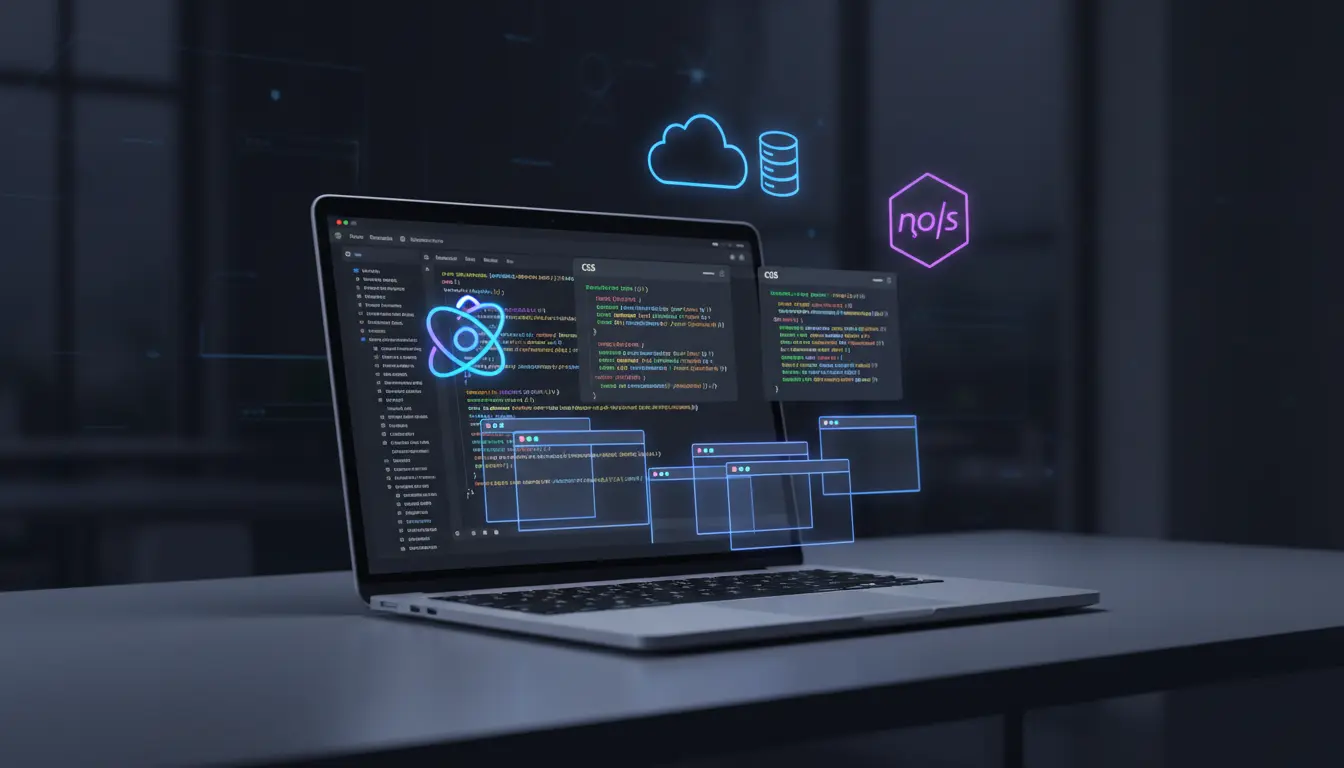
Front-end development focuses on everything users see and interact with in a browser. It is responsible for layout, design, navigation, and overall user experience. Front-end developers translate design mockups into functional interfaces using three fundamental technologies: HTML, CSS, and JavaScript.
- HTML (HyperText Markup Language) provides the structure of web pages, defining elements like headings, paragraphs, images, and forms.
- CSS (Cascading Style Sheets) controls styling, including colors, typography, spacing, and responsive layouts that adapt to different screen sizes.
- JavaScript adds interactivity and dynamic behavior, enabling sliders, modal windows, animations, real-time form validation, and much more.
To build modern, scalable, and maintainable user interfaces, front-end developers increasingly rely on JavaScript frameworks and libraries. React, Angular, and Vue.js are among the most popular technologies worldwide. React, developed by Facebook (now Meta), dominates the market thanks to its component-based architecture, strong ecosystem, and performance benefits. Angular, backed by Google, is widely used for enterprise-level applications, while Vue.js is appreciated for its simplicity and gentle learning curve.
Responsive design is another crucial concept in front-end web development. With users accessing the web from smartphones, tablets, laptops, and large monitors, websites must look and perform well on all devices. Tools like CSS Flexbox, Grid, and frameworks such as Bootstrap or Tailwind CSS help developers build responsive layouts efficiently.
Back-End Web Development: Powering the Server Side
While the front end handles what users see, back-end development deals with server-side logic, databases, authentication, security, and performance optimization. Back-end developers create APIs, manage data flow, and ensure that the application runs reliably under real-world conditions.
Some of the most in-demand back-end programming languages and frameworks include:
- Node.js with Express for JavaScript-based server applications
- Python with frameworks like Django and Flask
- PHP with Laravel or Symfony
- Ruby on Rails for rapid application development
- Java with Spring Boot for enterprise-grade systems
- .NET (C#) for robust applications in Microsoft environments
Databases are another core component of back-end web development. Developers often work with relational databases like MySQL, PostgreSQL, and SQL Server, or NoSQL databases such as MongoDB and Firebase. Choosing the right database depends on the type of application, scalability requirements, and data structure.
With the rise of cloud computing, back-end developers increasingly deploy applications on platforms like AWS, Microsoft Azure, and Google Cloud Platform. These services offer managed databases, serverless functions, scalable infrastructure, and advanced security features, allowing teams to build highly available, globally distributed applications.
Full-Stack Development: Bridging Front-End and Back-End
Full-stack developers work across both the client side and server side. They understand user interface design as well as server logic, databases, APIs, and deployment pipelines. This versatility makes full-stack developers extremely valuable in startups and small to medium-sized companies that prefer multi-skilled professionals who can handle end-to-end development.
Technologies such as the MERN stack (MongoDB, Express, React, Node.js) and MEAN stack (MongoDB, Express, Angular, Node.js) are popular full-stack solutions. They enable developers to use JavaScript across the entire application, simplifying development and reducing context switching between programming languages.
The Most In-Demand Web Technologies Worldwide
The global web development landscape evolves quickly, but some technologies consistently rank at the top in terms of employer demand, community support, and long-term viability.
- JavaScript and TypeScript
JavaScript remains the backbone of web development. Its superset, TypeScript, adds static typing and better tooling, becoming the default choice for large, scalable codebases. Many modern frameworks—such as Angular and NestJS—are built with TypeScript in mind. - React
React is arguably the most popular front-end library worldwide. Its virtual DOM, component-based architecture, and rich ecosystem (Next.js, Redux, etc.) make it ideal for building high-performance single-page applications (SPAs) and complex user interfaces. - Next.js and Other Meta-Frameworks
Tools like Next.js, Nuxt.js, and Remix enable server-side rendering (SSR), static site generation (SSG), and hybrid solutions. These approaches significantly improve performance, SEO, and user experience, which is why they are increasingly favored by modern web development teams. - Node.js
Node.js allows developers to build scalable back-end services using JavaScript. Its non-blocking, event-driven architecture is well-suited for real-time applications such as chat platforms, streaming services, and collaborative tools. - Python & Django / Flask
Python stands out for its readability and large ecosystem. Django and Flask are widely used for building secure, maintainable web applications, including content platforms, dashboards, and APIs. - Jamstack and Headless Architectures
The Jamstack (JavaScript, APIs, Markup) approach separates the front end from the back end, often relying on static site generators and headless CMS platforms like Strapi, Contentful, or Sanity. This architecture offers better performance, scalability, and security, and has become a major trend in modern web development. - DevOps, CI/CD, and Containerization
Today’s web developers increasingly use Docker, Kubernetes, and CI/CD pipelines (GitHub Actions, GitLab CI, CircleCI) to automate testing, deployment, and scaling. These tools reduce manual errors, shorten release cycles, and improve collaboration between development and operations teams.
Why Web Development Skills Are in High Demand
There are several reasons why web development skills remain globally in demand:
- Digital transformation: Businesses in every sector are moving online, from retail and finance to healthcare and education.
- E-commerce growth: Online shopping platforms, marketplaces, and payment integrations all depend on reliable web applications.
- Remote work and collaboration tools: Video conferencing, project management platforms, and communication apps are largely web-based.
- Continuous innovation: New frameworks, libraries, and cloud services create ongoing demand for developers who can adopt and integrate emerging technologies.
Because of these factors, web development offers strong career prospects, competitive salaries, and the flexibility to work remotely or as a freelancer for clients around the world.
How to Start a Career in Web Development
For beginners, the best way to get started is by building a solid foundation in HTML, CSS, and JavaScript. From there, you can choose a specialization:
- If you enjoy design and user experience: focus on front-end development with React, Vue, or Angular.
- If you’re interested in data, logic, and performance: explore back-end development with Node.js, Python, PHP, or Java.
- If you like seeing the whole picture and solving end-to-end problems: aim for full-stack development, combining both sides.
Creating real projects—personal portfolios, blogs, dashboards, or small web apps—is crucial. These projects not only strengthen your skills but also showcase your abilities to potential employers. Staying up to date through online courses, documentation, and developer communities will help you remain competitive as technologies evolve.