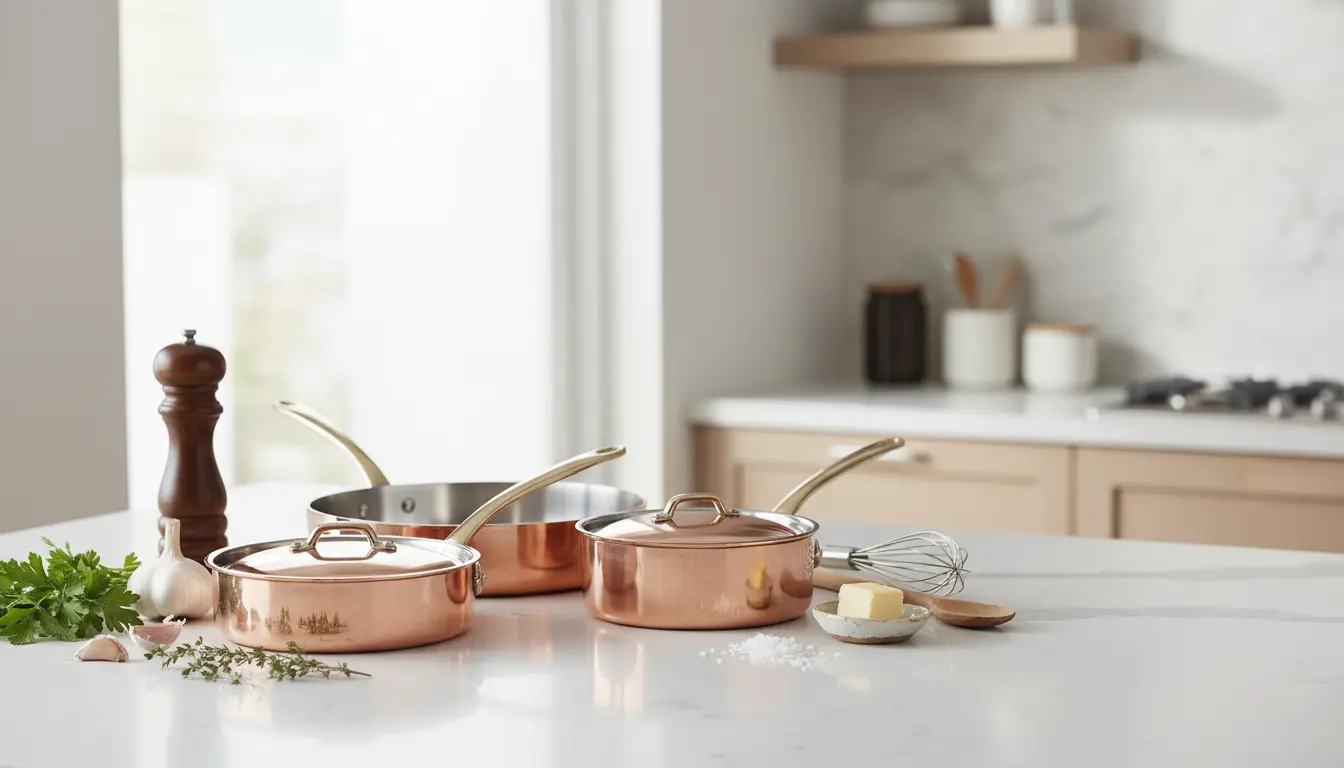

Professional-Style Cooking: The Best Copper Pots and Pans (A Practical Guide)
Cooking in a truly professional style is rarely about “secret” ingredients. It’s usually about heat control, consistency, and timing—and that’s exactly where copper cookware stands out. If you’ve ever wondered why many chefs still admire copper pots and pans, the answer is simple: copper reacts quickly to temperature changes, giving you precision that most materials struggle to match.
In this article, you’ll learn what makes copper cookware special, how to choose the best copper pots and pans for professional-style results, what to watch out for, and how to care for them so they perform beautifully for years.
Why Copper Cookware Feels “Professional”
Copper is famous for its excellent thermal conductivity. In real kitchen terms, that means:

- You heat the pan and it warms evenly and quickly.
- You reduce the flame and the pan responds fast.
- You build sauces with fewer hot spots and fewer surprises.
This responsiveness matters most when you cook foods that punish inconsistency—like delicate fish, caramel, custards, risotto, and classic pan sauces.
Copper vs. Stainless Steel vs. Cast Iron: What Changes in Daily Cooking?
Each material can be great, but they behave differently.
- Stainless steel is durable and practical, but it reacts slower to heat changes. Great for searing, decent for sauce work if you know your stove well.
- Cast iron holds heat extremely well, but it’s heavy and slow to respond; that’s perfect for steady searing, not ideal for quick temperature corrections.
- Copper gives you a more “surgical” approach to heat. You can correct mistakes faster and repeat successful results more reliably.
If your goal is professional technique—controlled reduction, stable simmering, precise sautéing—copper often feels like a performance upgrade.
What “Best Copper Pots and Pans” Actually Means
Copper cookware isn’t automatically “best” just because it looks premium. The real quality comes down to construction, lining, thickness, and handle design.
1) Thickness: The Make-or-Break Detail
A common shortcut in cheaper copper cookware is using copper that’s too thin. Thin copper may look nice, but it can warp and heat unevenly.
- For serious performance, many cooks look for around 2.0–2.5 mm copper thickness in classic styles.
- Thicker copper usually delivers better heat stability and more even cooking.
Thicker copper costs more, but it’s often the difference between “decorative” and “professional.”
2) The Lining: Tin vs. Stainless Steel
Copper needs a lining because raw copper can react with certain foods.
Tin-lined copper
- Delivers excellent nonstick-like release when used correctly
- Works beautifully for sauces, eggs, fish, and delicate cooking
- Has a lower melting point, so you avoid very high heat and empty-pan overheating
- May eventually need retinning (normal for long-term ownership)
Stainless-lined copper
- More durable and lower-maintenance
- Handles higher heat more confidently
- Slightly less “silky” for very delicate tasks, but still excellent
- Great for cooks who want copper performance with modern practicality
If you want the classic French-cooking feel, tin lining is iconic. If you want a workhorse, stainless lining makes daily use easier.
3) Handles and Ergonomics
Professional cooking involves repetition—lifting, tilting, swirling sauces, tossing vegetables. A good handle reduces fatigue and improves control.
Look for:
- Solid, riveted handles
- Comfortable grip shape
- Balanced weight distribution (pan shouldn’t feel “front-heavy”)
4) Shape and Use-Case: Build a Smart Set
You don’t need a full copper “museum collection.” A professional-oriented set usually starts with the pieces that show copper’s benefits most.
Great starter copper pieces:
- Saucepan (2–3 qt) for sauces, grains, reheating with control
- Saucier (rounded sides) for whisking sauces and risotto
- Skillet/frying pan for sautéing and temperature-sensitive browning
- Stockpot is optional—copper here is often more luxury than necessity
If you’re optimizing budget, prioritize sauce-focused pieces first.
Who Should Buy Copper Cookware?
Copper cookware shines if you:
- Care about technique and consistency
- Cook sauces often (pan sauces, reductions, béchamel, hollandaise-style control)
- Want fast response when you adjust flame or induction level
- Enjoy cookware that can last decades with proper care
Copper may not be ideal if you:
- Prefer dishwasher convenience
- Frequently cook at extremely high heat without attention
- Want the cheapest possible cookware solution
Induction Compatibility: A Quick Reality Check
Pure copper does not work on induction by itself. Many modern copper lines add an induction-friendly base layer. If you use induction, confirm the product is explicitly induction compatible. If you use gas or electric coil, copper is generally straightforward.
Maintenance: Keep Copper Beautiful Without Turning It Into a Hobby
Copper cookware has a reputation for being “high maintenance,” but it doesn’t have to be.
Cleaning (Daily)
- Hand wash with mild soap and a soft sponge
- Avoid harsh abrasives that scratch the lining
- Dry promptly to prevent water spots
Polishing (Optional)
Copper darkens naturally (patina). Performance stays the same. If you like the bright look:
- Use a copper polish occasionally
- Or accept patina as a professional kitchen aesthetic
Lining Care Tips
- With tin lining, avoid overheating and don’t preheat empty on high.
- With stainless lining, you can use more traditional stainless-steel techniques (deglazing, higher heat), but still avoid extreme abuse.
How to Spot Marketing Hype (And Avoid Overpaying)
Copper cookware pricing ranges widely. To shop confidently, focus on facts:
- Copper thickness (not just “copper plated”)
- Lining type and quality
- Construction method and fit/finish
- Warranty and reputation for consistency
A shiny exterior and a famous-looking shape don’t guarantee performance. A well-built copper pan should feel substantial, stable, and precise.
Cooking Results You Can Expect (When You Use Copper Correctly)
When you switch to copper, the improvement usually shows up in:
- Sauces that reduce more evenly and break less often
- Better control over simmering, especially for dairy-based sauces
- More consistent sautéing, fewer scorched patches
- Cleaner caramel work, because heat control becomes less chaotic
Copper won’t automatically make food amazing—but it makes it easier for you to cook with intention.
A Simple “Pro” Copper Starter Kit (Minimal but Effective)
If you want a tight, professional-oriented copper setup, consider this progression:
- 2.5–3 qt saucier (most versatile copper piece)
- 10–11 inch skillet (for sautéing and browning control)
- 2 qt saucepan (supporting role, very useful)
This small lineup covers the majority of technique-driven home cooking while keeping costs sane.
Amazon.com Product Recommendation (1 Item)
Recommendation: Mauviel M’Heritage Copper 150S Saucier (stainless steel lined)
Why it’s a strong pick: the saucier shape supports whisking and reductions, and stainless lining simplifies daily use while keeping copper responsiveness.