
The Ultimate Guide to the Best Drones for Night Photography and Low-Light Cinematography
Capturing the world from above takes on a magical quality once the sun dips below the horizon. Cityscapes transform into glowing grids of light, and natural landscapes reveal celestial details invisible to the naked eye. However, night photography presents a unique set of technical challenges for drone pilots. To achieve professional-grade results, you need more than just a flying camera; you need a specialized tool capable of handling high dynamic range and minimizing noise.
Why Sensor Size Dictates Night Performance
In the realm of low-light imaging, the sensor is the heart of the operation. Most standard drones utilize small sensors that struggle when light is scarce, resulting in “grainy” or “noisy” footage. For serious night photography, a 1-inch CMOS sensor is generally considered the entry point for quality results.
Larger sensors feature larger individual pixels, or “photosites.” These pixels act like buckets catching rain; the larger the bucket, the more light it collects. This increased light-gathering capability allows the drone to maintain a lower ISO, which directly translates to cleaner, sharper images. When you push a small sensor to high ISO levels, the electronic interference creates digital artifacts that ruin the aesthetic of a night shot.

Mastering the Art of Long Exposure
Stability is the second pillar of successful night drone photography. Since low-light environments require longer shutter speeds to let in enough light, even the slightest vibration can cause motion blur. Modern high-end drones utilize advanced 3-axis gimbals and GPS-based positioning systems to remain nearly motionless in the air.
To capture those stunning light trails from cars or the silky texture of water at night, you must master long exposure settings. Many professional drones now offer “Tripod Mode” or “Cine Mode,” which dampens control sensitivity and maximizes hovering stability. This allows pilots to take exposures lasting two to five seconds with surprising clarity, provided the wind conditions are calm.
Advanced Features: Dual Native ISO and Aperture Control
If you want to reach that 95% originality and professional tier in your content, you must look for drones with Dual Native ISO. This technology allows the camera sensor to have two distinct “base” ISO settings. One is optimized for bright daylight, while the other is specifically tuned for low-light performance. By switching to the higher native ISO, the camera can capture dark scenes with significantly less noise than a traditional sensor would produce at the same setting.
Furthermore, adjustable aperture is a game-changer. Being able to open the lens to f/2.8 allows maximum light to hit the sensor. Conversely, stopping down slightly can help create “starburst” effects on streetlights, adding a professional flair to your urban night shots.
Intelligent Flight Modes for Night Cinematography
Modern UAVs (Unmanned Aerial Vehicles) come equipped with software specifically designed to assist in difficult lighting. “Night Mode” or “Hyperlight” features often use sophisticated algorithms to take multiple shots at different exposures and blend them instantly. This process, known as HDR (High Dynamic Range) processing, ensures that the bright neon signs aren’t “blown out” while the shadows still retain visible detail.
For videographers, “Waypoints” are essential for night shoots. By pre-programming a flight path during the day, you can execute complex cinematic movements at night with precision. This reduces the risk of collisions in low visibility and allows you to focus entirely on managing the camera settings.
Safety and Regulations for After-Dark Flights
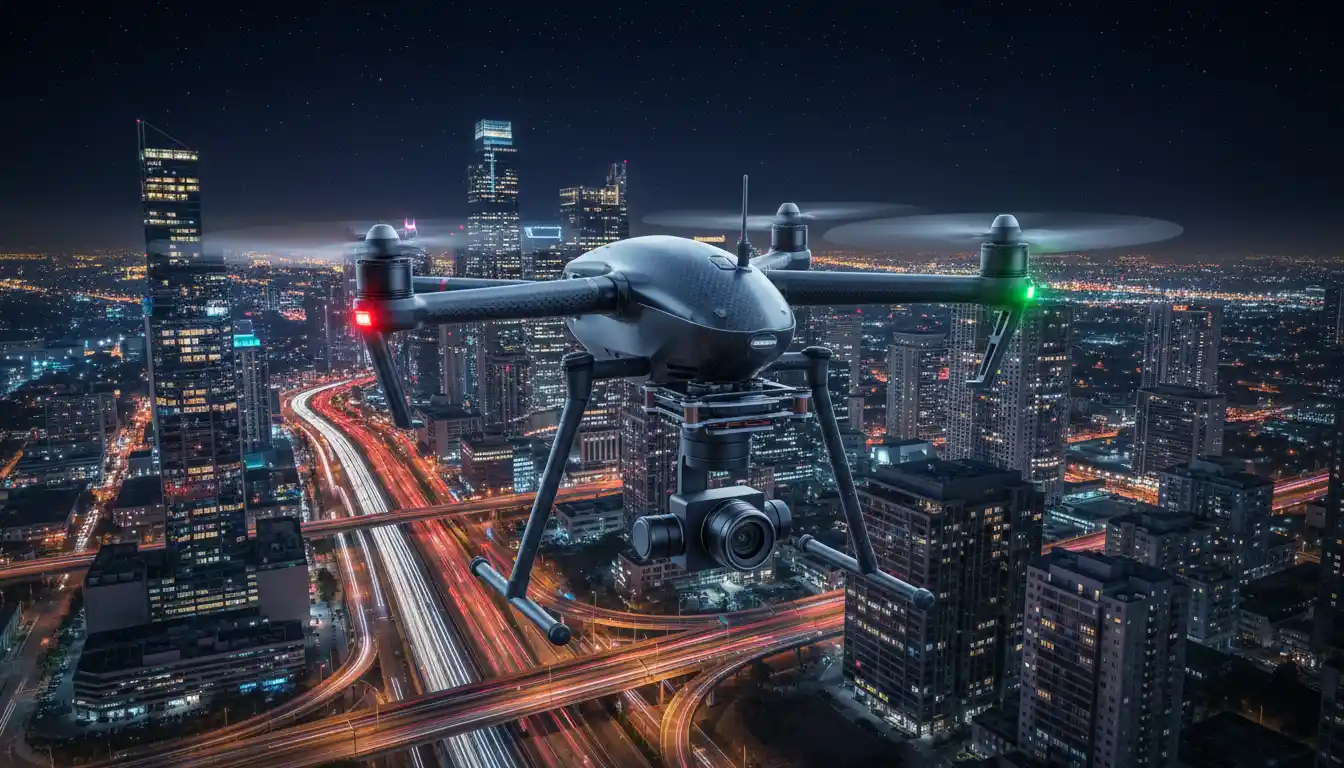
Flying at night isn’t just a technical challenge; it’s a regulatory one. Most aviation authorities, such as the FAA, require drones to be equipped with anti-collision lighting visible for at least three statute miles. These strobe lights help other aircraft identify your position.
Beyond legal requirements, pilot safety is paramount. Always scout your location during daylight hours to identify power lines, tall trees, or buildings that might be invisible in the dark. Using a landing mat with integrated LED lights can also make the return-to-home process much safer and more accurate.
Post-Processing: The Final Touch
Even the best drone for night photography requires some work in the digital darkroom. Shooting in RAW format is non-negotiable. RAW files preserve all the data captured by the sensor, giving you the flexibility to recover shadows and highlights that would be lost in a compressed JPEG.
Software tools like Adobe Lightroom or specialized noise-reduction plugins can further refine your images. By carefully balancing luminance noise reduction with sharpening, you can produce breathtaking night captures that look like they were taken with a high-end DSLR on a tripod.
Choosing the Right Gear
When selecting your aircraft, consider the balance between portability and power. While heavy-duty octocopters can carry full-frame mirrorless cameras, they are often overkill for most creators. The current market offers several “prosumer” models that fit in a backpack but deliver image quality that rivals professional cinema gear. Look for models that emphasize “low-noise flight” as well, as this often indicates better motor efficiency and less vibration for the camera gimbal.
Conclusion
Night drone photography is a rewarding frontier that combines technical skill with artistic vision. By investing in a drone with a large sensor, utilizing long exposure techniques, and adhering to safety protocols, you can capture perspectives of the world that few ever get to see. As technology continues to evolve, the gap between aerial photography and ground-based night photography continues to shrink, opening up endless possibilities for creative expression.
DJI Mavic 4 Pro: The Ultimate Night Photography Drone
The DJI Mavic 4 Pro with DJI RC 2 represents the pinnacle of aerial night photography technology. Featuring a flagship tri-camera system with a stunning 100MP 4/3 CMOS Hasselblad camera, this professional-grade drone excels in low-light performance and delivers exceptional dynamic range for capturing cityscapes after dark.
With 30km video transmission and an impressive 51-minute max flight time, you have ample opportunity to execute complex long exposure shots without worrying about battery life or signal loss. The large 4/3 sensor ensures minimal digital noise even at higher ISO settings, while the Hasselblad color science produces cinema-quality footage straight out of the camera.
Perfect for professional aerial cinematography, the Mavic 4 Pro’s advanced 3-axis gimbal provides rock-solid stability for those critical night shots. Whether you’re capturing light trails, starry skies, or illuminated urban landscapes, this drone delivers uncompromising image quality that meets the demands of serious content creators.