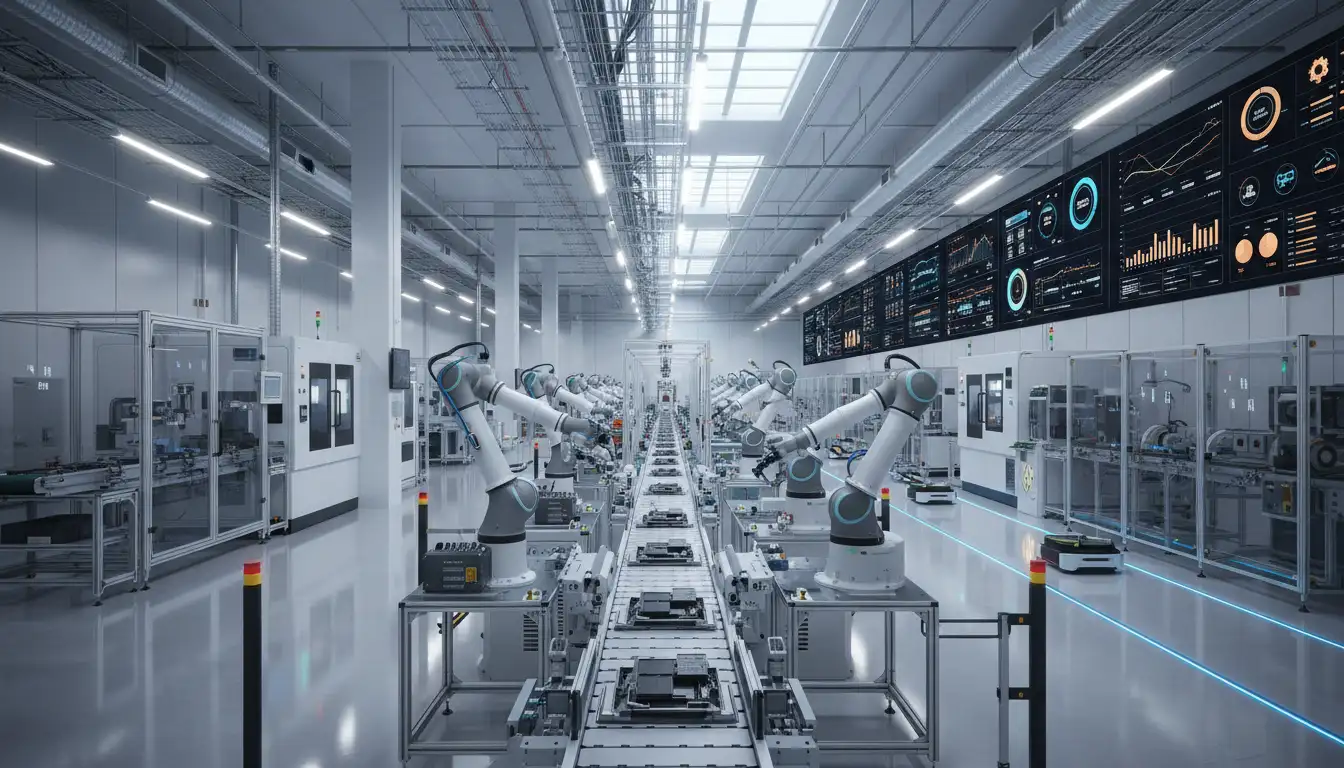

The Future of Manufacturing: How Artificial Intelligence is Powering Smart Factories in Industry 4.0
The global manufacturing landscape is undergoing a seismic shift. We are no longer in the era of simple automation; we have entered the age of the “Smart Factory.” Driven by Industry 4.0, this revolution centers on the integration of Artificial Intelligence (AI), the Internet of Things (IoT), and big data analytics into the heart of production lines. By transitioning from reactive to proactive systems, manufacturers are achieving unprecedented levels of efficiency, quality, and sustainability.
The Evolution from Automation to Intelligence
Traditional manufacturing relied on fixed automation—machines programmed to perform repetitive tasks with little to no variation. Industry 4.0 changes this by introducing cognitive capabilities to the shop floor. AI algorithms now process vast amounts of data from connected sensors in real-time, allowing machines to “learn” from their environment. This intelligence enables systems to adapt to changing conditions, such as fluctuating raw material quality or sudden shifts in consumer demand, without human intervention.
Predictive Maintenance: Eliminating Costly Downtime
One of the most significant impacts of AI in smart factories is predictive maintenance. In the past, factories followed a “run-to-failure” model or performed maintenance based on rigid schedules, often leading to wasted resources or unexpected breakdowns. AI changes the game by analyzing vibration patterns, temperature changes, and acoustic signals from machinery. By identifying subtle anomalies that precede a failure, AI predicts exactly when a component needs replacement. This proactive approach minimizes unplanned downtime, extends the lifespan of expensive equipment, and saves companies millions in lost productivity.



Enhancing Quality Control with Computer Vision
Quality assurance has traditionally been a labor-intensive process prone to human error. AI-powered computer vision systems are revolutionizing this domain. High-resolution cameras equipped with deep learning models inspect products at speeds impossible for the human eye. These systems detect microscopic defects, surface irregularities, or assembly errors with near-perfect accuracy. Because these AI models learn continuously, they become more precise over time, ensuring that only flawless products reach the customer while significantly reducing scrap rates.
Supply Chain Optimization and Demand Forecasting
A smart factory does not exist in a vacuum; it is part of a complex global ecosystem. AI enhances supply chain resilience by analyzing external variables such as weather patterns, geopolitical shifts, and market trends. Advanced machine learning models provide highly accurate demand forecasting, allowing manufacturers to optimize inventory levels. This ensures that factories produce exactly what is needed, reducing the capital tied up in excess stock and minimizing the environmental footprint of overproduction.
Human-Robot Collaboration: The Rise of Cobots
Contrary to the fear that AI will replace human workers, Industry 4.0 emphasizes human-robot collaboration. Collaborative robots, or “cobots,” work alongside technicians to handle heavy lifting or high-precision tasks. AI ensures these robots operate safely by using sensors to detect human presence and adjusting their speed or path instantly. This synergy allows human workers to focus on high-level problem-solving and creative tasks, while robots handle the repetitive and physically demanding aspects of production.
Energy Efficiency and Sustainable Manufacturing
Sustainability is no longer optional; it is a business imperative. AI plays a crucial role in reducing the carbon footprint of industrial operations. Smart energy management systems analyze the power consumption of every machine and optimize usage patterns. For instance, AI can shift energy-intensive processes to off-peak hours or identify energy leaks in real-time. By maximizing resource efficiency, smart factories contribute to a circular economy and meet increasingly stringent environmental regulations.
Overcoming Challenges in AI Implementation
While the benefits are clear, integrating AI into manufacturing is not without hurdles. Data silos remain a significant obstacle, as many factories still use legacy equipment that cannot easily communicate with modern AI platforms. Furthermore, the “skills gap” requires companies to invest in upskilling their workforce to manage and maintain AI-driven systems. Cybersecurity also becomes paramount; as factories become more connected, protecting intellectual property and production data from cyber threats is essential for long-term success.
The Road Ahead: Toward Industry 5.0
As we perfect the smart factory model, the horizon of Industry 5.0 is already appearing. While Industry 4.0 focuses on connectivity and AI, Industry 5.0 will bring the human touch back into the center of the digital framework, focusing on personalization and human-centric design. However, the foundation for this future is being built today through the robust application of AI in smart factories. Companies that embrace these technologies now will lead the market, while those that hesitate risk obsolescence in an increasingly digital world.
Product Recommendation for Industry 4.0 Enthusiasts
To start monitoring your own environment or small-scale production line with IoT and AI principles, we recommend the Raspberry Pi 4 Model B (8GB RAM). It serves as an excellent entry-level gateway for edge computing and running light AI models to monitor sensor data in real-time. You can find it on Amazon.com.