
Best Portable Power Stations for Texas Power Grid Failures: Survival Guide
Texas power grid failures are not just an inconvenience—they can quickly become a safety and comfort crisis. When extreme heat, ice storms, or high demand strain the system, outages can last hours or even days. A portable power station gives you quiet, indoor-safe backup power for essentials like phones, routers, medical devices, lights, and even small appliances. This survival guide walks you through how to choose the right unit, what to run during an outage, and how to prepare like a pro—without overbuying.
Why Texas Outages Hit Differently
Texas weather swings hard. In summer, a blackout can push indoor temperatures into dangerous territory. In winter, outages can freeze pipes and make homes unlivable. Unlike gas generators, a battery backup power station runs silently, produces no fumes, and works safely inside apartments or homes—making it a practical solution for families, renters, and anyone who needs reliable emergency power.
What a Portable Power Station Actually Is (and Isn’t)
A portable power station is a large rechargeable battery with multiple outputs:


- AC outlets (like a wall plug)
- USB-A / USB-C ports
- 12V car-style ports
It’s not the same as a small power bank for phones. These units store far more energy (measured in watt-hours) and often include a built-in pure sine wave inverter so sensitive electronics run smoothly.
Also, it’s not a “whole home backup.” Think of it as targeted resilience: keeping your critical devices alive and your outage stress low.
Key Specs That Matter for Texas Power Grid Failures
Buying the “best” portable power station depends on your real needs. Focus on these specs:
1) Battery Capacity (Watt-hours)
Capacity tells you how long you can power devices. As a rough guide:
- 300–600Wh: phones, lights, router, fan for short outages
- 700–1500Wh: longer coverage, small fridge cycling, CPAP, work setup
- 2000Wh+: more serious backup, higher loads, longer runtimes
If you want to power a portable refrigerator or keep your internet running for remote work, don’t undershoot capacity.
2) Output Power (Watts)
Output is how much the station can supply at once. A 1000W-rated unit can handle more devices simultaneously than a 300W unit. High-watt appliances like kettles, space heaters, hair dryers, and microwaves often exceed what many stations can support.
For survival-oriented planning in Texas, prioritize:
- refrigerator/freezer cycling capability (if possible)
- fans in summer
- communications (router + phone charging)
- medical devices
3) Charging Options: Wall, Car, and Solar
Texas is ideal for a solar generator setup. Even a modest folding solar panel can top off your battery during daylight, which is huge in multi-day outages. Look for:
- fast AC recharging for quick turnaround
- solar input compatibility (check voltage and connector type)
- pass-through charging (useful but verify safety features)
4) Battery Chemistry: LiFePO4 vs Lithium-ion
For reliability and long-term value, LiFePO4 power station models have become the go-to. They typically offer longer cycle life and better thermal stability—important when Texas garages and cars get brutally hot.
What to Power First: A Practical Outage Priority List
During a grid failure, your goal is not “power everything.” Your goal is “power what keeps life normal and safe.”
Tier 1: Safety + Communication
- Phone charging
- Wi-Fi router/modem
- LED lighting
- Weather radio
A stable emergency preparedness plan starts here. If you can communicate and get alerts, you make better decisions.
Tier 2: Comfort + Heat Risk Reduction
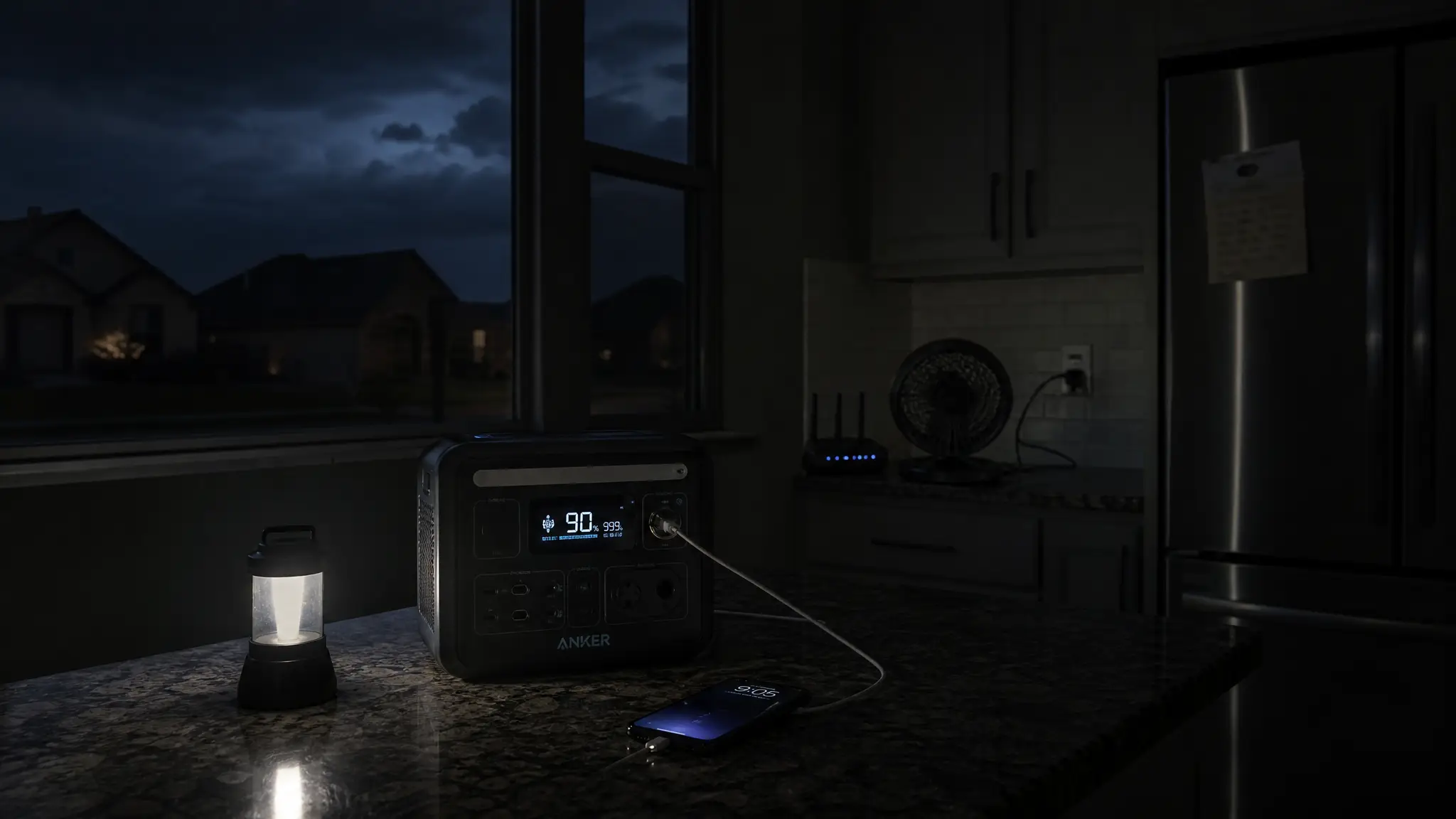
- Box fan or small DC fan
- Cooling devices (as realistic for your wattage)
- Charging for battery lanterns
In Texas summers, airflow can be a health issue. A fan plus hydration goes a long way.
Tier 3: Food Protection
- Fridge (if your station can handle surge watts)
- Small cooler/portable fridge alternative
If your unit can’t run a full-size fridge, you can still reduce food loss with a smaller strategy: keep fridge closed, consolidate perishables, and use a power outage kit to avoid repeated door opening.
Tier 4: Medical and Work Needs
- CPAP or oxygen devices (check exact watt draw)
- Laptop charging and small monitor
- Printer (only if necessary)
If you rely on medical devices, treat a power station like critical equipment and keep it charged year-round.
How to Choose the Right Size (Simple Math, Realistic Expectations)
To estimate runtime, use:
- Device watts × hours = watt-hours needed
Then add 15–25% loss for inverter and efficiency.
Example:
- Router (10W) for 24h → 240Wh
- Fan (40W) for 10h → 400Wh
- Phones/lights → ~100Wh
Total ≈ 740Wh + losses → aim for ~900–1000Wh.
This is why many people land in the 1000Wh range for Texas outages: it’s a sweet spot for meaningful comfort without turning into a bulky “project.”
Features That Make a Station Truly “Survival Ready”
Not all units are built the same. For a true emergency backup power tool, look for:
- Multiple AC outlets: lets you run router + fan + laptop without constant swapping
- USB-C PD: fast charging modern phones and laptops
- Fast recharge: shorter time on the wall before the next outage
- Low idle drain: battery doesn’t disappear overnight
- Clear display: input/output watts and remaining time
- Overload protection: reduces risk when loads spike
- Quiet operation: ideal for sleeping, apartments, and families
If you plan to rely on solar, confirm maximum solar input wattage and realistic charge times in cloudy weather.
Texas-Specific Prep Tips (That People Forget)
Keep It Charged Before Storm Season
Treat charging like changing smoke detector batteries. Don’t wait for the forecast.
Store It in a Safer Temperature Range
Extreme heat degrades batteries. Avoid leaving it in a car trunk or unventilated garage during peak summer if you can.
Pair It With a Simple Solar Panel Plan
Texas sun is an advantage. Even if you only buy a panel later, choose a station that supports solar input so you can scale up.
Build a “Power Menu”
Write a short list: what you run first, second, and never. In an outage, decision fatigue is real.
Common Mistakes to Avoid
- Buying based only on capacity and ignoring output watts
- Assuming it will run a space heater (most won’t, or it drains instantly)
- Forgetting surge power needs for compressors (fridges)
- Not testing your setup before the next blackout
- Skipping cables/adapters (especially for solar)
A good survival setup is tested, not imagined.
Best One-Product Recommendation on Amazon
If you want a dependable, widely trusted choice for outage resilience, consider:
Jackery Explorer 1000 v2 Portable Power Station (Amazon.com)
Why it fits Texas outages:
- Strong balance of capacity and portability
- Practical for routers, fans, laptops, lights, and small appliances
- Works well as a base for a solar-capable setup if you expand later