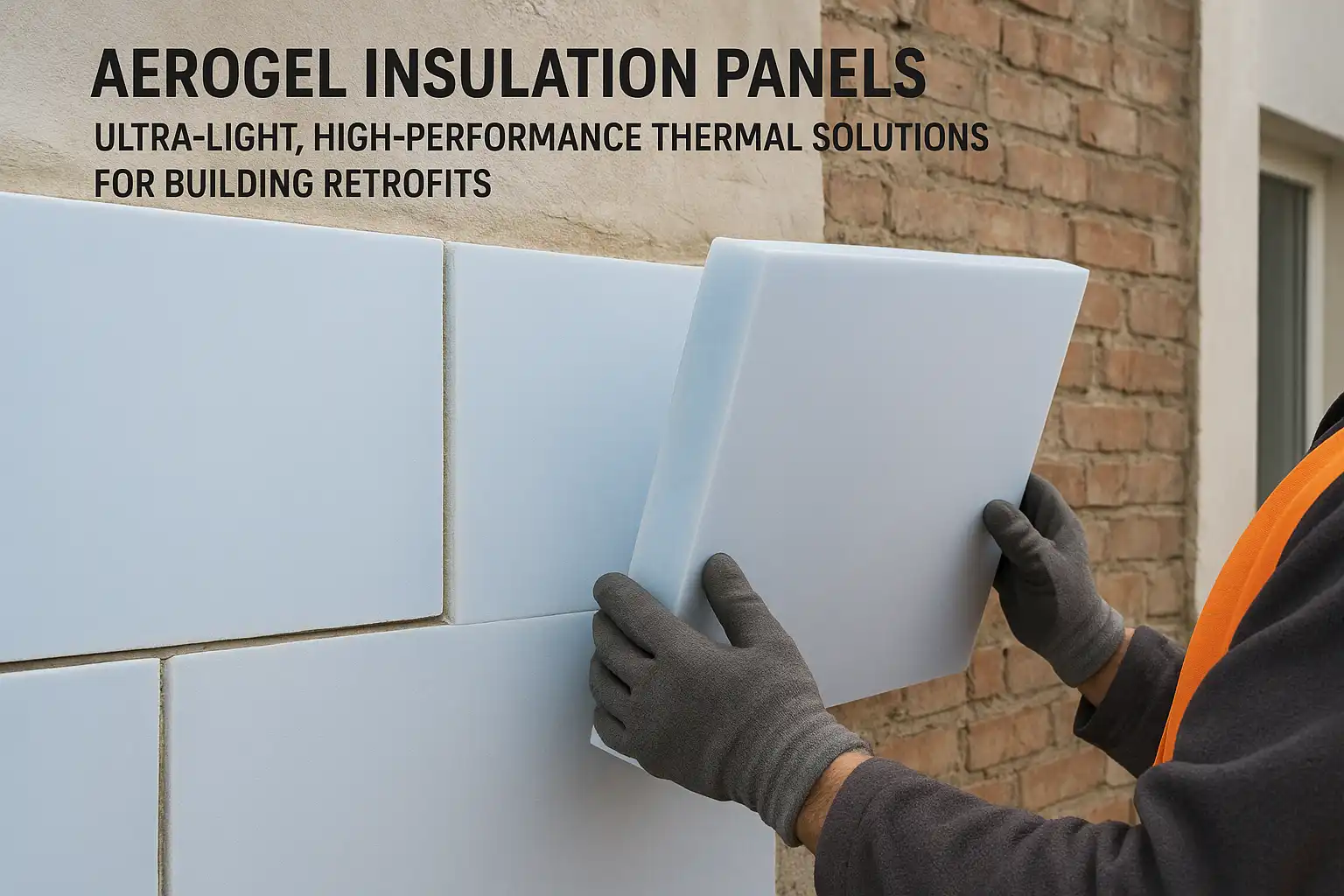

Aerogel Insulation Panels — Ultra Lightweight Insulation
Aerogel insulation panels represent a major leap in thermal engineering: an ultra-light, ultra-thin material that delivers exceptional thermal performance where traditional insulation struggles. For architects, engineers, and building owners aiming to reduce energy consumption while conserving usable space, aerogel panels combine cutting-edge science with practical advantages: very low thermal conductivity, hydrophobic options, high compressive strength for panels, and non-combustible formulations for enhanced fire performance. This article explains how aerogel panels work, where they excel, installation and performance considerations, and why they are increasingly used in demanding commercial, industrial, and retrofit projects.
What is Aerogel and How Do Panels Differ from Other Forms?
Aerogel is a synthetic porous material derived from a gel in which the liquid component has been replaced with gas, leaving a highly porous solid network. The result is an extremely low-density material with exceptional insulating properties because heat transfer by conduction, convection, and radiation is dramatically reduced.
Aerogel comes in multiple formats:
- Granules or powder (used as loose-fill),
- Blankets (flexible mats combining fibers with aerogel particles),
- Rigid or semi-rigid panels (engineered boards or composite panels).
Aerogel panels are typically composite assemblies: an aerogel core or aerogel-infused matrix bound between protective facings (aluminum, fiberglass, or polymer laminates). Compared to blankets, panels offer improved mechanical stability, easier handling in vertical applications, and suitable compressive strength where a defined thickness and flatness are required.
Key Performance Benefits
- Exceptional thermal performance: Aerogel panels have one of the lowest thermal conductivities among commercially available insulation materials. This means thinner insulation can achieve the same R-value as much thicker traditional materials.
- Ultra-lightweight: Panels are designed to be low mass per unit area, reducing structural load and allowing easier transportation and installation.
- Space-saving: Because of higher R-values per unit thickness, aerogel panels are ideal for retrofits where cavity space is limited or where preserving interior/exterior clearance matters.
- Moisture resistance: Many aerogel formulations and panel facings are hydrophobic, reducing moisture uptake and preserving thermal performance over time.
- Fire performance: Silica-based aerogels are non-combustible and can contribute to fire-resistant wall and roof assemblies.
- Durability: When properly protected by facings, aerogel panels exhibit long-term thermal stability and resist settling, unlike loose-fill insulations.
Typical Applications
- Building envelopes: thin retrofit layers on walls, façades, and roofs where space is scarce.
- Industrial piping and equipment: high-temperature aerogel panels protect flanges, valves, and tanks where compact insulation and easy access are important.
- Transportation: lightweight thermal barriers in aerospace, marine, and specialty vehicles.
- High-performance glazing systems: translucent aerogel panels can provide thermal buffering while allowing diffused light.
- Acoustic treatments: certain composite panels can improve sound insulation in addition to thermal control.
Installation and Handling Tips
- Protect facing layers: The aerogel core is best preserved behind durable facings. Avoid exposing panels to prolonged UV or abrasive contact.
- Seal joints carefully: To maintain whole-assembly thermal performance, seal seams and penetrations with compatible tapes or mastics that remain flexible and moisture-resistant.
- Allow for mechanical fixing: Panels can be glued, mechanically fastened, or fitted into framed cavities. For exterior use, ensure fixings accommodate thermal movement.
- Avoid compression: Compressing panels reduces effective R-value. Install without crushing the panel core and follow manufacturer clearances.
- Consider vapor control: In some climates, combine panels with appropriate vapor control layers to prevent internal condensation.
Performance Metrics and Standards
When comparing aerogel panels, consider:
- Thermal conductivity (λ or k-value) at relevant temperatures — lower is better.
- R-value per inch or per mm for direct thickness comparison with traditional materials.
- Water vapor transmission and water absorption — crucial for long-term stability.
- Fire classification (e.g., non-combustible ratings, surface spread, smoke development) depending on code requirements.
- Compressive strength and flexural properties for mechanical integrity where needed.
Specifiers should request third-party test data (ASTM, ISO) for all claim metrics and confirm the performance at the expected in-service temperature range.
Cost, Lifecycle, and Sustainability Considerations
Aerogel panels are typically more expensive per square meter than conventional insulation (fiberglass, mineral wool, EPS), but the higher upfront cost can be offset by:
- Reduced thickness leading to greater usable floor area in retrofit schemes,
- Lower HVAC loads and resulting energy cost savings,
- Longevity and lower maintenance in hostile environments,
- Potential for meeting strict energy codes or passive-house level targets without deep wall rebuilds.
From a sustainability perspective, many aerogel panels reduce lifecycle carbon emissions by cutting operational energy. Recyclability depends on panel facings and binders; choose manufacturers offering clear end-of-life guidelines and lower embodied carbon manufacturing if that is a priority.
Common Misconceptions and Practical Limitations
- Not all aerogel products are the same: panel composition, facing materials, and manufacturing methods vary. Performance claims must be validated with lab reports.
- Installation expertise matters: improper cutting, sealing, or compressing can negate thermal benefits.
- Vapor and moisture management remain critical: despite hydrophobic properties, assemblies still need correct detailing to avoid condensation at interfaces.
- Cost sensitivity: for large-area, low-budget projects, conventional insulation may still be the most economical choice.
Choosing the Right Aerogel Panel
Ask suppliers for:
- Full technical datasheets (λ-values at multiple temperatures),
- Fire and moisture test reports,
- Long-term thermal stability data,
- Case studies of similar applications,
- Handling and installation guides.
Consider pilot installations to verify performance in the actual building system before large-scale rollout.
Future Trends and Innovation
Research continues into lower-cost production methods, hybrid composites combining aerogel with recycled fibers, and translucent aerogel glazing panels for daylighting applications. As manufacturing scales and codes evolve to incentivize higher-performing envelopes, expect wider adoption in both commercial and residential retrofits.
Conclusion
Aerogel insulation panels offer an exceptional blend of ultra-lightweight construction, high thermal performance, and space-saving installation — making them highly attractive for retrofits, high-performance new builds, and specialized industrial applications. While upfront costs are higher than conventional options, their thin profile, longevity, and energy-saving potential can provide tangible lifecycle benefits. When specifying aerogel panels, focus on validated test data, proper detailing, and compatible facings to unlock the full potential of this advanced insulation technology.