
Herman Miller Aeron vs. Steelcase Gesture: The Luxury Ergonomic Battle
Choosing between the Herman Miller Aeron and the Steelcase Gesture is less about “which chair is best” and more about which chair fits your body, your work style, and your climate. Both sit firmly in the premium office chair category, both have reputations built over decades, and both can dramatically improve comfort when your day includes long hours at a desk.
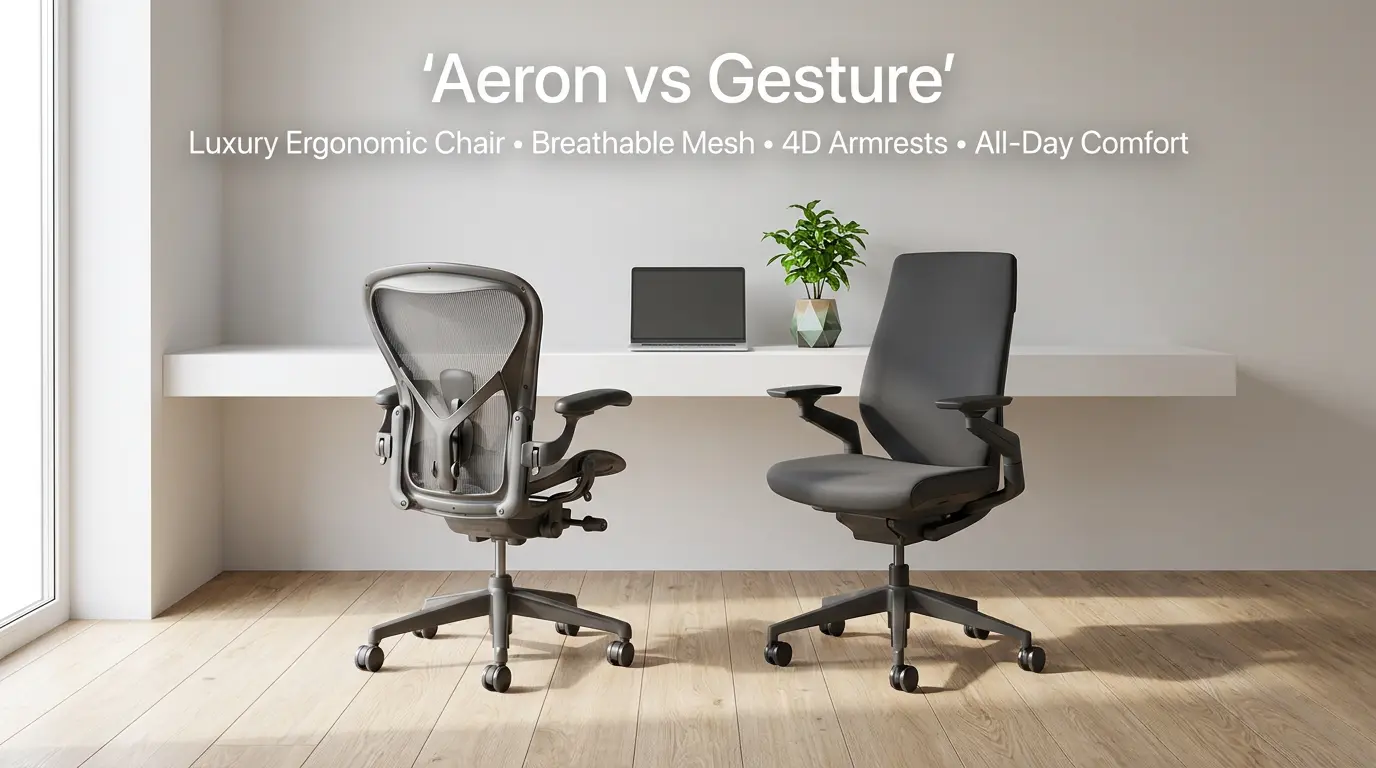
Still, they solve the same problem—sitting well—in very different ways. The Aeron is a legendary mesh ergonomic chair that prioritizes breathability and a “floating” feel. The Gesture is a more traditional, highly adaptive chair designed to support modern posture shifts—especially when you use multiple devices and move your arms constantly.
Below is an explanatory, practical breakdown to help you decide with confidence.


Two Design Philosophies, Two Very Different Experiences
Aeron: engineered suspension.
The Aeron’s identity is its mesh: it distributes your weight across a taut, supportive surface, aiming for even pressure and strong posture support. If you run hot, live in a warm climate, or dislike the “sink” feeling of foam, the Aeron’s breathable mesh can feel like an immediate upgrade.
Gesture: adaptive structure.
The Gesture focuses on how people actually work today—leaning forward to type, leaning back to think, swiveling to talk, and reaching for a phone or tablet. Its frame and back design aim to keep support consistent across many postures, not just one ideal seated position. If you want that “hugged by the chair” feeling, Gesture leans that way.
Ergonomics and Back Support: Where the Battle Gets Real
If you care most about back pain relief, you should look at how each chair handles your lower back and pelvis positioning.
Aeron’s approach:
- Strong emphasis on pelvic stability and a more “set” sitting posture
- Excellent lumbar support options (depending on configuration)
- The mesh can reduce pressure points for many people, especially during all-day use
Aeron tends to reward you when you sit “in” the chair correctly—hips positioned well, shoulders relaxed, feet grounded. When you dial it in, it can feel like your posture becomes easier to maintain.
Gesture’s approach:
- Back support that stays present while you shift positions
- Often feels forgiving if you move, perch, or recline frequently
- Can suit users who alternate between keyboard/mouse, calls, and device use
Gesture may be the better fit if your workday involves constant micro-movements and you don’t want to feel “locked” into one posture.
Adjustability: Arms, Seat, and Recline Controls
Luxury ergonomics often comes down to whether the chair lets you tailor the fit precisely—without fighting the controls.
Arm support (a major differentiator):
Gesture is famous for its highly adjustable arms that behave like true 4D armrests—helpful for typing, mousing, gaming, reading, or holding a phone. If shoulder and neck tension is part of your story, arm setup matters more than most people realize.
Aeron arms are adjustable too, but the Gesture often wins for people who need arm positioning to change constantly throughout the day.
Seat feel and fit:
- Aeron’s mesh seat feels springy and cool; it can feel firm yet pressure-relieving.
- Gesture uses cushioning; it can feel more familiar if you like a classic executive desk chair feel.
Also consider seat pan depth and how the chair supports your thighs. If the seat is too long, it can press behind your knees; too short and it may not support your legs well. People who are between sizes or have longer legs should pay special attention to seat pan depth adjustment and real-world fit.
Recline behavior:
Both chairs can support a productive recline, but they feel different.
- Aeron often feels “balanced” and springy when you dial in recline tension.
- Gesture often feels more like it’s guiding your body through a controlled recline path.
If you take thinking breaks leaning back, test which recline feels natural—because you’ll use it more if it feels effortless.
Comfort Over Long Hours: The “All-Day” Test
If your priority is all-day comfort, ask yourself one question: Do I want a chair that disappears, or a chair that cushions me?
- Aeron can “disappear” once fitted—especially in warm rooms—because the mesh stays cooler and you feel less heat buildup. Many people love it for marathon work sessions and summer-heavy climates.
- Gesture can feel more plush, especially if you prefer a padded seat and a supportive back that stays present when you shift around.
Your personal comfort will also depend on how the chair interacts with your desk height, keyboard tray (if any), and monitor setup. A great chair can’t fully fix a poor home office setup—but the right chair can make a good setup feel effortless.
Breathability, Temperature, and Materials
This section is simple:
- If you run hot or sweat easily, Aeron’s mesh advantage is real. A good breathable mesh design can keep you noticeably cooler, especially in long sessions or in rooms without strong air conditioning.
- If you prefer the feel of upholstery and don’t mind warmth, Gesture’s materials can feel more “traditional luxury.”
If you live somewhere with hot summers or you dislike sticky seating, a mesh ergonomic chair often becomes the practical choice—not just a preference.
Body Types and Fit: Don’t Skip This
One reason these chairs create endless debate is that fit is personal.
- Aeron is famously fit-dependent; many people love it, some bounce off it quickly. If a chair requires a “perfect” setup to feel right, it can be brilliant for one body and annoying for another.
- Gesture often accommodates a wider range of casual sitting styles—crossing legs, leaning sideways for a minute, shifting forward—without feeling like it’s punishing you.
If you’re tall, broad-shouldered, or have specific proportions, treat this like buying footwear: comfort comes from fit, not reputation.
Durability, Warranty, and Long-Term Value
These chairs compete in the “buy once, use for years” category. That’s why warranty and durability should factor into the decision—not just day-one comfort.
In practical terms:
- If you plan to keep one chair for many years, prioritize proven build quality, reputable sellers, and service support.
- If you’re buying used or refurbished, condition matters as much as the model.
When you look at cost, compare price to how many hours you’ll sit. A chair used 6–10 hours a day becomes a daily health tool, not a luxury toy.
Which One Should You Buy?
Choose Herman Miller Aeron if you:
- Want maximum airflow and a cooler sitting experience
- Prefer a supportive, “suspended” feel rather than plush cushioning
- Care most about stable posture and strong lumbar options
- Want a standout premium office chair for hot climates or long sessions
Choose Steelcase Gesture if you:
- Move your arms a lot and need excellent arm positioning
- Switch tasks constantly (typing, calls, device use, reading)
- Prefer a more classic padded feel (closer to an executive desk chair)
- Want support that stays consistent across many postures
Quick Decision Checklist (Practical and Honest)
- If you hate heat buildup → Aeron’s mesh is hard to beat.
- If your shoulders/neck get tight → Gesture’s arms can be a game-changer.
- If you want “set it and forget it” posture → Aeron may feel cleaner.
- If you want “support me while I move” → Gesture often fits better.
Amazon.com Product Recommendation (1)
If you want the “arms and modern work posture” advantage, look for Steelcase Gesture Office Chair (with headrest) on Amazon.com (choose a reputable seller and verify return policy).