
AI-Powered Creativity: New Tools for Designers, Artists and Inventors Worldwide
Artificial intelligence is rapidly transforming the way we imagine, design and create. From visual design and digital art to product innovation and music composition, AI‑powered creativity tools are becoming essential companions for designers, artists and inventors around the world. Rather than replacing human imagination, these systems act as intelligent collaborators that can generate ideas, automate repetitive tasks and open up entirely new creative possibilities.
At its core, AI‑driven creativity is about augmenting human potential. Modern AI models can understand images, text, sound and even 3D forms. They learn from vast datasets and then use that knowledge to produce new combinations, patterns and concepts. This makes them ideal partners in early‑stage ideation, rapid prototyping and continuous refinement of creative work.
How AI Enhances the Creative Process
The creative process often begins with a blank page or an empty canvas, which can be intimidating. AI tools help overcome this barrier by providing fast, diverse suggestions that spark inspiration. Text‑to‑image generators, for example, can turn a short written prompt into dozens of visual variations in a matter of seconds. Writers can use AI assistants to generate plot ideas, outlines or alternative phrasings. Musicians can experiment with AI‑generated melodies or harmonies to explore new directions.
These systems do more than produce content; they assist with discovery. By proposing unusual combinations or unexpected visual styles, AI can push creators beyond their habitual patterns. Designers can iterate rapidly, testing different color palettes, layouts or typographic systems. Inventors can explore alternative product configurations and user experiences before committing resources to physical prototypes.
Benefits for Designers Around the Globe
For designers, AI‑powered creativity tools deliver three major advantages: speed, exploration and personalization. First, they dramatically shorten concept development time. Instead of manually sketching dozens of versions, a designer can generate hundreds of layout options in minutes and focus on selecting and refining the most promising ones.
Second, AI systems enable deep exploration of visual styles and design languages. A brand designer can experiment with futuristic, minimalist or retro aesthetics without recreating every element from scratch. This breadth of exploration can reveal design directions that might never have emerged in a traditional workflow.
Third, AI can personalize design outputs based on real user data. Systems can learn which styles perform better for specific audiences and suggest design choices that align with those preferences. This allows designers to create experiences that are not only visually compelling but also more relevant and effective in different cultural and market contexts.
Empowering Artists With New Forms of Expression
For artists, AI is more than a productivity tool; it is a new medium. Generative art systems can create complex patterns, textures and compositions that would be difficult or impossible to craft manually. Artists use AI to explore surreal landscapes, hybrid creatures, abstract forms and dynamic visual narratives that challenge conventional aesthetics.
Many artists integrate AI into their creative practice as a collaborator. They provide initial prompts, reference images or training data, then curate and edit the AI’s outputs. The process becomes a dialogue between human intuition and machine‑generated variation. This hybrid approach can lead to highly original work that still reflects the artist’s vision and sensibility.
AI can also support accessibility in the arts. Creators with limited technical drawing skills can still realize sophisticated visual concepts by directing AI systems with text or rough sketches. This lowers the barrier to entry and invites more people to participate in visual culture, regardless of traditional training.
New Opportunities for Inventors and Innovators
Inventors and product innovators are also benefiting from AI‑powered creativity. Advanced models can simulate how a product might look, feel or function long before it is manufactured. AI‑assisted ideation tools help teams generate new product concepts by combining features, use cases and design patterns from different industries.
In early research and development phases, AI can analyze patent databases, scientific literature and market data to identify gaps and opportunities. This can inspire novel inventions or suggest improvements to existing solutions. Generative design systems can propose structural forms that optimize strength, weight or energy consumption, enabling more sustainable and efficient products.
By reducing the time between idea and prototype, AI helps innovators iterate faster, test more alternatives and ultimately bring better solutions to market.
Balancing Human Creativity and Machine Intelligence
As AI becomes more capable, an important question emerges: what is the role of the human creator? The answer lies in the distinction between generation and judgment. AI excels at generating large quantities of options; humans excel at setting goals, defining meaning and making nuanced aesthetic and ethical judgments.
Human creators decide which prompts to give an AI system, which outputs to keep, how to edit them and how to integrate them into a broader narrative or design system. They bring context, emotion, cultural understanding and personal experience—qualities that current AI cannot replicate. In this sense, AI‑powered creativity tools expand the creative palette but do not replace the artist’s or designer’s voice.
To maintain this balance, it is essential for creators to develop a critical perspective on AI outputs. They should learn how these systems work, where their training data comes from and what biases might be present. Responsible and transparent use of AI can foster trust with clients, audiences and collaborators.
Ethical and Practical Considerations
The new landscape of AI‑assisted creativity also raises ethical and practical questions. Intellectual property is a major concern. When an AI model generates an image or design inspired by millions of existing works, who owns the result? Different jurisdictions are still developing guidelines, and many creative communities are actively debating fair use, attribution and compensation.
Another issue is authenticity. As AI‑generated content becomes more realistic, audiences may struggle to distinguish between human‑made and machine‑made work. Some artists choose to clearly label their use of AI, treating it as a material or technique in their practice. This transparency can strengthen trust and invite meaningful discussion about the role of technology in art and design.
On a practical level, creators need to choose their tools carefully. Not all AI platforms prioritize user privacy, data security or fair licensing. Professionals should evaluate terms of service, output rights and the long‑term reliability of the tools they adopt. Educating teams and clients about these factors is now part of modern creative practice.
Future Trends in AI‑Powered Creativity
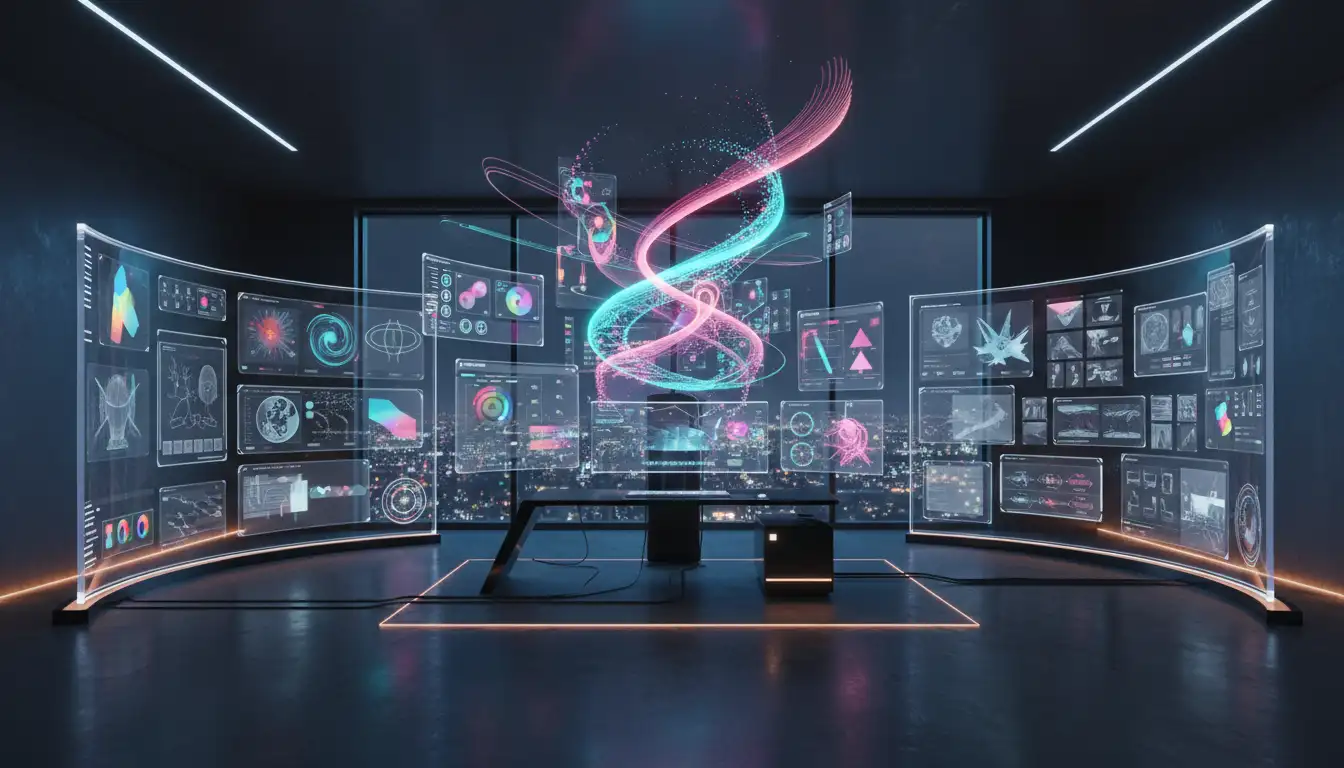
Looking ahead, AI‑driven creativity tools will become more interactive, more collaborative and more deeply integrated into everyday workflows. Multimodal systems will be able to understand voice, gesture, sketches and 3D models simultaneously, making creative interactions more natural and intuitive. Real‑time co‑creation environments will allow multiple people and AI agents to work together on shared canvases, timelines or prototypes.
We can also expect more specialized tools tailored to niche creative fields: AI assistants for fashion design, architecture, game environments, interface animation, sound design and more. As these tools mature, they will move from being experimental add‑ons to becoming core components of professional toolchains.
For designers, artists and inventors worldwide, embracing AI‑powered creativity is less about replacing existing skills and more about expanding their impact. By combining human imagination with machine intelligence, creative professionals can explore new territories, solve complex problems and express ideas with unprecedented depth and variety.
The most successful creators will be those who treat AI not as a shortcut, but as a strategic partner—one that helps them think differently, work more efficiently and communicate more powerfully with global audiences.