
Best Ceiling Speaker Layout Packages for Immersive Home Audio
Designing a powerful, clutter‑free sound system starts with choosing the best ceiling speaker layout packages. Ceiling speakers save floor space, blend seamlessly with décor, and can deliver immersive audio when they are positioned correctly. A smart layout matters more than sheer volume; the right combination of speaker type, spacing, and amplification can transform an ordinary room into a cinematic listening environment.
In this guide, you will learn how to select and position ceiling speakers for different room sizes, what to look for in complete layout packages, and how to avoid the most common installation mistakes. We will also cover ideal layouts for home theater systems, multi‑room audio, and Dolby Atmos configurations so you can make the most of your investment.
Why Ceiling Speaker Layout Matters
A ceiling speaker package is more than a box of speakers. It is a coordinated system designed for even sound coverage and balanced frequency response. When ceiling speakers are randomly installed, the result is patchy audio, weak bass, and poor dialogue clarity. With a thoughtful ceiling speaker layout, you get:
- Consistent volume throughout the room
- Clear dialogue and detailed highs
- Strong and controlled bass response
- A wide and convincing soundstage
High‑quality in‑ceiling speaker systems are engineered with dispersion angles and crossover networks that work best within specific layout guidelines. By following these guidelines, you create a more natural and engaging listening experience for movies, music, and gaming.
Key Elements of the Best Ceiling Speaker Layout Packages
The best ceiling speaker layout packages share several core characteristics. When you compare different options, pay attention to these elements:
- Matched Speaker Set
A good package includes matched in‑ceiling speakers with similar drivers and sensitivity ratings. This ensures tonal consistency across the room, especially important for home cinema and surround sound systems. - Optimized Speaker Count
Packages are often labeled as 2‑speaker, 4‑speaker, 5.1.2, 7.1.4, or whole‑home bundles. The right number of speakers depends on room size and purpose. More speakers are not always better—proper placement is crucial. - Clear Layout Diagrams
Premium ceiling speaker placement kits provide diagrams with recommended spacing, angles, and listening positions. These guides help you achieve optimal Dolby Atmos ceiling speaker placement or a balanced stereo image with minimal trial and error. - Compatible Amplification
Some ceiling speaker packages include dedicated amplifiers or clearly specify recommended power handling. Matching amplifier power to speaker sensitivity prevents distortion and protects the system. - Installation Accessories
Look for kits that include mounting templates, cutout guides, backer boxes, and optional fire‑rated enclosures. These accessories simplify installation and can improve acoustic performance by isolating the speaker from the ceiling cavity.
Ideal Ceiling Speaker Layouts by Room Type
Different rooms and use cases require different ceiling speaker layout strategies. Here are practical examples to guide your planning.
1. Small Rooms and Offices
For small rooms, such as home offices or compact bedrooms, a simple 2‑speaker in‑ceiling audio layout is usually sufficient. Position the speakers:
- Equidistant from the main listening position
- Roughly at one‑third and two‑thirds of the room length
- Away from corners to avoid boomy reflections
This basic layout delivers a clean stereo image and even background music for casual listening without overwhelming the space.
2. Medium‑Sized Living Rooms
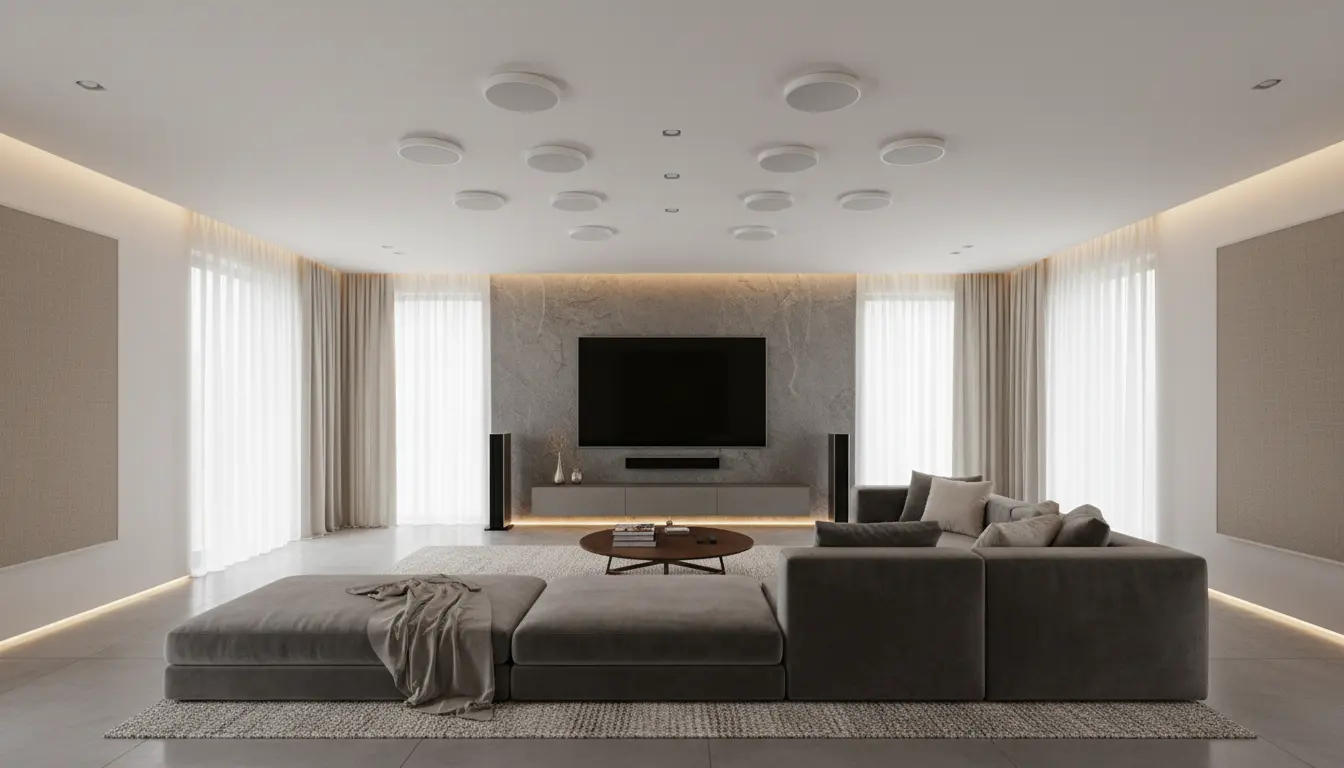
In a typical living room, a 4‑speaker ceiling layout offers better coverage and clarity. A common configuration:
- Create a rectangle or square with four speakers
- Center that shape around the main seating area
- Maintain equal spacing between speakers and avoid placing them directly above listeners’ heads
If you use a TV with a soundbar or front speakers, the ceiling speakers can act as rear or side channels, enhancing surround effects while keeping the floor clear.
3. Dedicated Home Theater Rooms
For a dedicated media room, full home theater ceiling speaker layout packages are ideal. A common layout includes:
- Front left, center, and right speakers at ear level or slightly above the screen
- Two to four in‑ceiling speakers used as height or rear channels
- A subwoofer or multiple subwoofers placed on the floor for low‑frequency impact
In this context, in‑ceiling speakers are often used for Dolby Atmos speaker layout, adding vertical dimension and enveloping the listener in sound effects like rain, helicopters, and ambient noise.
Dolby Atmos Ceiling Speaker Placement Essentials
Dolby Atmos has become a key selling point for modern home cinema systems, and ceiling speakers are central to achieving it. Correct Dolby Atmos ceiling speaker placement ensures precise 3D sound imaging.
General guidelines for Atmos height speakers:
- Use at least two in‑ceiling speakers, ideally four for a 5.1.4 or 7.1.4 system
- Place front height speakers slightly in front of the main listening position
- Place rear height speakers slightly behind the main seating row
- Keep them symmetrically aligned left and right across the room’s centerline
The best ceiling speaker layout packages explicitly mention Atmos compatibility and provide spacing recommendations in feet or meters, making installation much easier.
Multi‑Room Audio and Whole‑Home Sound
If your goal is seamless sound throughout the house, consider multi‑room ceiling speaker layout packages. These bundles bundle enough in‑ceiling speakers for several rooms and sometimes include a multi‑zone amplifier or audio matrix.
To achieve consistent results:
- Use the same or closely matched ceiling speaker models in all rooms
- Keep spacing consistent from room to room for predictable coverage
- Integrate with a smart home audio system or streaming hub for easy control
This approach is ideal for background music in kitchens, hallways, and lounges, and it keeps surfaces uncluttered while offering high‑quality distributed audio.
Practical Tips for Installing Ceiling Speaker Packages
Even the best ceiling speakers require thoughtful installation. Consider the following best practices before you cut any holes:
- Plan Around Furniture and Listening Position
Finalize the location of couches, desks, and TV screens first. Then design your ceiling speaker layout around the primary listening position to maximize clarity and imaging. - Check Ceiling Structure and Obstacles
Use a stud finder to locate joists, pipes, and electrical wiring. Ensure there is enough depth for the speaker enclosures and that nothing blocks the ideal placement points. - Mind Speaker Spacing and Angles
A common rule of thumb is to keep ceiling speakers 4–6 feet apart in small rooms and 6–10 feet apart in larger rooms. Aim the tweeters, if pivotable, toward the listening area. - Use Appropriate Cabling and Amplification
Choose high‑quality speaker wire and adhere to local electrical codes. Make sure the amplifier or AV receiver can comfortably drive the total speaker load without overheating. - Test Before Final Mounting
Connect the system and test audio levels and coverage before snapping grilles into place. Subtle adjustments in position can significantly improve the sound.
Choosing the Right Ceiling Speaker Package for You
When comparing ceiling speaker layout systems, start by defining your primary goal: cinematic home theater, background music, or a hybrid of both. Then:
- Match the package size to your room dimensions and number of zones
- Prioritize reputable brands with clear documentation and layout diagrams
- Look for adjustable tweeters and wide dispersion patterns for flexible placement
- Consider acoustic treatment or soft furnishings to reduce echoes and improve clarity
Taking time to design and implement the right ceiling speaker layout will reward you with a more natural and immersive listening experience, whether you are watching a movie, streaming a concert, or enjoying low‑volume background audio throughout your home.
Recommended Ceiling Speaker Package on Amazon
As a practical example, you can look at a popular bundle like the Polk Audio RC80i 2‑Way Premium In‑Ceiling Speakers (Pair) on Amazon.com. This type of package offers moisture‑resistant drivers, wide dispersion, and easy‑mount hardware, making it suitable for living rooms, kitchens, and even bathrooms when installed with proper protection. Pairing several of these speakers with a capable AV receiver allows you to build a flexible and scalable ceiling speaker layout tailored to your space.