
Best Decorative Speakers That Double as Art Objects
Creating a beautiful home no longer means hiding your tech. Today’s best decorative speakers act as sculptural objects, table lamps, or minimalist design pieces while still delivering rich, room‑filling sound. Instead of bulky black boxes, you can now choose speakers that look like vases, artwork, or stylish furniture – all while supporting modern features like Bluetooth, Wi‑Fi, and voice assistants.
In this guide, you’ll learn how to choose decorative speakers that actually sound good, what design styles are trending, and which features really matter for everyday use.
Why Choose Decorative Speakers Over Traditional Models?
Decorative speakers solve a problem many design‑conscious people share: technology often clashes with interior style. Classic speakers may sound great, but they rarely blend with curated decor.



Decorative or object‑like speakers change that in three ways:
- They enhance your interior design
Brands now work with industrial designers and furniture labels. The result: speakers that look like ceramics, sculptures, or modern table objects instead of gear from a recording studio. - They reduce visual clutter
When a speaker doubles as a lamp, side table, or sculptural centerpiece, you remove one more “tech box” from your space. This minimalist approach keeps rooms feeling calm and intentional. - They invite daily use
A beautiful object naturally attracts attention. When a speaker looks like a piece of art on your shelf, you feel more inclined to use it every day, rather than leaving it powered off in a corner.
Key Design Styles in Decorative Speakers
1. Minimalist Sculptural Speakers
Minimalist speakers focus on clean lines, neutral colors, and simple geometric shapes. Many look like smooth stones, cylinders, or vertical totems. They fit perfectly into Scandinavian, Japandi, or modern interiors.
You often see:
- Matte finishes in white, sand, or charcoal
- Hidden drivers and controls to preserve clean silhouettes
- Discreet logos or no visible branding
These models work best as bookshelf pieces or on media consoles, where they can visually anchor a vignette without screaming “electronics.”
2. Speakers Disguised as Everyday Objects
Another growing category: speakers intentionally disguised as everyday objects. Here are a few creative examples you might see:
- Table lamps with integrated speakers in the base
- Plant pot speakers that hold faux or real greenery
- Side tables with hidden audio components beneath the surface
These multi‑use designs save space in small apartments and studio flats. You gain both functional furniture and immersive sound with a single object.
3. Retro‑Inspired Decorative Speakers
Retro‑inspired decorative speakers blend vintage charm with modern wireless connectivity. They often feature:
- Textured grille cloths
- Analog‑style knobs and dials
- Leather straps or wood veneer accents
These are ideal if you love mid‑century modern decor, record players, or eclectic interiors. You achieve a warm, nostalgic visual style with contemporary streaming capability in the background.
Sound Quality Still Matters – Here’s What to Check
A speaker can look stunning and still sound weak. To avoid disappointment, pay attention to a few core audio specs and design details.
Frequency Response and Driver Design
Look for balanced frequency response rather than just heavy bass. Decorative speakers that invest in good driver engineering deliver:
- Clear vocals and instruments
- Defined mids that don’t feel muddy
- Bass that supports the music instead of overpowering it
If a brand shares frequency response ranges or mentions custom‑tuned drivers, that often signals a more serious approach to sound.
Internal Amplification and Power
Decorative speakers usually include built‑in amplifiers. While wattage numbers can be misleading, more power typically means better dynamics at higher volumes.
For small to medium living rooms, a compact wireless speaker with 25–80W of effective power usually handles everyday music and TV sound comfortably.
Room Placement and Acoustic Design
Many sculptural speakers project sound in 360 degrees, which is perfect if you place them in open living spaces or centrally in a room. If you intend to put a speaker on a shelf against a wall, look for a more directional design that fires sound forward for tighter imaging.
Essential Features for Everyday Convenience
Beautiful design draws you in, but long‑term satisfaction comes from convenience features. When comparing decorative speakers, consider the following:
Wireless Connectivity
- Bluetooth is nearly universal and easy for guests to use.
- Wi‑Fi (with AirPlay, Chromecast, or proprietary apps) provides better stability, higher audio quality, and multiroom streaming.
For modern homes, a mix of Bluetooth and Wi‑Fi support creates the most flexible system.
Smart Home and Voice Assistants
Many object‑like speakers now integrate with:
- Amazon Alexa
- Google Assistant
- Apple’s Siri (via AirPlay or HomeKit support)
If you already use smart bulbs, thermostats, or routines, a voice‑enabled decorative speaker becomes both a control hub and a design piece.
Multiroom Audio
If you place multiple decorative speakers across your home, multiroom audio lets you:
- Play the same playlist in every room
- Group speakers by zones (living room, kitchen, balcony)
- Control everything from a single app
This is especially powerful when each speaker suits the style of its specific room while still acting as part of a unified system.
How to Match Decorative Speakers to Your Interior Style
Choosing the right model begins with your existing decor. Here’s how to align speakers with your space:
- For neutral, minimalist interiors
Pick speakers in white, beige, or light gray with matte finishes and soft curves. Keep cables hidden and place them near other neutral objects like ceramics, coffee table books, or glass vases. - For bold, eclectic spaces
A retro‑inspired speaker in color (mustard, forest green, or deep blue) can act as an accent piece. Combine it with artwork, plants, and patterned textiles for a curated, lived‑in look. - For industrial or loft aesthetics
Consider speakers with exposed metal, black finishes, or architectural silhouettes. Place them on concrete ledges, metal shelves, or reclaimed wood furniture to underline the contrast. - For small apartments or studios
Multi‑purpose objects are your best friend. A lamp‑speaker or nightstand‑speaker gives you light, sound, and a stylish focal point while preserving valuable floor space.
Practical Tips for an Organic, Live‑In Feel
Your speaker should feel like part of the room, not an afterthought. To keep the look organic:
- Blend textures: Pair the sleek surface of a speaker with softer materials like linen, wool, or wood.
- Avoid perfect symmetry: Place the speaker slightly off‑center within a vignette of books, plants, and framed photos.
- Mind cable management: Use cable clips or fabric sleeves; visible tangles instantly break the illusion of a clean, curated object.
- Leave breathing room: Don’t crowd the speaker with too many small items. A bit of empty space around it helps it read as a standalone design piece.
When to Add a Decorative Subwoofer
If you enjoy movies, gaming, or bass‑heavy music, you may want to pair your decorative speakers with a subwoofer. Traditionally, subwoofers look like plain black cubes. Newer models, however, use elegant shapes and finishes that integrate far better into a living room.
A well‑designed subwoofer:
- Extends low‑frequency impact without drawing attention to itself
- Can tuck next to a sofa, under a console, or against a wall
- Uses wireless connectivity to reduce cable clutter
By choosing a visually refined subwoofer, you preserve your decor’s integrity while dramatically upgrading cinematic and musical depth.
Amazon Product Recommendation: Sonos Sub 4
If you want a subwoofer that looks intentional in a modern home and pairs beautifully with decorative speakers, consider Sonos Sub 4 on Amazon.
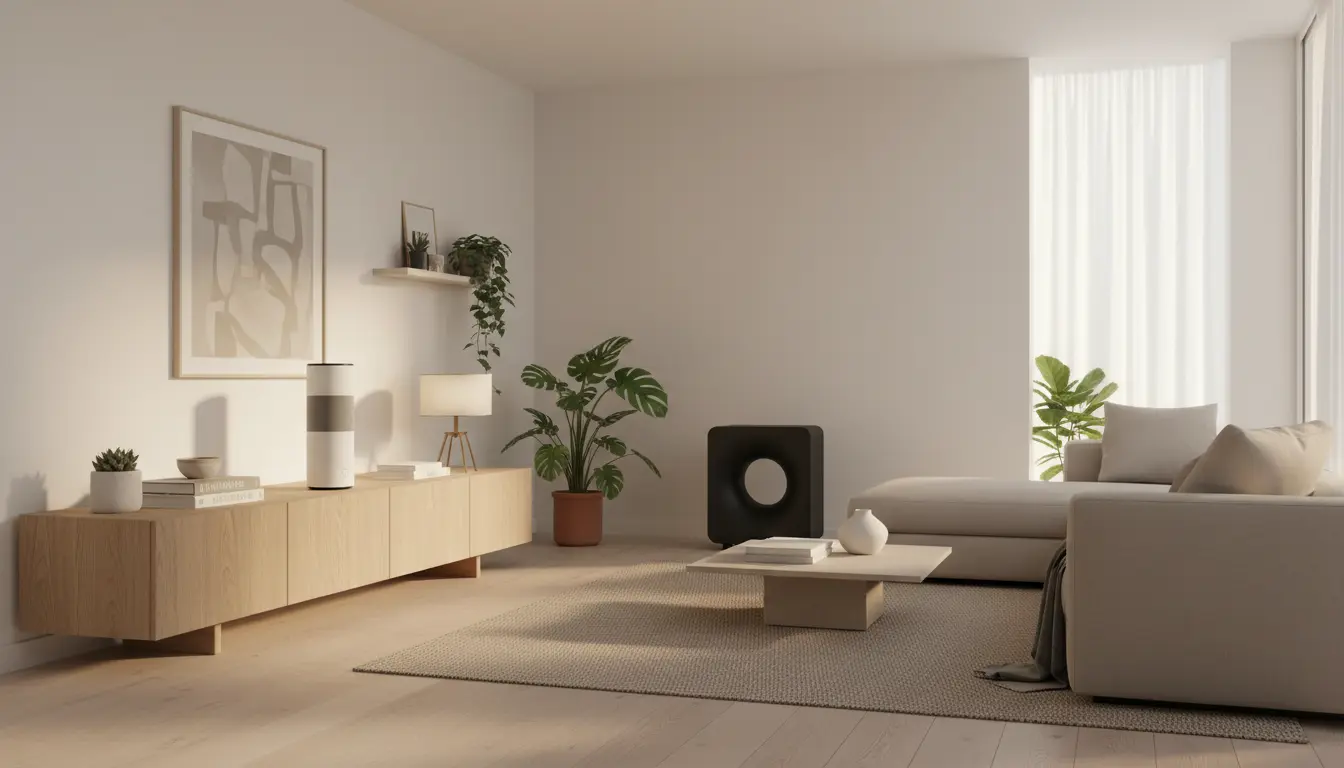
Sonos Sub 4 features a slim, sculptural design with a central cutout that makes it feel more like a modern art object than a traditional audio box. You can stand it upright as a bold statement near a console or lay it flat and slide it under furniture to keep the room visually clean. Despite its discreet look, it delivers deep, tight bass that complements compact wireless speakers and enhances movies, music, and TV.
Because it integrates into the wider Sonos ecosystem, Sonos Sub 4 also supports intuitive app control and multiroom audio, making it a strong choice if you want both design‑forward aesthetics and serious low‑end performance.