
Best Gimbal Stabilizers for New Jersey Street Filming
New Jersey street filming moves quickly. One minute you may be following commuters through Hoboken, and the next you may be capturing neon reflections, boardwalk movement, or passing trains in Newark. A strong gimbal stabilizer helps creators keep that energy while removing distracting shake. It supports smooth camera movement, protects the natural rhythm of handheld filming, and gives solo filmmakers more control in crowded public spaces.
The best gimbal stabilizer for New Jersey street filming depends on your camera, filming style, and daily carrying needs. Smartphone creators usually need a compact, fast-balancing tool. Mirrorless camera users often need stronger motors, a longer battery, and more precise controls. Before comparing models, define how you work. Do you walk for hours, shoot vertical social video, record interview clips, or create cinematic travel footage? Your answers will guide the right choice.
Why Stabilization Matters on New Jersey Streets
Street videography rarely gives you a second take. Pedestrians change direction, traffic creates noise and vibration, and crowded sidewalks leave little space for tripods. A three-axis gimbal counteracts roll, tilt, and pan movement, allowing you to film smoother tracking shots as you walk. The result looks more deliberate without making the scene feel staged.

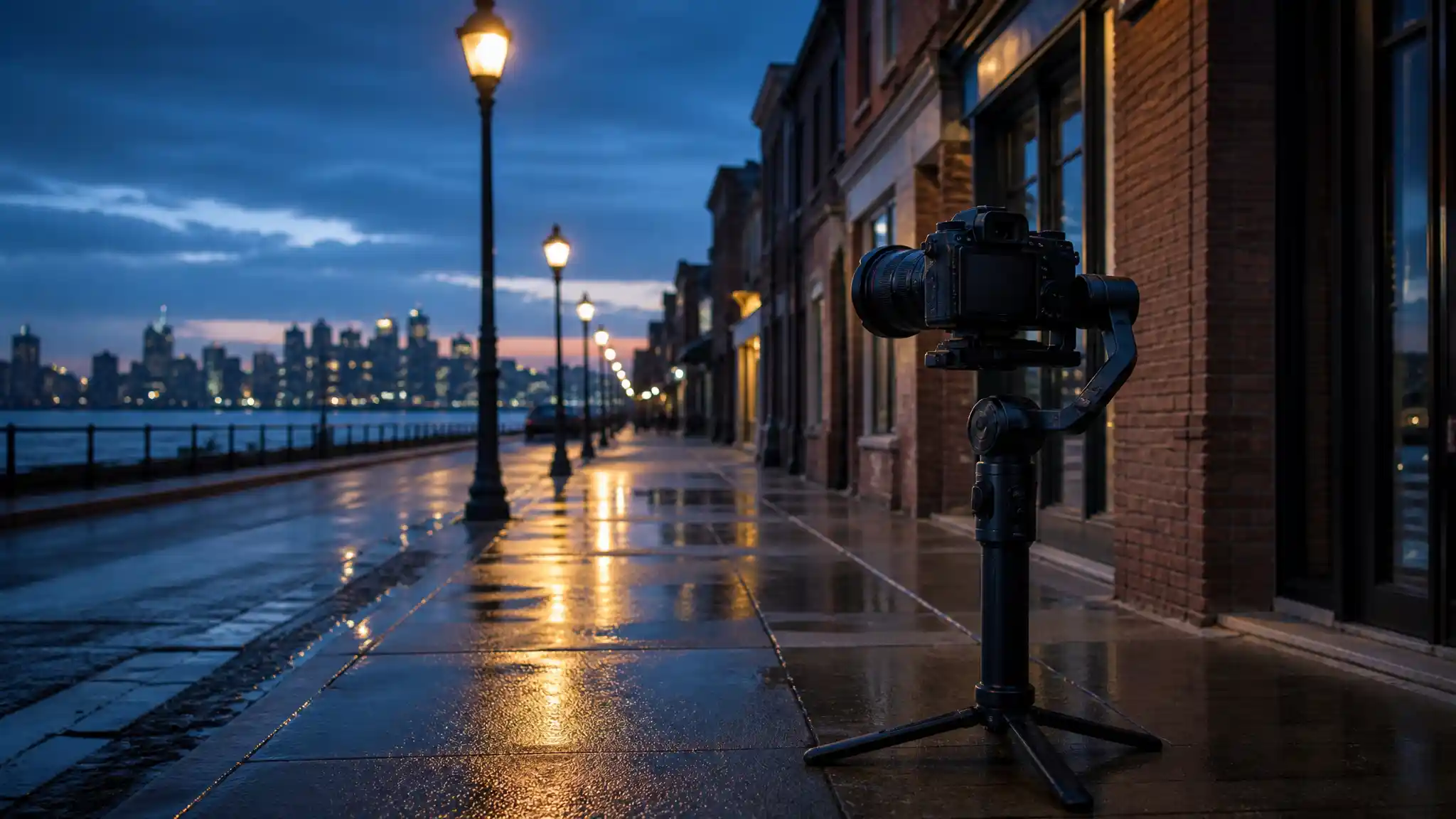
New Jersey also offers varied shooting environments within short distances. You might record waterfront skyline views near Jersey City, local businesses in Montclair, live events in Asbury Park, or fast-paced urban scenes in Paterson. Each location benefits from portable video stabilization. With a reliable gimbal, you can move between wide establishing shots, close details, and low-angle shots with greater confidence.
Choose the Right Payload and Camera Compatibility
Payload capacity is the first technical detail to check. Your gimbal must safely support the combined weight of your camera body, lens, microphone, cage, and accessories. Do not choose based on camera weight alone. A lightweight mirrorless setup may become front-heavy after you attach a fast zoom lens or wireless receiver.
For smartphone videography, look for a phone gimbal with secure magnetic mounting, quick balancing, and a companion app that offers subject tracking. For mirrorless camera gimbals, prioritize adjustable arms, motor strength, and clear camera compatibility information. Proper balancing reduces motor strain, improves battery performance, and keeps footage steady during a long shooting day.
A compact travel gimbal suits creators who film walk-and-talk content, restaurant reels, and neighborhood guides. A larger handheld gimbal suits filmmakers who need professional camera stabilization, external monitors, or heavier lenses. Buy for your normal setup, not an occasional oversized rig.
Prioritize Speed, Portability, and Battery Life
Street filmmakers need to react fast. A gimbal that takes too long to unfold or balance can make you miss spontaneous moments. Quick-release plates, built-in axis locks, and rapid setup features make a real difference when the light changes or a scene suddenly becomes interesting.
Portability matters equally. New Jersey public transit, parking constraints, and long walks reward a lightweight gimbal that fits comfortably in a backpack. However, smaller does not always mean better. Check grip comfort and operating weight, especially if you plan to film continuously. A poorly balanced or uncomfortable device can tire your wrist and cause shaky footage despite excellent motors.
Battery life should cover your realistic schedule. Consider not only advertised runtime, but also the power used by Bluetooth connections, tracking, displays, and charging a connected phone. A removable battery or USB-C charging option gives additional flexibility for travel video production. Carry a power bank if your smartphone handles both filming and navigation.
Use Gimbal Modes to Create Natural Movement
Modern gimbal modes help you shape visual storytelling. Pan-follow mode keeps the horizon stable while letting the camera follow your left and right movement. Follow mode responds to both pan and tilt, making it useful for revealing buildings, signs, and people. Lock mode holds the camera firmly in one direction for controlled forward movement.
For street scenes, avoid overusing dramatic spins and rapid transitions. Smooth footage should support the location, not distract from it. Walk with bent knees, keep your elbows close, and start recording before entering a movement. These simple habits improve cinematic street footage more than any automatic setting.
Many stabilizers include active tracking, gesture control, time-lapse, and vertical video modes. These tools can speed up social media video production, but test them before a paid shoot. Tracking may struggle in low light, busy crowds, or when several people cross the frame. Keep manual controls available so you can adapt immediately.
Consider Audio, Weather, and Public-Space Workflow
A gimbal improves visual stability, but it cannot fix poor sound. Street filming in New Jersey may include wind, sirens, traffic, and conversations. Use a compact external microphone with wind protection when dialogue matters. Confirm that cables do not interfere with the gimbal arms during movement. Wireless audio systems require careful placement so they do not shift your balance.
Weather can change fast near the coast and along waterfront locations. Most consumer gimbals are not weatherproof. Carry a small cover, wipe moisture from controls, and avoid exposing motors to heavy rain or sand. Plan short filming segments, protect your equipment, and inspect the device after every outdoor session.
Respecting people and places also improves your workflow. Stay aware of pedestrian paths, avoid blocking entrances, and ask permission when you film someone prominently. Check local rules or event policies before using larger equipment. A compact setup often attracts less attention and helps you capture more authentic street scenes.
How to Select the Best Gimbal Stabilizer
Compare gimbals using your actual shooting needs: camera compatibility, payload capacity, battery life, folding design, control layout, app reliability, and price. Read recent user feedback about firmware stability and balancing rather than relying only on promotional specifications. If possible, test how quickly you can change from horizontal footage to vertical video.
For many creators, the best choice is not the most expensive model. It is the gimbal you will carry, balance correctly, and use consistently. Select a dependable stabilizer, practice basic walking techniques, and let New Jersey’s diverse streets provide the motion and character. Your footage will look smoother, more professional, and still unmistakably real. That practical approach creates a repeatable mobile filmmaking workflow: arrive prepared, balance before the action begins, review clips between locations, and preserve enough battery power for unexpected golden-hour scenes that can elevate any local story.
Amazon.com Product Recommendation
DJI RS 4 Mini Combo