
Best Air Purifiers for New York Air Pollution and Allergies
New York residents often share compact apartments, busy streets, changing seasons, and limited opportunities to ventilate without inviting outdoor contaminants inside. That combination makes a carefully chosen air purifier a practical addition to an indoor wellness routine. The best air purifiers for New York air pollution and allergies do more than move air around a room. They capture airborne particles, reduce everyday odors, and help create a cleaner sleeping or working environment.
This guide explains what New Yorkers should prioritize before buying an air cleaner. It also highlights practical features that suit dense urban living.
Why New York Homes Need Thoughtful Air Cleaning
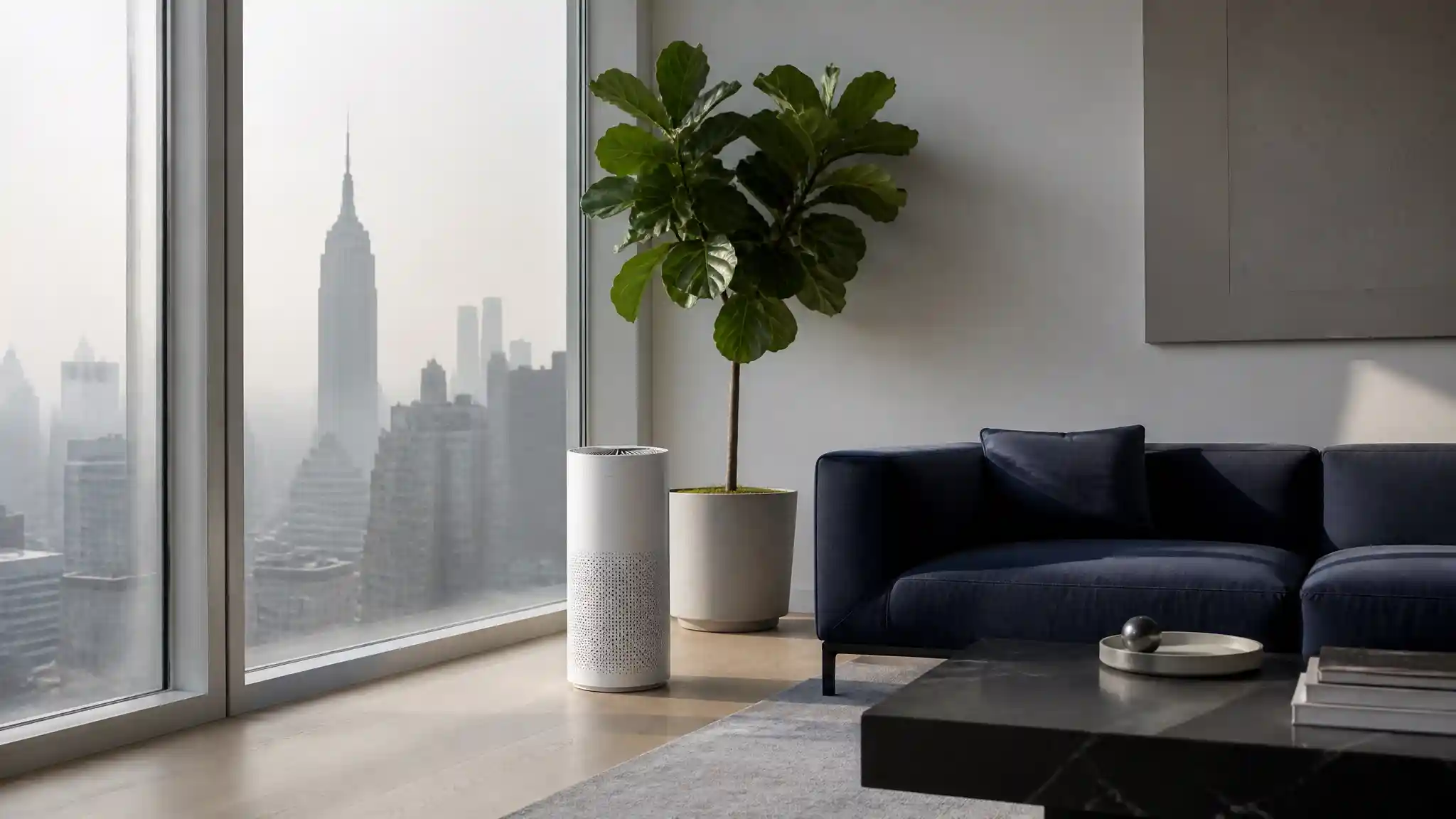
City air can carry traffic-related particles, construction dust, smoke drifting from distant events, and seasonal pollen. Indoors, residents may also encounter dust, pet dander, cooking fumes, fragrances, and particles that enter through windows or gaps around them. In an older building, shared corridors and neighboring units may add odor concerns as well.


Start by identifying the room where symptoms or odors feel most noticeable. For many households, the bedroom deserves first priority because people spend long, uninterrupted hours there. A quiet air purifier for bedroom use can run overnight without disrupting sleep.
Good placement and timely filter changes matter as much as the logo on the front panel.
Start with True HEPA Filtration
For allergy-focused buyers, a True HEPA air purifier is the baseline feature to seek. A genuine HEPA filter is designed to capture fine airborne particles, which can include pollen, dust, and pet dander. This makes HEPA filtration for allergies especially relevant when sneezing, itchy eyes, or congestion become worse inside.
Read the product page closely. Marketing phrases such as “HEPA-type,” “HEPA-style,” or “HEPA-like” do not necessarily mean the unit uses a true HEPA filter. Also examine replacement-filter availability and cost before purchasing. A machine becomes far less helpful if its filter is difficult to find or too expensive to replace on schedule.
Use Activated Carbon for Urban Odors and Smoke
Particles are only one part of the indoor-air picture. New York apartments may experience cooking smells, vehicle exhaust odors, or smoke-related odors. An activated carbon filter can help adsorb some gases and odors. Buyers concerned about these pollutants should look beyond a thin carbon sheet and compare how a brand describes its carbon stage.
Remove or reduce the source whenever possible, then use filtration as added support.
Match CADR and Coverage to the Actual Room
Room size is one of the most important buying decisions. Measure the space rather than guessing from the apartment’s total square footage. Then compare that measurement with the manufacturer’s stated coverage and clean air delivery rate, commonly called CADR. CADR gives shoppers a useful way to judge how quickly a purifier delivers cleaned air for particular particle categories.
Choose a model that comfortably handles the room instead of selecting the smallest option that barely qualifies. A stronger unit can often clean the air at a lower, quieter fan speed. This approach suits bedrooms, home offices, and shared living areas where noise affects whether people actually use the device.
For an open-plan apartment, one purifier may not effectively cover every corner. Place the first unit in the room where you sleep or spend the most time, then consider a second unit for another high-use area. Keep doors and windows closed during operation when outdoor pollution or pollen is a concern, unless ventilation is necessary for safety or comfort.
Look for Low Noise, Auto Mode, and Useful Sensors
The best air purifier is one you will run regularly. Low noise matters, especially in a small apartment where the bed, desk, and living area may sit close together. Review reported sound levels, but remember that tolerance varies from person to person. If possible, select a unit with several fan settings and a dedicated sleep mode.
An air quality monitor or automatic mode can make operation simpler. These features can respond to changing indoor conditions and encourage continuous use. They should not replace common sense, however. A sensor reading may not reveal every allergen or gas, and it may react differently depending on its location. Treat it as a helpful guide, not a diagnosis of air quality.
Filtration performance, room fit, and reasonable replacement costs deserve more attention than app features.
Avoid Ozone-Producing Approaches
People with allergies or respiratory sensitivities should be cautious with devices marketed as ionizers or ozone generators. Ozone is a lung irritant, and some technologies can create it. An ozone-free air purifier offers a more straightforward option for ordinary particle filtration. Check product documentation and choose a unit that clearly states how it operates.
If a purifier includes an optional ionization feature, learn whether you can turn it off. In many cases, a conventional fan-and-filter design supplies the focused performance most apartment dwellers need without adding an unnecessary variable.
Placement and Maintenance Make the Difference
Put the purifier on a stable, open surface or floor location with clear space around its air intake and outlet. Do not hide it behind a sofa, wedge it into a crowded shelf, or block it with curtains. Keep it away from splashing water and follow the manufacturer’s safety guidance.
Run the unit consistently during allergy season, smoky periods, and daily activities that create particles, such as cooking. Vacuum with effective filtration, damp-dust surfaces, wash bedding regularly, and manage indoor humidity. These habits work alongside an air cleaner; they do not compete with it.
Replace filters according to the manufacturer’s instructions, adjusting earlier if the home has pets, heavy pollution exposure, or frequent cooking. Write the replacement date on the filter or set a calendar reminder. A clogged filter can reduce airflow, increase noise, and undermine the clean-air routine you intended to build.
How to Choose with Confidence
Before ordering, make a short checklist: room dimensions, primary concern, noise tolerance, filter cost, and available floor space. Prioritize a properly sized HEPA unit for particles, then add substantial carbon filtration if odors or smoke matter. Compare published coverage responsibly, because test conditions and room layouts differ.
For New York allergy sufferers, the most effective purchase is usually a reliable purifier that fits the bedroom or main living space and receives consistent care. It should support better indoor air quality without demanding complicated daily attention. Pair it with source control and a clean-home routine, and you create a more resilient indoor refuge from the city outside.
Amazon Product Recommendation
One current option is the LEVOIT Core300-P, listed on Amazon as a quiet HEPA air purifier for allergens, dust, pollen, smoke, and pet odor, with stated coverage up to 1,073 square feet. Confirm current price, delivery availability, replacement-filter costs, and suitability for your specific room before purchase: LEVOIT Core300-P Amazon listing.