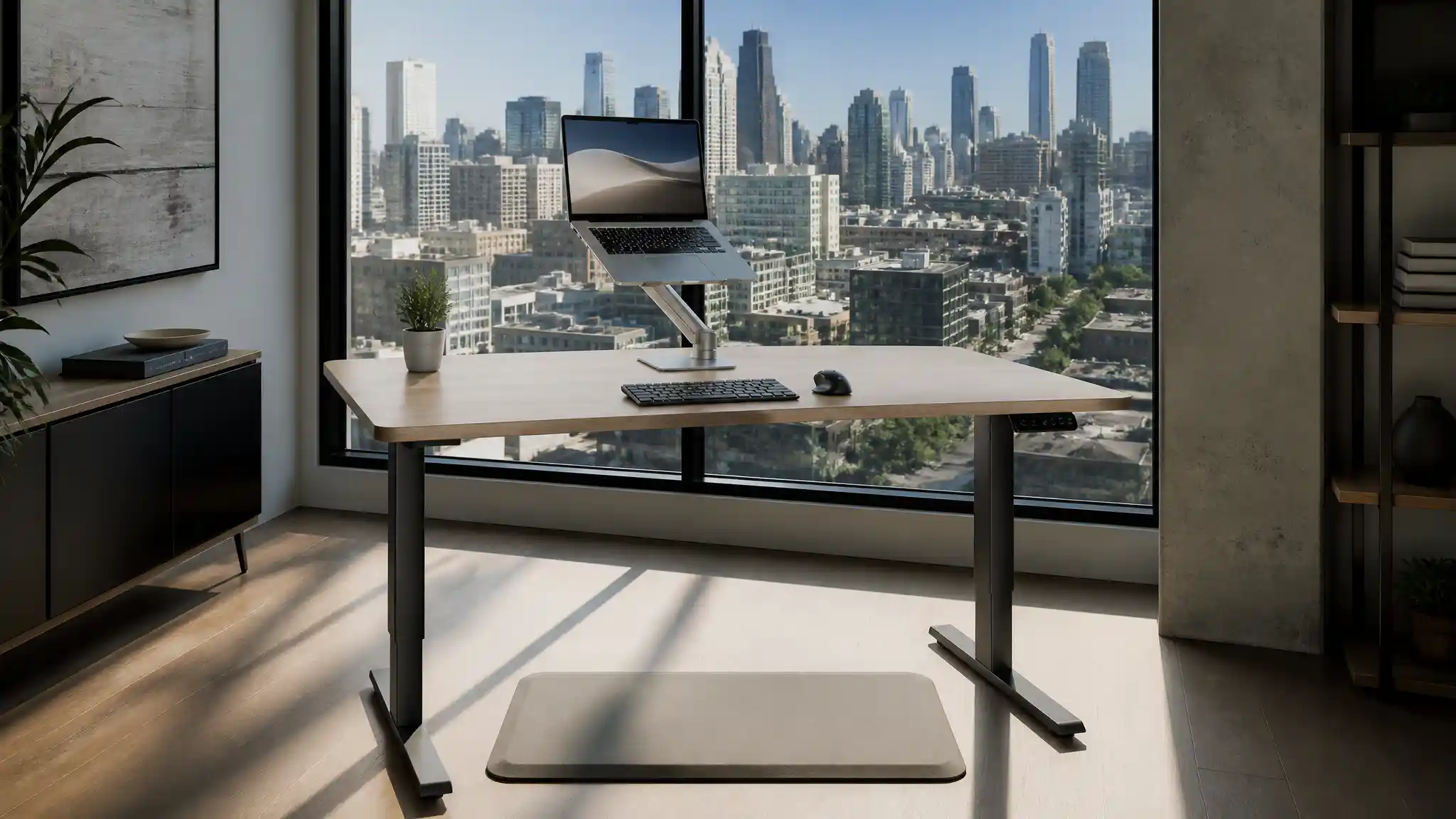

Optimizing Your Workspace: The Best Laptop Stands for Standing Desks in Chicago
Professionals across the Windy City are rapidly transforming how they approach daily office ergonomics. From towering corporate headquarters overlooking the Loop and bustling tech hubs in River North to creative agencies in Fulton Market and modern residential workspaces in Lincoln Park, active work routines define contemporary productivity. Height-adjustable motorized workstations now anchor countless professional environments throughout Chicago, yet many knowledge workers quickly discover that an adjustable table surface addresses only half of the ergonomic equation. Without elevating your laptop screen directly to eye level, you inadvertently swap lower lumbar pressure for persistent cervical spine tension, chronic shoulder fatigue, and repetitive strain discomfort. Pairing a dedicated portable elevation platform with your sit-stand workstation bridges this critical structural gap, actively fostering natural spinal alignment, sharp cognitive focus, and lasting physical vitality across intense business days.
Why Chicago Professionals Need Dedicated Laptop Elevators
Chicago features an extraordinarily dynamic, hard-working labor force driving competitive sectors like financial trading, enterprise technology, logistics management, healthcare administration, legal consulting, and innovative brand marketing. Local specialists routinely distribute their schedules across downtown high-rises, communal coworking spaces, and home offices. When you elevate your adjustable motorized workstation from a seated position to an upright stance, your visual focal point changes drastically. Gazing downward at a laptop resting flat against a desktop surface exerts immense forward head tilt, placing intense mechanical stress upon cervical vertebrae and delicate shoulder muscles.
A premium adjustable notebook riser lifts your display panel effortlessly so the top boundary of your monitor meets your natural horizontal viewpoint. This simple yet profound mechanical alignment prevents persistent hunching, opens your ribcage for unrestricted oxygen intake, and maintains balanced spinal posture throughout standing sessions. Furthermore, lifting the chassis off dense work surfaces maximizes passive thermal regulation, ensuring internal hardware fans and multi-core processors operate efficiently during heavy analytics computation, design rendering, and back-to-back virtual client conferences.
Key Features for Sit-Stand Desk Compatibility
Selecting the optimal desk accessory requires careful attention to material engineering, range of articulation, and foundational stability. A rickety platform disrupts steady typing cadences, causes irritating visual vibration, and endangers valuable enterprise computing hardware whenever motorized desks transition between height presets.
First, demand robust structural integrity and balanced weight thresholds. Seek out heavy-duty aircraft-grade aluminum alloy construction, reinforced steel dual-hinge pivots, and broad bottom plates engineered to counteract tipping forces. Resilient silicone grip pads lining the cradle hooks and underneath the base prevent structural scratches while anchoring the device firmly in place through sudden desk movements.
Second, evaluate multi-angle versatility and fluid height modification. High-performing risers provide independent angle tilting and multi-tier vertical extension, allowing smooth recalibration whether you stand upright during morning strategy briefings or lower your desk for detailed afternoon spreadsheet auditing. This adaptable range also aligns your built-in webcam squarely with your face, establishing crisp, authoritative eye contact during professional video calls without awkward ceiling-facing camera angles.
Third, prioritize effective heat dissipation and compact portability. Agile city professionals who commute across suburban Metra lines or the ‘L’ train system require collapsible mechanisms that fold down flat into standard laptop bags. Open-air skeletal frames, perimeter ventilation cutouts, and thermally conductive metallic components dissipate processing heat rapidly, safeguarding performance during hot Midwestern summer afternoons and overheated urban office winters.
Top Recommended Laptop Stand Styles for Chicago Workspaces
The modern ergonomic accessory market provides diverse functional styles designed to support specific workplace environments, spatial footprints, and daily workflows.
Dual-pivot adjustable aluminum risers serve as the undisputed standard for permanent sit-stand setups. Equipped with high-torque articulating friction joints, these heavy-duty units allow users to elevate notebooks up to twenty inches above the desk plane while fine-tuning keyboard angles. They easily support oversized mobile workstations while maintaining steady footing alongside dual-monitor desktop arrays.
Collapsible ultra-lightweight travel stands cater directly to mobile professionals dividing time between corporate offices, local coffee houses, and remote retreat destinations. Built from composite carbon materials or foldable aluminum scissor joints, these portable stands deploy within seconds, creating a healthy ergonomic posture wherever a flat counter or temporary standing table is available.
Full 360-degree rotating swivel stands excel in collaborative environments like agile project spaces and startup incubators. A smooth ball-bearing base lets you pivot project wireframes, interactive dashboards, and client presentations toward team members instantly, combining individual posture support with dynamic office collaboration.
Maximizing Ergonomics in Your Active Daily Routine
Purchasing a top-grade elevation accessory constitutes an essential workplace upgrade, but applying sound ergonomic principles ensures complete posture protection.
Always combine your elevated notebook with an external Bluetooth keyboard and a precision ergonomic mouse resting flat on the desk surface or an adjustable tray. Reaching upward to type directly on an elevated notebook keyboard bends the wrists into extreme dorsal extension, causing rapid forearm exhaustion and carpal tunnel stress. Place your screen approximately arm’s length away, squarely centered in front of your core.
Cultivate continuous dynamic movement during business hours. Workplace health specialists suggest adopting a structured interval routine: stand actively for twenty minutes, sit supported for ten minutes, and walk or stretch briefly before repeating. Pair your sit-stand workstation with a high-density anti-fatigue floor mat to absorb joint impact across hardwood or concrete loft flooring commonly found in Chicago apartments.
Maintenance and Long-Term Setup Care
Preserving the functionality of your ergonomic workstation requires minimal yet consistent maintenance. Inspect friction hinge fasteners periodically using standard hex wrenches to preserve optimal tension against heavier computers. Wipe aluminum surfaces gently with a soft microfiber cloth to prevent particulate accumulation within ventilation vents. Route monitor cables, power cords, and accessory leads through integrated cable management clips to avoid snagging when adjusting desk heights.
Chicago professionals who deliberately configure their sit-stand workstations unlock sustained daily stamina, minimize chronic physical strain, and maximize productive focus across demanding projects.
Recommended Amazon.com Product
Nulaxy Ergonomic Aluminum Laptop Stand (Model C3 / Dual-Hinge Adjustable Series)
This laptop stand features a durable aircraft-grade aluminum body, non-slip silicone pads, and a dual-hinge adjustment system for customized height and viewing angles. It provides excellent stability and ergonomic support for standing desks while helping position your laptop screen at eye level.